ASQ Montreal Welcome

Welcome | Bienvenue

Dedicated to quality since 1950

Je suis ravie de vous accueillir dans la section de Montréal, et j’espère pouvoir vous rencontrer bientôt. Pour nous aider à mieux vous connaître, veuillez répondre à ces brèves questions (choisir la langue de votre choix en haut à droite de la page).
Profitez des avantages que vous offre la section Montréal. Au plaisir de vous rencontrer!
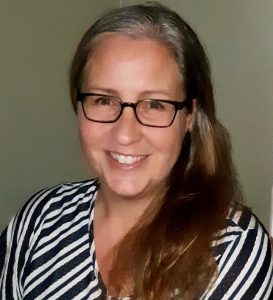
Chantale Simard

—————

I am delighted to welcome you to the Montreal section, and I hope to be able to meet you soon.To help us get to you know better, please answers these short questions.
Please take advantage of the things Montreal Section has to offer you. Looking forward to meeting you!
Chantale Simard
Chantale Simard

VISION — MISSION

The vision of the ASQ Montreal Section is to function as a resource for learning, networking and fellowship for individuals, organizations, and the Quebec-wide community with an interest and passion for Quality. To promote and enhance the quality profession by providing support to our Section membership, offering information, educational programs and events and promoting the awareness and value of quality in the community.
Quality Drive

OUR EVENTS

We hold regular events from September through June, except for December, typically on the last Wednesday evening of the month.
These include individual speakers who talk on a range of subjects of interest to Quality Professionals, but we also organize:
  • • Tours, whenever possible;
  • • Mentoring events;
  • • Networking events;
  • • Events for our student population;
  • • Panel events and workshops.
Note that our events are virtual now, but when we are back live, it will be our pleasure to offer you a free meal at the first event you attend.
To learn more about our next events, please visit our website.
Learning

INTERESTED IN AN ASQ CERTIFICATION?

We can help you prepare to certify through teaching or exam preparation.
Have a certification already? Recertification
Participation in events contributes to your recertification. Otherwise, you have to retake the exam which is costly both in time and money. For more information, please visit ASQ’s website.

SECTION LEADERSHIP TEAM

Dedicated to the advancement of Montreal Quality Professionals. The team includes our:
  • • Section Chair
  • • Vice Chair
  • • Secretary
  • • Treasurer
As well as the following Committee Chairs and members:
  • • Program and Arrangements
  • • Auditing
  • • Certification / Recertification
  • • Education
  • • History of the section
  • • Internet Liaison
  • • Membership
  • • Newsletter Editor
  • • Nominations
  • • Social Media
  • • Student Outreach
  • • Voice of the Customer
  • • Web Site Committee
We are all volunteers! Offering your time to ASQ Montreal provides a great opportunity for networking and developing new skills. Contact us and we will gladly answer your questions and welcome you to the leadership team.

WE SUCCEED IF WE ADDRESS YOUR NEEDS

We are looking forward to hearing your opinions and any ideas you may have.
You can share them with the leadership team through the contact addresses.

OTHER SECTION BENEFITS

Newsletter - The section circulates a newsletter within its membership 9 times per year, primarily covering local quality initiatives, events, and training opportunities.See our past newsletters.
Mentoring Program - We can help you improve technical knowledge or leadership skills. Seasoned members can increase their network and advancement opportunities.

TO LEARN MORE ABOUT US AND OUR EVENTS

Our monthly Newsletter myASQ anglais myASQ français
Information about events and sections across the ASQ network.
ASQ Montreal ASQ Students ASQ Montreal

We hope we can be a key part of your quality journey!

Quality Journey

Subscribe/Opt out: You are receiving this e-mail because you are registered to the ASQ Montreal Section. You must login at ASQ to change your communications preferences.

Copyright © 2021 ASQ Montreal.
Articles may be reproduced/used if the source is credited to ASQ Montreal Section.

ASQ Montreal Welcome Read More »

Had You Connected to the Last Event

Debbie Sears Barnard

By Fatima Al-Roubaiai, Graduate Student, School of Nursing, UBC Okanagan

Had You Connected . . . Can Continuous Improvement Impact the Reduction of Systemic Racism in Healthcare

On February 24th, 2021, Debbie Sears Barnard gave an informative and inspirational talk via TEAMS from her home in Dubai about what Continuous Improvement (CI) professionals can do about systemic racism in healthcare. Debbie began by giving a special shout out to the Women in Lean, an online community of improvers, as well as Deondra Wardelle of #rootcauseracism for their power and energy towards ending racism around the world. This is part of what I love about learning with Debbie – she begins from a place of purpose, a place of community, and invites you in with arms wide open. I first met Debbie in Northern Ontario ten years ago. She was my first mentor in quality and improvement, and she continues to be a support for me today. One of her reminders to all of us working for change was to “get comfortable being uncomfortable,” and she found a way to bring that into her presentation.

One point that I continue to reflect on is how in 2021, we still cannot ensure that all patients will be treated with respect and dignity. Not in the United States, not in Canada, and not around the world. It has been decades since the Institute of Medicine report and To Err is Human were published, and in this time, there have been infinite references to the social determinants of health, yet still the frustration with our failure to move the needle on equity is real. Healthcare has a long history of racism to work through. The Tuskegee Syphilis Study in which researchers experimented on Black men enrolled in the study for 40 years and knowingly allowed them to die when a treatment became available. Or myths about physical racial differences that doctors still believe today, and that lead to racial profiling in healthcare and differences in treatment. All of this is unnerving and can bring about all types of feelings, so now what do we do about it?

Debbie made an excellent point around CI professionals being perfectly positioned to help move us from the current to an idealized state. She challenged us to learn and act. Do we know the key terms around this topic: racism, implicit bias, intersection of racism and health, equality, equity? She challenged us as CI professionals to use the language, to use what we know to help the teams we work with. Do we really know what our baseline is? Where are the gaps? Go and see! When we approach equity, let’s apply the same steps to problem-solving – identify, analyze, develop, test/implement, sustain.

The most impactful recommendation had to be around making equity the priority. Equity infuses all of quality care. That work needs to happen at an organizational and leadership level. We need to identify and promote the conditions that support equity and quality in healthcare. Is there a lens of diversity, equity, and inclusion? Do the members of the health system represent the communities that they serve? Do staff feel taken care of and safe? And do they understand their role towards the overall strategy?

This past year, with the pandemic spreading around the world; the killing of George Floyd (and so many others) by police in the US; the deaths of Chantel Moore, Ejaz Choudry, and other fatal encounters with police and RCMP during wellness checks in Canada; and the anti-Indigenous, anti-Asian, anti-Black, anti-other racism happening across our country – this talk helped to focus me towards action. I am so grateful to Debbie for taking the time to research and prepare this talk, and I thank ASQ Montreal for hosting and encouraging my small contribution with this article.

I have compiled a list of a few of the many resources Debbie shared in her talk to pass on to my fellow CI and quality professionals:

Had You Connected to the Last Event Read More »

Turning Data into Useful Information

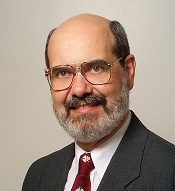
Dr David TozerBy Dr. David Tozer, Ph.D., ASQ CQE and SSBB, Education & Audit Chair.

Over the years I have seen many presentations where people collect data to perform evaluations and then try to draw conclusions from the data.  In many cases it is difficult to draw conclusions from the data collected.  A common reason for this difficulty is the data were collected by an experiment or evaluation that did not use designed experiment methodology to guide how to collect data.

For almost 100 years, we have been teaching Design of Experiments (DOE) to students.  These methods are more efficient and effective, from an economic perspective, than other methods.  In some industries, designed experiments are used regularly.  Examples include agriculture, chemical and pharmaceutical safety and efficacy testing (pre-clinical and clinical trials).  In other parts of industry, designed experiments are uncommon.  Many of us are involved in doing experiments or evaluations.  I think it would be useful to use a scientific method to perform experiments or evaluations.

Scientific work is based on having standards.  I am not referring to ISO standards, but the physical standards that are the basis for commerce, physics, chemistry, biology, engineering and medicine.  Standards reduce bias and allow us to use a common language to describe the world.  These physical standards include the degree (temperature), ampere, kilogram, metre, second and mole.  In the case of biological and social systems, we often do not have well-defined physical standards when performing experiments or evaluations.  In these circumstances we designate a sample from the population as a control to serve as the standard.  Controls receive a reference treatment and can include placebos (sugar pill), untreated subjects or a current treatment.

Designed experiments can be used in almost all industries and get useful results. The simplest experiment that could be used by many organizations is described in the following example. 

An activity that is done in almost all industries is training.  Another thing that is common to many industries: the money spent on training does not seem to yield the expected results in increased productivity or effectiveness. 

So, to assess training effectiveness the following process could be used:

1) Before training begins:

  • Training methods are developed and documented;
  • Important performance metrics are identified;
  • People being sent on training are evaluated to access current performance, the control, and data collected on the current performance. 

2) The people are then trained in the required skill using the developed methods. 

3) After training is completed, the trained people are evaluated for their performance of the required skill, the treatment effect. 

4) The difference in performance between the control and the treatment is assessed to see if there is a training effect.

In more technical terms, this set up is a single factor (training) repeated measures (repeated on the same people) two level experiment (control and treatment). 

The analysis of the results requires the use of the first statistical test discovered in the early 1900s.  It too is the simplest possible statistical test.

We also need to make sure the environment and selection of trainees is done in as uniform a manner as possible.  It is important to ensure the environment, in which any experiment or evaluation is done, is understood and documented.  All results are conditional on the environment the data were collected in.  In the case of the training example the results are conditional on the training methods.

An important take away from this short discussion is the idea of a control as a reference standard.  It is not the same as a physical standard, but it is a standard nonetheless.  Standards in the form of controls should form the basis for evaluations and experiments in many business situations.

As mentioned earlier, the example demonstrates the simplest designed experiment possible.  The real world is a lot more complicated.  For more complicated systems, more complicated designs need to be used.  Many economical methods have been developed over the years to handle complicated situations.  The methods can be used for evaluation, screening and optimization.  Some designs look for relative changes and may not, at first glance, appear to have a standard or control.  It is always a useful exercise to determined what the actual control is when doing an experiment or evaluation.

By performing designed experiments, data collected during the evaluation are turned into information about the effectiveness of an intervention.  By using information, we can make better informed decisions.

Turning Data into Useful Information Read More »

Word from the Chair

By Chantale Simard, MBA, Quality Assurance Analyst, Bombardier Aviation, ASQ CMQOE and CSSGB

This month, I would like to share with you a summary of our Business Plan for 2021. First, all objectives of Geographic Community (GC) level entities such as the Montreal Section and the Canada and Greenland Region must be aligned with the ASQ Strategic objectives. Those are:

  • Improve the individual member experience
  • Institute best practices in governance, operations, and risk management
  • Drive thought leadership in excellence through quality
  • Deliver new, tailored solutions to organizational members and customers.

Your section business plan includes metrics and targets. Here is a list of our main targets for this year:

  • Support the Canada Conference 2021 in October: This one just changed to Hosting the Canada Conference 2021. You may remember my February article where I told you about our main objectives for this big event!
  • Host one of the 9 Regional Webinars
  • Host 8 Montreal events and 2 Student events
  • Publish 8 newsletters per year
  • Increase in myASQ activity over 2020 with a focus on new joins and downloads.
  • Minimum 3 French-language events in the Montreal area and minimum one of the events of the Student Outreach committee in French.
  • Find new ways for promotion of ASQ certifications and make investments

If you want to volunteer on the Section Leadership Team (SLT), we always need extra help. You need to be a “Full”, “Senior” or “Fellow” member to join. We hold a meeting at the beginning of every month (except during the summer). Our meetings are all virtual for the moment. But, even when we were holding face to face meetings, we started using technology to accommodate SLT members to join electronically. This makes it easier for members outside the Montreal area or people with different or busy schedules to get involve. Some of us are giving a lot of time to the Section and others have less time to invest and it is really good; all help is welcome.

All volunteers are adding value to Section members and help attain our mission: To promote and enhance the quality profession by providing support to our Section membership, offering information, educational programs and events, and promoting the awareness and value of  quality in the community.

Contact me if you would like to help the Montreal Section by taking up a role on the SLT.

Give me your comments

Word from the Chair Read More »

2021 ASQ Canadian Conference

2021 ASQ Canadian Conference

The Montreal Section will be hosting the 2021 ASQ Canadian Conference, which will probably take place in October, traditionally Quality Month, but in virtual mode. A planning team has started work and has identified many ideas. The working theme for the Conference is Risk and Resilience and it would be illustrated by various conferences and workshops with hands-on experiences, each rated by “knowledge levels”. We have already identified three objectives close to our hearts:

  • An interactive experience;
  • Activities categorized by level of knowledge of the subject;
  • A bilingual conference.

Stay tuned for further developments.

2021 ASQ Canadian Conference Read More »

Voice of the Customer – Voix du client

Amine Djeffal

Amine DjeffalBy Amine Djeffal, ASQ CQA, RAC, Quality and Regulatory Affairs Professional.

Can the Continuous Improvement (CI) Professional Influence the Reduction of Systemic Racism in Healthcare (24 February 2021).

Interestingly 38% of the audience declared themselves as ASQ senior members. If we take a look at poll results in terms of field and responsability, non-managerial roles and manufacturing areas are what defined the audience the most.

Participants expressed interest in attending other webinars. Many topics were proposed such as Risk management, Human error, Audits and Quality standards offered by registrars.

Based on poll results nearly 29% of the participants heard about the event through the section’s newsletter which demonstrates it is still the perfect communication channel to reach a maximum of ASQ members and to keep them informed about the section’s events. In addition, using Eventbrite to inform members about our section’s events was efficient, since 18% of the attendees heard about the event through this platform. Finally 07:00 pm to 9:00 pm was the best time to join webinar.

We would like to thank all the attendees for their enthousiasm, as usual. We look forward to connecting with you soon at one of our events.

Since this Voice of the Customer report is my last one, I would like to take this opportunity to bid farewell to the Section Leadership Team and to all ASQ Montreal section members.

Amidst the pandemic that we continue to endure we’ve learnt a lot. We should continue to see the value in the positive and encouraging lessons of resilience.

Stay safe and healthy.

Voice of the Customer – Voix du client Read More »

ASQ Region Webinar-Webinaire

Lean as a Lever for a Sustainable Supply Chain – Le Lean comme levier pour une chaîne d’approvisionnement durable

Lean Supply Chain

What is your organization doing to positively impact the SDG goals?
Que fait votre organisation pour avoir un effet positif sur les ODD ?

May 19, 2021 – 19 mai, 2021 (12h00)
(Webinar-Webinaire bilingue)

In 2015, the UN adopted a plan for achieving a better future for all with sustainable development goals (SDG) to end extreme poverty, fight inequality and injustice, and protect our planet. If this seems like a daunting task, join us to discuss what you can do in your organization to make the world a better place with Veronica Marquez, Certified Lean Six Sigma Black Belt with ASQ and Certified Sustainable Supply Chain Professional from ISCEA.


En 2015, les Nations Unies ont adopté un plan pour parvenir à un avenir meilleur pour tous avec des objectifs  de développement durable (ODD) visant à mettre fin à l’extrême pauvreté, à lutter contre les inégalités et l’injustice et à protéger notre planète. Si cela vous semble insurmontable, joignez-vous à nous pour discuter de ce que vous pouvez faire dans votre organisation pour rendre le monde meilleur avec Veronica Marquez, Certified Lean Six Sigma Black Belt avec l’ASQ et Certified Sustainable Supply Chain Professional de l’ISCEA. Looking forward to see you there. On vous y attends.

ASQ RU Recertification Units:
Attendance will be worth 0.5 RU (Recertification Units) for ASQ. A certificate will be sent by email after the event to the participants.
La participation vaut 0.5 RU (Recertification Units) de l’ASQ. Un certificat sera envoyé par courriel aux participants après l’événement.

ASQ Region Webinar-Webinaire Read More »

The Editor’s Corner

Michael Bournazian

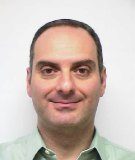
Michael BournazianBy Michael Bournazian, Eng., Newsletter Editor, ASQ Senior Member, CSSGB

The February 2021 power crisis in the state of Texas, that continues to cause issues even after all the snow and ice has melted away, was something to see.

I have been to the state on several occasions in my professional life: Dallas twice, and Houston, Tyler, Abilene and Lufkin once each. These trips were never scheduled to take into account any specific season because, well, it’s Texas, and never did I assume at any time I may want to avoid, say, Dallas in January because it would snow a lot.

Politics aside, the causes as to why the grids failed will be interesting to find out, to say the least. On February 16, 2021, Governor Greg Abbott declared that there will be an investigation of the power outage to determine long-term solutions. Good idea: of course he then turned around a few days later and declared Texas 100% open for business with no mask mandate, so not so good. But I digress.

I have written in the past about catastrophic failures in industry (British Petroleum, Toyota, Boeing), all with a sense of  “look at what these buggers (clean language folks) did?! How dare they?! There better be some honest-to-goodness investigation, cause & corrective action/risk analysis/restructuring/rewriting of processes/hirings/firings/blah blah blah.” To be honest, this was going to be my “tone” for this article.

And then, not long after, I was reminded of something: the January 1998 Ice Storm.

Remember, that storm that came through and affected Eastern Ontario, Southern Quebec, New Brunswick and Nova Scotia, knocking out power to millions of people for days, weeks, and even months in some cases? At the time, the power grids and installations in this part of the world (aka Canada, the cold snowy country) did not fare much better. I personally remember my family taking in some relatives for one week when their power was out; and then when theirs came back, they immediately returned the favour when ours went out for a week!

Eventually, lives got back to normal, as they will in Texas. But can either of these situations be considered the better of the other?

* In this corner, we have Texas, an American state synonymous with sun, heat and desert. So power grids ill-equipped to handle snow and ice would not be too surprising. That said, the effects of global climate change have been evident for decades, and abnormal weather events have become unfortunately normal. And sometimes, it does take a disaster to make people realize that a risk is real.

* And in this corner, we have Canada, a country synonymous with snow at every given stereotype. You would have expected the power grids here to have been well-equipped to withstand snow, ice, wind, hail, freezing rain and the like. And yet . . . well, you know.

So how was my tone?

EDITOR’S NOTE: Neither the “C” word nor the “P” word were used during the writing of this article.

**********************************************

Any feedback? Click on the link and let me know.

Thank you, all the best and none of the worst.

The Editor’s Corner Read More »

Next Event – Prochain Événement

Women in Quality

Wednesday 31 March, 2021 à 19:00

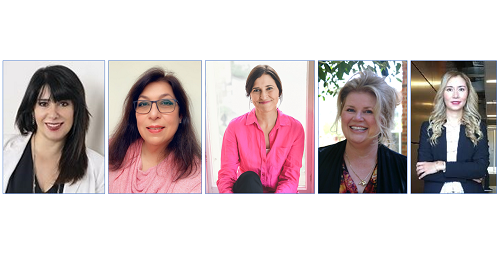
A panel event of FOUR professional women from various backgrounds will share their experiences in the quality fields.

– WEBINAR IN ENGLISH –

Networking opportunity starts at 18h30.

Veronica Marquez

Veronica Marquez, M. Sc., CSSBB of Aristeío Consulting and member of the ASQ Section Leadership Team will moderate this panel discussion and networking event.

Nowadays, an increasing number of incredible women work in a wide range of quality fields. As managers, academic leaders and decision makers, women in quality are all hardworking, smart, and professional; focused on making our products flawless, establishing the highest standards of quality, and optimizing the manufacturing and industries’ processes. Our four invited high caliber panelists will share their background, work experience-challenges and general feelings about being a woman in the quality field.

Panel members:

  • Marjaneh (Marsha) Pourmand: Senior Consultant with her consulting firm 7S Knowledge Express Inc.
  • Véronique Boucher: Independent Quality System Consultant since mid-2019 and is an ASQ Certified Auditor with twenty years of experience in medical devices QA (ISO 13485), manufacturing (ISO 9001) and pharmaceutical (GLP, GCP) sectors and with the new regulations (e.g. EU MDR 2017/745) to optimize their quality processes.
  • Dr. Carolee Rigsbee: Assistant Professor at University of Illinois at Springfield and a senior member of the ASQ.
  • Dr. Farnoosh Naderkhani: Assistant Professor at the Concordia Institute for Information System Engineering (CIISE) at Concordia University.
Panel

Attendance will be worth 0.5 RU (Recertification Units) for ASQ.
La participation vaut 0.5 RU (Recertification Units) de l'ASQ.

For more information on this upcoming event, see our Newsletter, myASQ or myASQ-FR.

Next Event – Prochain Événement Read More »

Mot de la présidente

Par Chantale Simard, MBA, Analyste Assurance Qualité, Bombardier Aviation, ASQ CMQOE et CSSGB

Ce mois-ci, je vous présente un résumé de notre plan d’affaires pour 2021. Premièrement, tous les objectifs des organisations de l’ASQ au niveau de la communauté géographique (CG), comme la Section de Montréal et la région du Canada et du Groenland, doivent être harmonisés avec les objectifs stratégiques de l’ASQ, qui sont:

  • Améliorer l’expérience individuelle des membres
  • Instaurer les meilleures pratiques en matière de gouvernance, d’opérations et de gestion des risques
  • Assuré un leadership réfléchi visant l’Excellence grâce à la qualité
  • Offrir de nouvelles solutions sur mesure aux membres et aux clients de l’organisation.

Votre plan d’affaires de section comprend des mesures et des objectifs. Voici une liste de nos principaux objectifs pour cette année :

  • Supporter la Conférence du Canada 2021 en octobre: Celui-ci vient de changer pour organiser la Conférence du Canada 2021. Vous vous souvenez peut-être de mon article de février où je vous ai parlé de nos principaux objectifs pour ce grand événement!
  • Organisez l’un des 9 webinaires de la région
  • Organisez 8 événements à Montréal et 2 événements étudiants
  • Publier 8 bulletins d’information par année
  • Augmenter notre présence sur myASQ par rapport à 2020 en mettant l’accent sur les membres qui joignent la plateforme et les téléchargements
  • Minimum de 3 événements en français dans la région de Montréal et minimum d’un des événements du comité de sensibilisation des étudiants en français
  • Trouvez de nouvelles façons de promouvoir les certifications ASQ et de faire des investissements en ce sens

Si vous voulez faire du bénévolat au sein de l’équipe de leadership de la section, nous avons toujours besoin d’aide supplémentaire. Vous devez être un membre “Full”, “Senior” ou “Fellow” pour vous joindre. Nous tenons une réunion au début de chaque mois (sauf pendant l’été). Nos rencontres sont toutes virtuelles pour le moment. Mais, même lorsque nous tenions des réunions en personne, nous avions commencé à utiliser la technologie pour accommoder les membres de l’équipe afin qu’ils puissent se joindre par voie électronique. Il est ainsi plus facile pour les membres à l’extérieur de la région de Montréal ou les personnes ayant des horaires différentes ou chargés de s’impliquer. Certains d’entre nous donnent beaucoup de temps à la Section et d’autres ont moins de temps à y investir et c’est tout à fait correct; toute aide est bienvenue.

Tous les bénévoles ajoutent de la valeur aux membres de la section et nous permettent d’atteindre notre mission : Promouvoir et améliorer la profession de la qualité en appuyant les membres de notre section, en offrant de l’information, des programmes éducatifs et des événements, tout en sensibilisant et en faisant la promotion de la valeur de la qualité dans la communauté.

Contactez-moi si vous désirez aider la Section de Montréal en prenant un rôle au sein de l’équipe de leadership.

Envoyez-moi vos commentaires

Mot de la présidente Read More »

Had You Connected to the Last Event

Marcel CharbonneauPar Marcel Charbonneau, T.P., Membre senior et CQA de l’ASQ

Webinaire: La réalisation d’audits virtuels, mercredi, le 27 janvier, 2021.

Pré-rencontre: Vous êtes invités à vous présenter 30 minutes avant pour un réseautage et vous familiariser avec l’outil de télécommunication.
Vous n’y étiez pas? Eh bien, pour la prochaine rencontre, SVP cela vous aidera à profiter pleinement de votre soirée.

En attendant l’arrivée de tous les participants, la présidente de la section  Chantale Simard, a présenté deux personnes qui ont reçu des honneurs pour souligner une reconnaissance de leurs engagements, contributions à l’association, le travail pour le colloque 2020 et la francisation de l’infolettre (Newsletter) et du site internet, deux gars qui valent leur pesant d’or: Raymond Dyer, membre depuis 1993 et Jean-Pierre Amiel, membre depuis 1977. Des bénévoles, qui ont occupé toutes les fonctions au sein de l’équipe de la section Montréal (401) au cours des années. Nous les avons remerciés chaleureusement et les applaudis pour leur travail. En plus de leur préparation de ce webinaire nous avons aussi remercié David Tozer, Veronica Marquez et Chantale Simard. Il faut aussi féliciter l’équipe pour le succès de ce webinaire et la qualité de la plateforme informatique “TEAMS” de Microsoft.


La présentation animée par Raymond Dyer, B.Sc., ASQ Senior, CMQ/OE, & CQA a été préparée en collaboration avec Annie van Otterdijk, QMS Chef auditeur certifié par l’IRCA. Parmi les 37 participants de divers entreprises des secteurs pharmaceutiques, électroniques, aéronautiques, institutionnels, alimentaires, manufacturiers et de services, on retrouvait des auditeurs d’expériences et novices. Certains travaille avec des Registraires — tel que Guy, Sam et Annie; d’autres sont des consultants qui réalisent des audits internes — Michael, Véronique, Jean, Rosaire et d’autres sont auditeurs internes pour leurs organisations — Amine, Raymond, Tereza, etc. Dans le contexte actuel ils réalisent des audits virtuels et ont bien commenté les différentes situations alors que d’autres ont posé des questions sur des points en particulier.

Nous les remercions pour cet excellent travail qui a couvert tous les aspects des audits virtuels. Une copie de la présentation a été envoyée aux participants, mais pour les absents je vous présente ci-dessous un sommaire des divers thèmes présentés et des discussions qui ont découlée des questions, réponses et commentaires suite à la présentation:

  • Moyens de communication
  • Avantages
  • Enjeux
  • Éthique
  • Difficultés
  • Déroulement de l’audit virtuel – bien voir les évidences
  • Recommandations
  • Résultats remarqués

Attention: Je ne veux pas être redondant car nous avons eu déjà une discussion sur les audits virtuels. Je vous invite à lire la Newsletter (l’infolettre) de septembre 2020.

Le client a le choix de l’outil ou de la plateforme informatique pour l’audit virtuel et il doit s’assurer de répondre à un minimum d’exigences pour que l’auditeur puisse réaliser les objectifs de l’audit: c’est le but ultime de la valeur de l’audit. Ils font ce qu’ils peuvent correctement et complètement.

L’auditeur a déjà signé par contrat entre le Registraire et le client toute la confidentialité qu’il doit avoir sur les données et les documents qu’il reçoit.

Les auditeurs utilisent souvent plus d’un écran de grand format pour mieux lire et comprendre les documents et données fournies par le client. Ou, vous installez une carte graphique 4K selon Guy dans votre appareil.

Des effets/conséquences du travail virtuel – certains ne croient pas à son efficacité car il leur manque trop d’informations sur la perception lors du contact avec les audités, le plancher de l’usine, le processus de fabrication et des laboratoires. Une statistique, je dirais lancée, dit qu’il y a beaucoup moins de non-conformités d’émises de 50 à 75%, et cela devrait être confirmé lors d’un retour à la normale des audits sur les sites. Je crois que c’est là que les audits internes prennent leur valeur pour s’assurer du maintien et de l’amélioration.

Audit virtuel ou sur site – le débat a porté aussi sur les audits internes faits par des consultants. Pourquoi des consultants? Sans être ne veux être péjoratif, ils ont les compétences et l’expérience. Mais, les consultants disent premièrement que c’est un bon travail pour eux. Les clients leur demandent. Les clients n’ont pas le temps de libérer et de former du personnel, d’auditer où, surtout dans les PME, le personnel est restreint. Des objections à tout cela – le commentaire des pharmaceutiques: le consultant fera un audit semblable à l’auditeur des agences gouvernementales (FDA, Santé Canada) donc il n’y a pas de valeur ajoutée. Le personnel interne peut plus rapidement identifier les anomalies car il connait les processus et son organisation.

Personnellement j’ai toujours recommandé la formation du personnel cadre et technique d’une organisation pour effectuer les audits internes. Ce personnel découvrira et apprendra les détails de leur organisation et comprendra mieux les forces et les faiblesses des processus.

Je seconde Rosaire, Guy, Luc, Jean, Veronica et Véronique qui préconisent qu’il est possible de faire comprendre au client leur double rôle et que se sera utilisé pour améliorer leur système.

Est-ce que le Registraire devrait s’assurer d’avoir le même auditeur pour les audits? Oui, dit Chantale F. C’est très important à moins que le client ne le demande après un certain temps et qu’il y a une exigence dans des normes après quelques années qu’un nouvel auditeur soit nommé. Est-ce que les Registraires donnent plus de temps de préparation à l’auditeur contractuel? Avec leur professionnalisme les auditeurs se préparent adéquatement, mais des gens professionnels ça se paient.

Merci, et je vous invite à poursuivre la discussion ou à poser vos questions sur LinkedIn ASQ Montreal Quality Network – Réseau Qualité ASQ Montréal.


Had You Connected to the Last Event Read More »

Next Event – Prochain Événement

Can CI Influence the Reduction of Systemic Racism in Healthcare?

Mercredi 24 Février, 2021 à 19:00

(Le CI peut-il influencer une réduction du racisme systémique dans la santé?)

– WEBINAR IN ENGLISH –

Networking opportunity starts at 18h30.

Debbie Sears Barnard

Presentation by Debbie Sears Barnard, MSc, RN, CPHQ, Principal, Diamond Cut Leadership Network and Consultant with Joint Commission International.

Debbie will “unpack” for us how systemic racism and our personal biases impact our patients and communities. This thoughtful session will present some meaningful strategies that the Continuous Improvement (CI) Professional may use to influence the reduction of systemic racism in healthcare and communities.

Racism is not always easy to talk about – even in the health care sector. The Institute of Medicine 2001 report, “Crossing the Quality Chasm: A New Health System for the 21st Century,” called for urgent changes to healthcare systems to close the quality gap. The report detailed practices that were seen to impede the provision of quality and detailed six aims that healthcare should embrace to facilitate the creation of a “new health system”. The six aims of a “quality” health system were detailed as: safe, timely, effective, efficient, patient-centered and equitable. Unfortunately, although some organizations have made measurable improvements, others lag, and “equity” has remained elusive.

Debbie Sears Barnard is a Certified Professional in Healthcare Quality (CPHQ), Canadian EXTRA Fellow and holds a Certificate in Advance Nursing Education (Hons), a Bachelor of Arts in Applied Behavioral Sciences, and a Master of Science in Human Resource Management and Development. She has worked in Abu Dhabi, UAE, Northern Ontario and Alberta, Canada and Georgia, USA.

Attendance will be worth 0.5 RU (Recertification Units) for ASQ.
La participation vaut 0.5 RU (Recertification Units) de l’ASQ.

For more information on this upcoming event, see our Newsletter, myASQ or myASQ-FR.

Next Event – Prochain Événement Read More »

The Editor’s Corner

Michael Bournazian

Michael BournazianBy Michael Bournazian, Eng., Newsletter Editor, ASQ Senior Member, CSSGB

Since I last wrote to you in January, I have had 2 good friends of mine, both of whom work in the Quality field, lose their jobs. Both had been with their respective companies for over a decade, but in both cases, cutbacks and downsizing needed to happen, so their seniority, experience and dedication meant little.

As someone who has been through this myself, I know that starting over and finding new employment can be difficult under the best of circumstances: under our current world circumstances, well, difficult suddenly becomes DIFFICULT.

So I am using my Editor’s Corner this month to highlight a few things that I believe are important when it comes to job searching. If you are reading this and unfortunately find yourself in the same boat, maybe these tips will help you find your way to a new shore.

1) CVs and LinkedIn: Nowadays, a solid and comprehensive LinkedIn profile is as (if not more) important that the paper/Word CV. Recruiters and headhunters use LinkedIn to easily search for candidates that fit the profile of the job they are trying to fill, so making sure that your profile properly summarizes your work experiences, education and training is vital. In the end, make sure both your CV and LinkedIn profile are up-to-date and “attractive”. And don’t forget to use job sites like Monster, Jobillico, Indeed and the like.

2) References: Most (if not all) companies will ask for references during the interviewing/hiring process, so make sure you have (if possible) 3-4 reliable references. A mix of people you have both worked with and worked for is good, and of course, make them aware that you are on the job market and get their buy-in that they will give you a solid reference when called upon. Finally, I have found that having the vital information regarding these references summarized on a single page very handy, especially when asked for them in an interview.

3) Interviews: It’s been said/heard many times, but prepare for your interviews: have copies of your CV, references and certificates with you; research the company ahead of time, as you may be asked what you know about them and/or why you want to work for them; have a list of questions to ask them, it shows that you are prepared and interested. Finally, unless you are very lucky and get hired at your first interview, you are more than likely going to have more interviews that don’t end with a job offer than those that do. The important thing is to not get discouraged, you are probably not the only one who applied and got rejected; and if you do get discouraged, don’t stay down for too long.

4) Zoom/Skype/Teams: Given our current world situation Part 1 . . . the previously discussed interviews may very likely happen virtually. So make sure that you are accustomed to using the current plethora of online meeting tools.

5) Working from Home or On-Site: Given the current world situation Part 2 . . . it is important to determine your comfort level with working at the company site, and therefore, in potential close proximity to other humans. Not all jobs can be done from your home bubble. So make sure to take this into consideration when researching an opportunity or being interviewed for it: it may be important for both your physical and mental health.

6) Any Given Hour: One important thing to finish on . . . when I first entered the job market in the early 1990s, the Internet was not a major player in our lives, so job searching mainly took place during traditional working hours and certainly not on weekends. Well, no more: with everything electronic and online, you can basically job search 24/7 if you wanted to. I am not advocating being on your computer all day and night looking for and applying to job opportunities, but realize that even on a Saturday or Sunday, an opportunity may pop up and the recruiter may be there to see your application. The early bird catches the worm, but so does the omnipresent bird.

I hope these tips have helped someone in some fashion. Good luck to you.

EDITOR’S NOTE: Neither the “C” word nor the “P” word were used during the writing of this article.

**********************************************

Any feedback? Click on the link and let me know.

Thank you, all the best and none of the worst.

The Editor’s Corner Read More »

Word from the Chair

By Chantale Simard, MBA, Quality Assurance Analyst, Bombardier Aviation, ASQ CMQOE and CSSGB

I am honored to announce that the Montreal Section will host the 2021 ASQ Canadian Conference, which will take place virtually later this year. We have already identified 3 objectives that are close to our hearts: An interactive experience, activities categorized by level of knowledge of the subject and a bilingual conference.

We will provide you with options for workshops and activities that will promote exchange and discussion and allow participants to learn through small group workshops, software or simulation available online during the activity.

We will offer learning opportunities according to the required level of knowledge of the topics covered (beginner, intermediate and advanced). We hope this will help you choose the activities and conferences that will meet your expectations.

Finally, we intend to take advantage of the fact that we are a bilingual section to ensure that this conference will offer activities in both official languages, as well as simultaneous translations.

We are interested in your comments and suggestions. We will be launching an online survey in connection with this conference shortly. I will tell you about it and will give the link in the next edition of the newsletter. In the meantime, feel free to write to me or start a discussion on our LinkedIn group or on our French or English MyASQ sites.

Thanks to the members of the ASQ Canada region for your trust and support!

FR

Give me your comments

Word from the Chair Read More »

Scroll to Top