Wisdom from our Wisest | Sagesse de nos plus sages

Eric Hosking & Samira Kazemi

Eric Hosking & Samira KazemiBy Eric Hosking, Section Treasurer, Membership Chair, ASQ CQE, CSSBB and CQA and Samira Kazemi, Program Committee Member

CLIQUEZ ICI POUR LIRE L’ARTICLE EN FRANCAIS

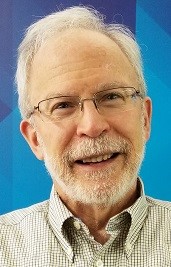
Last month, we introduced Rosaire Ratelle, a long-time ASQ member and one of the fathers of modern quality in Quebec. This month, we spoke to Brenda Fisk, also a long-time ASQ member. She has chosen to be active in the senior ranks of ASQ, not only in Canada but also in the central organization in Milwaukee. Here is what she had to say:


BRENDA FISK

Brenda Fisk

Brenda Fisk

Brenda is a results-driven, project manager, delivering business transformation initiatives across multinational, financial services companies.  She has worked for large financial institutions including CIBC, TD Canada Trust, the Royal Bank and American Express.  She has expertise with full life cycle software project management — project charter development, change request documentation, test plan creation, and reporting.

In addition, she is a collaborative leader with a talent for cultivating high-performance teams, facilitating business and technical training programs, and partnering with executive leadership to drive corporate-wide success.  She is quick to adapt to new technologies and shifting priorities in ever-changing environments.

Complimenting her work résumé is her long-time involvement in ASQ as a Leadership team member in the Toronto Section.  Her many roles included Section Chair and also a number of key roles in American Society for Quality (ASQ), the world leader in quality.

What is the definition of Quality in your industry? 

Quality is meeting customer requirements.  In software, it is important to have a complete set of requirements or in manufacturing terms, specifications.  The requirements for a report, for example, may describe the layout, sheet size, number of fields, point and font in each field and the data that is displayed in the field as well the frequency of printing or issuing the report.

I have observed confusion between Quality Assurance and Quality Control.

The Quality Control element of testing is put forward as an element of Quality Assurance.  I think of the silly Lucille Ball episode at the chocolate coated candy factory.  The Quality Assurance aspect would be the recipe for making the chocolates and include such specifications as how much chocolate, tempered for how long, put into what size molds, etc.  The Quality Control aspect is the inspection process after the chocolates are made.  Does the amount of chocolate on each piece meet the specifications in the recipe?

In software, “quality assurance” is often used to describe the testing processes, not the process of “how to develop the software”.

Quality Assurance should be described in the software world as “the planned and systematic set of all actions and activities needed to provide adequate confidence that the product conforms to its requirements and the organization’s quality management system”.

Quality Control is “the planned and systematic set of all actions and activities needed to monitor and measure software projects, processes and products to ensure that a specific cause has not introduced unwanted variation into those projects, processes or products”. [1]

Often in today’s society, the name used for the “inspection team for software” is Quality Assurance when it should be correctly termed the Quality Control Department, in my viewpoint, based on the definitions above.

How did you get into Quality and how did your profession in Quality evolve over these many years in your industry?

I got into quality by accident.  I was working for Canada Permanent as a procedure analyst and a business analyst.  In that role, I was asked to test the software for some of the projects they were developing.  At the time, I was not aware of the definitions I mentioned above and simply executed the steps in the business process to see if the software worked as expected.  I did document what I found and that was the beginning of my career.

When I moved to CIBC, I was hired as a “quality assurance” person and asked to participate in the test one of the banking systems.  My manager wanted to find out two things: did I know how to test and, were the documented test cases well enough documented that they could be used to automate the testing process.  Within an hour, he had the results.  I knew how to test and the test cases were not well enough defined for a non-banking person to adequately execute the test and not ready to be automated.

Once that was established, my manager asked me to visit other software development projects and ensure they were executing the documented testing process as it had been prescribed.  If projects were not using the process, I then offered them a training course in “how to do software testing” and from there, my career continued to expand.

In the various companies mentioned above, I developed processes for requirement gathering, change control, defect and risk management through the software development life cycle.  It doesn’t matter whether the development process is Agile or Waterfall or anything else; there are processes that should be followed.

Did you always stay in the same industry? 

The largest part of my career has been in the financial industry and while not always in the same company, my roles have always been in software development processes. 

What made you successful in your Quality role?

Tenacity.  As I worked in various organizations, I would come to understand what was lacking in the software development life cycle and work with the project managers to introduce the processes that were missing to make the life cycle more vibrant thus improving the quality for the customers.

How long have you been with ASQ and what kept you as a member for such a long time? 

Since 1986.

My boss at CIBC invited me to an ASQ meeting where I was introduced to the world of “quality”.  I had not thought about it before and realized that I had a lot to learn in many industries to understand how quality was defined and what process was in place to ensure that quality was delivered to the customer.  I attended every ASQ meeting the Toronto Section put on and learned a lot from the many industry leaders who presented their company’s approach to providing quality products.

While the Toronto Section Chair, I invited my Periodontist to present to the group.  After his presentation, many of the engineers in the room came to me to thank me for inviting him and said that they had never realized that other industries used the same engineering terms as they did.  For example, to build a bridge on land requires the engineer to understand the stress that will be put upon it.  In dentistry, building a bridge in someone’s mouth requires much of the same kind of understanding.  Many terms in dentistry are the same as those in engineering.  Amazing!

ASQ afforded me a window into the world outside my own allowing me to see how other industries were dealing with their quality issues, and how I could benefit.

How has ASQ membership helped or played a role in your career advancement and how have you benefited from being a member?

I have benefitted from having opportunities to take on several leadership roles in an international organization such as ASQ.

I was asked to be secretary for the Toronto Section for several years and I then became the treasurer.  It appeared that the accounts had lost $2,000.00. The error was that by using an Excel spreadsheet, rather than an accounting software, the previous treasurer had forgotten to take the retained earnings into the accounting process for the year-end annual statement.  The funds were not lost, just not correctly accounted for in the spreadsheet.  The lesson here is one needs to use the right tools for the job.  I believe this is true in all industries in all situations.

From there I became the Section Chair and I attended a training conference hosted by ASQ Headquarters.  The point of the training was for the Section Chair to learn about the policies and procedures that were standardised for the organization and take them back to train the rest of the Section leadership team.  I set about sharing my learning with the team.

In 1999 I took on the volunteer role as Deputy Regional Director (DRD) for Southwestern Ontario, overseeing the Sections in Windsor, London, Kitchener-Waterloo, Hamilton and Toronto.   Again, the primary role for a DRD was to be a resource to the sections and provide section leadership training where necessary.

In 2003 I became Regional Director for Canada, and responsible as a training resource to the 14 Canadian Sections.  I was also a volunteer leader on the ASQ Board of Directors as one of the 15 Regional Directors.  There were representatives from the 22 Technical Committees so the Board of Directors was a large group of extremely knowledgeable people from very diverse backgrounds.

From this vantage point, I helped ASQ recognize that it was more than just a US based organization and that some things needed to be addressed from each regions’ perspective.  For example, I helped them understand that the annual salary survey needed to address the issue from a “different country” perspective.  While collecting data from quality professionals in the US and Canada, the reporting of that data has to be in the currencies for those countries; not have the Canadian data converted to US currency.  That was a major breakthrough.

Another major breakthrough involved the ASQ Acronym.  If you ask a person what ASQ stands for while in Canada and the explanation becomes “The American Society for Quality,  people ask…where is the “Canadian Society for Quality”?  If Canada were to become that, we would have to develop a whole new society and the leadership teams across Canada did not want to do that at that time.

The benefits of belonging to ASQ made sense and the ASQ brand was well recognized internationally, outside North America.  Canadians still needed a way to feel part of a Canadian group.  Therefore, a name change was recommended that would clarify things.  For example, people understand “Ford Canada”, “IBM Canada” and so on.  The thinking at the time, was why not introduce the idea of “ASQ County 1”, “ASQ Country 2” etc.  While Regional Director for Region 4, I as able to work with ASQ’s Board of Directors to change the name of “ASQ, Region 4” to “ASQ Canada”; another major success.

What would you suggest that could work / serve members better?

The Society is made up of volunteer leadership with a core of headquarters staff to support the leadership teams around the world.  The volunteer leaders make the society as vibrant as we can and when necessary, recommends changes to ASQ policies and procedures to keep everything running smoothly.  It is up to us!  Actively participate and do what needs to be done to keep the society going.

Another one of the things that changed while I was Regional Director, was the year-end for the organization.  It had been July1st to June 30th each year.  However, that meant that the annual financial statements needed to be submitted during a time when many people in North America take summer vacations.  Under this model, it was difficult for Section leadership to have audited financial statements to submit within the 60 days after year-end.  To reduce the number of late submissions, the year-end was moved to a calendar year.  This has proven most successful as there are far fewer late financial report submissions, making the Headquarter Year-End Audit process run smoothly. 

You have worked at very high levels in ASQ organization.  How did you come to work in that organization?

ASQ is a Society; a volunteer leadership organization that has a core of headquarter staff to support the leadership teams throughout the country. The Society has Sections that are geographically based such as the Montreal Section, Toronto, Ottawa, and other Sections in Canada.  The Society also has Technical or Industry specific Communities such as the “Automotive”, “Food Drugs and Cosmetics”, “Statistics”.  There are 22 Technical Communities

A member can belong to a geographic “Section” as well as belonging to as many of the Technical Communities as the person is interested in.  There are volunteer leadership roles for everyone. As a volunteer leader, I simply had the pleasure of working in many roles.

After diligently working in the Toronto Section from 1996 onwards in many executive roles, I became the Deputy Regional Director for Southwestern Ontario, Member of the Section Management Program Committee, and then the Canadian Director in 2002. 

These latter roles automatically added me to the ASQ Board of Directors.  With this exposure, I was able to take on other roles vital to the overall functioning of ASQ.  I became the Section Affairs Council Chair, Financial Reporting Review Process Committee Chair and Software Division (Technical Community) Treasurer.

We have seen a very powerful evolution in ASQ HQ in recent years with a profound impact on what is expected of Sections.  Could you explain briefly the drivers for this evolution?

Several drivers played a role.  ASQ is a legal, not-for-profit entity incorporated in Wisconsin, in 1948.  As such there are regulations that need to be adhered to for legal and taxation laws, in order to remain a Not for Profit Society.  ASQ realized that it was losing oversight of what geographical and technical communities were doing and needed to regain that control.  For example, all the money managed by geographical or technical communities in fact comes under the jurisdiction of ASQ.  Some communities were treating these funds as their own and investing monies to generate revenues. This is clearly outside the Geographic and Technical Community mandates.

ASQ’s external auditors recognized that the Geographical and Technical communities were not following some of the Headquarter policies and procedures to ensure its “Not for Profit Status”.  Therefore, steps and actions were put into place to help the Geographic and Technical communities protect the ASQ’s Not for Profit status.  Some processes seem to be against what the geographic and technical groups would like; however, these steps were introduced to maintain the Not For Profit Status.  They are not intended to punish or prevent the geographic or technical groups from doing what they do best – provide value added to their members by providing education, training, certification, conferences and newsletters addressing quality initiative around the world in all industries.

Competitive pressures have a strong influence also.  Automation of the Certification exams through a 3rd party provider was a response to PMI offering of the same thing.  The benefit to the members is that the results of the certification process are available sooner than having a centrally proctored exam process

Is there likely to be a slow down in this phenomenal rate of evolution? 

The world is changing fast and ASQ has to either keep up or get out of the way.  ASQ is choosing to keep up and is trying hard to be a step ahead of the game.  It is for these reasons the society continues to evolve.  Wouldn’t you want your society to do that?

What would you say to any aspiring Senior ASQ candidate?

Go for it! Put up your hand and participate!

A word of caution though.  If you are considering applying for ASQ fellowship or being a candidate for one of the ASQ medals— document everything.  One of my difficulties was that I didn’t have enough documented evidence to support all the things I’ve done over the years.  I did not retain all the records for sufficient audit evidence to be able to apply for these prestigious awards and recognitions.  However, that didn’t stop me from being a very active and effective volunteer leader.  Don’t worry about any position.  There are lots of policies and procedures to help you fulfil any role to which you may aspire!   Just go for it and have fun.  I did!

[1] Westfall, Linda.  2016. The Certified Software Quality Engineer Handbook, Second Edition. ASQ, Quality Press, Milwaukee, WI, 53203 USA.

If you enjoyed this article, please write to the Membership Chair, and we will share it with the author.

Wisdom from our Wisest | Sagesse de nos plus sages Read More »

Call for Officer Nominations | Appel à candidatures 2022

Sam Weissfellner

Sam WeissfellnerBy Sam Weissfelner, ASQ Senior Member, ASQ CSQE, CQA, Nominating Chair, Arrangements Chair, Program Committee Member (le texte Français suit)

We are planning the 2023 Section Leadership Team (SLT). There are three elected positions on the SLT: Chair, Secretary, and Treasurer.

The election process involves the Nominating Committee submitting a slate of officers and the slate being approved at the General Assembly. To hold a Section Officer position, you must be a Full, Senior or Fellow ASQ Member in good standing affiliated with our Section. Should you wish to submit alternate nominations for Section officer positions, please complete and submit the Nomination Form.

This call for nominations will be repeated in the next edition of our Newsletter in September, and the proposed Leadership Team slate will be published in the October edition of the Newsletter. The new Leadership Team will be approved at our Annual General Assembly to be held on October 26th, 2022. Here is a complete listing of current ASQ Montreal Section positions.

For more information on these positions, login to the ASQ site (you must be a member). If you have any interest in participating on the upcoming Section Leadership Team or have any questions on the roles themselves, please contact the Section Chair. Thank you to all our current members, and welcome to any of our new members.

May you all have a GREAT and COVID-free SAFE summer!


Nous planifions l’Équipe de direction de la section (EDS) de 2023. Il y a trois postes élus au sein de l’EDS: le Président, Secrétaire , et Trésorier.

Le processus d’élection implique que le comité de nomination soumette une liste de dirigeants et que cette liste soit approuvée lors de l’assemblée générale. Pour occuper un poste de dirigeant de section, vous devez être un membre en règle de l’ASQ (Full, Senior ou Fellow) affilié à notre section. Si vous souhaitez proposer d’autres candidatures pour les postes de dirigeants de section, veuillez remplir et soumettre le formulaire de candidature.

Cet appel à candidatures sera répété dans la prochaine édition de notre bulletin d’information en septembre, et la liste des membres de l’équipe de direction proposée sera publiée dans l’édition d’octobre du bulletin. La nouvelle équipe de direction sera approuvée lors de notre Assemblée générale annuelle qui se tiendra le 26 octobre 2022. Voici une liste complète des postes actuels de la section de Montréal de l’ASQ.

Pour plus d’informations sur ces postes, connectez-vous au site de l’ASQ (membres seulement). Si vous êtes intéressé à participer à la prochaine équipe de leadership de la section ou si vous avez des questions sur les rôles eux-mêmes, veuillez contacter le président de la section. Merci à tous nos membres actuels, et bienvenue à tous nos nouveaux membres.

Je vous souhaite à tous un excellent été, sans COVID et en toute sécurité!

Call for Officer Nominations | Appel à candidatures 2022 Read More »

Voice of The Customer | Voix du Client

Tooraj Khalili 2022

Tooraj Khalili 2022By Tooraj Khalili, ASQ member, VOC Chair  (texte en français suit)

Benefit Corporations and B Corp Certification presented by Carolee Rigsbee, PhD. on May 25th, 2022.

You were 22 participants to respond to the survey for “Benefit Corporations and B Corp Certification”, an English webinar presented by Carolee Rigsbee which took place on May 25th, 2022 from 18:30 Eastern time. The overall satisfaction was 95.9% and participants particularly appreciated the exchange with 98.1%. Satisfaction for the subject and the approach was 94.5% while the presenter was 96.4%.

The webinar began with a 30-minute networking period for participants to exchange on various subjects. It is important to underline that this webinar attracted people from Montreal and its surroundings, while the rest of the participants were from Canada (Toronto, Ottawa), the United States, and France. I take this opportunity to tell you that it’s always a pleasure for the whole team to have such a diverse crowd.


Vous étiez 22 participants à répondre à l’enquête pour “Benefit Corporations and B Corp Certification”, un webinaire en anglais présenté par Carolee Rigsbee qui a eu lieu le 25 mai, 2022 à partir de 18h30 heure de l’Est. La satisfaction globale est de 95.9% et les participants ont particulièrement apprécié l’échange avec 98.1%. La satisfaction pour le sujet et l’approche était de 94.5% tandis que la présentatrice était de 96.4%.

Le webinaire a débuté par une période de réseautage de 30 minutes permettant aux participants d’échanger sur divers sujets. Il est important de souligner que ce webinaire a attiré des gens de Montréal et de ses environs, alors que le reste des participants provenaient du Canada (Toronto, Ottawa), des États-Unis et de la France. Je profite de l’occasion pour vous dire que c’est toujours un plaisir pour toute l’équipe d’avoir une foule aussi diversifiée.


Voici quelques prochains événements | Here are some future events:
♦ 15 Juin | June 15: Bilingual e-Networking Workshop | Atelier bilingue e-réseautage:
What do Quality Professionals need/want to learn? | Que doivent/souhaitent apprendre les professionnels de la qualité?
avec|with Raymond E. Dyer. Information | Reservations
♦ 28 Septembre | September 28: Pharmaceutical data integrity and computer systems validation (Intégrité des données pharmaceutiques et validation des systèmes informatiques) with Kia Kahhali (Webinar in English | Webinaire en anglais)

Voice of The Customer | Voix du Client Read More »

Next Event | Prochain Événement

Raymond Dyer

Bilingual e-Networking Workshop | Atelier bilingue e-réseautage

What do Quality Professionals need/want to learn?

Que doivent/souhaitent apprendre les professionnels de la qualité?

June 15th, 2022 | 15 Juin 2022 19:00

Networking Opportunity Starts | Opportunité de réseautage à 18:30

Photo Matheus Bertelli, Pexels

(Photo Matthew Bertelli, Pexels)

The field of Quality is vast. The tools, skills, methods, and models supporting this field range from technical and quantitative to behavioral and qualitative. Each industry and specialization in Quality has its own set of needs. That’s why ASQ has so many different types and levels of certifications. So, what is pertinent, what is needed, and what is wanted in terms of information and training by Quality professionals?

This workshop will solicit the input of attending participants as to what they think Quality professionals most need or want to learn about. To get an idea of events ASQ Montreal Section has had in the past, see our History of Section Events.

Your host: Raymond E. Dyer is an ASQ CMQ/OE, a CQA and is the Montreal Section and Program Chairs. Ray was in Product Development, Product Management, and Purchasing before embarking on his career in Quality. Over the past 30 years, he’s dealt with different industries, different Quality methods, models, and tools, different management system registrations, and different registrars.


Le domaine de la qualité est vaste. Les outils, les compétences, les méthodes et les modèles qui soutiennent ce domaine vont de la technique et du quantitatif au comportemental et au qualitatif. Chaque industrie et chaque spécialisation dans la qualité a ses propres besoins. C'est pourquoi l'ASQ propose tant de types et de niveaux de certifications différents. Alors, qu'est-ce qui est pertinent, qu'est-ce qui est nécessaire et qu'est-ce qui est recherché en termes d'information et de formation par les professionnels de la Qualité?

Cet atelier sollicitera l'avis des participants sur ce que les professionnels de la qualité ont le plus besoin ou veulent apprendre. Pour avoir une idée des événements organisés par la Section de Montréal de l'ASQ au cours des dernières années, voir notre répertoire d'anciens événements.

Votre hôte: Raymond E. Dyer est un ASQ CMQ/OE, un CQA et est le président de la section de Montréal et le responsable de programme. Ray a travaillé dans le développement de produits, la gestion de produits et les achats avant d'entamer sa carrière dans la qualité. Au cours des 30 dernières années, il a eu affaire à différents secteurs, différentes méthodes, modèles et outils de qualité, à différents enregistrements de systèmes de gestion et à différents registraires.

Prix Denis Pronovost Award

Marcel Charbonneau a mené le projet de la Section de Montréal de créer un prix de 500 $ en l'honneur de Denis Pronovost, décédé en juin 2015. Par sa contribution exceptionnelle à l'association, son leadership et son implication, Denis a grandement participé à la promotion de la qualité du français au Québec et était un invité et conférencier fréquent de la section. Marcel remettra le prix à Patrick Barnes, étudiant au Certificat en gestion et assurance de la qualité de l'École de technologie supérieure, un programme multidisciplinaire qui offre une formation ou un perfectionnement en gestion et en assurance de la qualité. Patrick nous présentera un résumé de son projet d'amélioration de la qualité à l'ETS.


Marcel Charbonneau led the Montreal Section project to create a $500 award in honor of Denis Pronovost, who passed away in June 2015. Through his outstanding contribution to the association, his leadership and his involvement, Denis greatly participated in the promotion of quality in French in Quebec and was a frequent guest and speaker at the Section. Marcel will present the award to Patrick Barnes, a student in the Certificat en gestion et assurance de la qualité de l'École de technologie supérieure (Management and Quality Assurance Certificate) of the École de technologie supérieure, a multidisciplinary program that provides training or development in management and quality assurance. Patrick will present a summary of his quality improvement project at the ETS.

Your participation will be worth 0.5 ASQ RU (Recertification Units).
Votre participation vaut 0.5 RU (Recertification Units) de l'ASQ.

For more information on this upcoming event, see our Newsletter, or myASQ.

Next Event | Prochain Événement Read More »

The Editor’s Corner | Mot de l’éditeur

Michael Bournazian

By Michael Bournazian, Eng., Newsletter Editor, ASQ Senior Member, Quality Management Professional, CSSGB

As is customary for me in the June newsletter, I would like to thank you, the reader, for taking the time to read this newsletter. I do hope that the effort that goes into putting it together by myself and others shows, and that you get something positive out of it every time you read it.

I wish you a safe, happy and QUALITY summer season. We will be back in September 2022 with the next newsletter. All the best to you.

EDITOR’S NOTE: Neither the “C” word nor the “P” word were used during the writing of this article.

**********************************************

Any feedback? Click on the link and let me know.

ALSO . . .  Please contact me or any one else on the Leadership team if you would like to:

1) Write and submit an article to be published in the Newsletter.

2) Write a review of one of the upcoming monthly webinars for the “Had You Been There” section.

Thank you, all the best and none of the worst.

The Editor’s Corner | Mot de l’éditeur Read More »

Had You Been There | Si vous étiez présent

JP Amiel

JP Amiel Benefit corporations and B Corp certification

By Jean-Pierre Amiel, ASQ Senior, CQA ret., Secretary, Web committee Chair and Audit Chair. (un texte en français suit)

In this presentation on May 25th, 2022, Dr. Carolee Rigsbee (Assistant Professor at the University of Illinois Springfield) gave us a quick overview of benefit corporations and B Corp certification standards as it evolved over the last decades based on her research on the subject.

Her presentation first described how a “not-for-profit” benefit corporation had a similar structure to a “for-profit” one – a profit-making goal – but that it also makes a material positive impact on society and the environment, to be socially responsible. Over the last few decades though, the latter has also become a bigger trend as the public expects that “all” for-profit corporations also be more socially responsible.

Then she described the evolution of the standards, started in 2010, which define the basis of a benefit corporation and the B certification processes.
She then challenged the participants to discuss, in three breakout rooms: What Corporate Social Responsibility (CSR)/Environmental, Social and Corporate Governance (ESG) changes are affecting your company? What skill-sets do Quality Assurance Professionals bring to the CSR/ESG table? And, finally, How will these trends evolve or need to evolve? Of course, in a true quality professional spirit, here is a summary of those discussions as reported:

  • As for CSR/ESG changes: Certain corporations, like Heinz, have developed packaging reduction programs to bring back and reuse their glass bottles; there is a change for more economic and lower energy and heat lighting with annual energy consumption reduction targets; Report of carbon disclosure projects initiated by customer request; CSR going with RBA model; Montreal building all LED; Reporting rates for carbon emissions and recycling; ISO 14001 & CSR demands increasing; Reducing waste, e.g. water & hazardous waste targets; Mid-90s company tracked and reduced waste many years – cut in half by 5 years (United Technologies) – Goals met – water use & hazardous chemicals + Net zero carbon footprint reduction target; Not so much in medical device, FoxConn was big on CSR, e.g. minerals – work with suppliers; EcoVadis CSR questionnaires on carbon footprint, now requested by customers.
  • As to what skill-sets quality professionals bring to the organization: Many ideas were discussed as to the role of engineering, education and availability.
  • As far as the evolution of the trends and how: Green-washing is an ongoing major concern; Skepticism that third party sustainability/ESG related certifications will be effective; ESG trends depend on the country’s policies (e.g. Australia – recent elections indicated support from public on addressing climate change) and time-frame (could be many decades before KPIs well developed /standardized); a problem since time is of the essence; Lots of push to electrification (e.g. vehicles) but need more renewable power generation.

You definitely missed a good debate on a popular subject – a 100% vote by the participants and 96% on exchange. As far as some of the comments received: Present style and format is very good. Well done! Interesting again! Wonderful evening.

Thank you all for participating!


Dans cette présentation du 25 mai, 2022, Dr. Carolee Rigsbee (professeur adjoint à l’Université de l’Illinois à Springfield) nous a donné un aperçu rapide des sociétés de bienfaisance et des normes de certification B Corp telles qu’elles ont évolué au cours des dernières décennies sur la base de ses recherches sur le sujet.

Elle a d’abord décrit comment une société de bienfaisance “à but non lucratif” avait une structure similaire à une société “à but lucratif” – un objectif de rentabilité – mais qu’elle avait également un impact positif important sur la société et l’environnement, pour être socialement responsable. Cependant, au cours des dernières décennies, cette dernière tendance s’est accentuée, le public s’attendant à ce que “toutes” les sociétés à but lucratif soient également plus responsables socialement.

Elle a ensuite décrit l’évolution des normes, lancées en 2010, qui définissent la base d’une société à but non lucratif et les processus de certification B. Elle a ensuite mis les participants au défi de discuter, dans trois salles de discussion: Quels changements en matière de responsabilité sociale des entreprises (RSE)/de gouvernance environnementale, sociale et d’entreprise (ESG) affectent votre entreprise? Quelles compétences les professionnels de l’assurance qualité apportent-ils à la table RSE/ESG? Et, enfin, Comment ces tendances évolueront-elles ou devront-elles évoluer? Bien entendu, dans un véritable esprit de professionnel de la qualité, voici un résumé de ces discussions tel que rapporté:

  • En ce qui concerne les changements en matière de RSE/ESG: Certaines sociétés, comme Heinz, ont développé des programmes de réduction des emballages pour ramener et réutiliser leurs bouteilles en verre; il y a un changement pour un éclairage plus économique et à faible consommation d’énergie et de chaleur avec des objectifs annuels de réduction de la consommation d’énergie; Rapport des projets de divulgation du carbone initiés à la demande des clients; RSE allant avec le modèle RBA; Bâtiment de Montréal tout LED; Taux de rapport pour les émissions de carbone et le recyclage; ISO 14001 & les demandes de RSE augmentent ; Réduction des déchets, ex. Objectifs de réduction des déchets, par exemple de l’eau et des déchets dangereux; Une entreprise du milieu des années 90 a suivi et réduit ses déchets pendant de nombreuses années – ils ont été réduits de moitié en 5 ans (United Technologies) – Objectifs atteints – utilisation de l’eau et des produits chimiques dangereux + Objectif de réduction de l’empreinte carbone nette zéro; Moins dans le domaine des dispositifs médicaux, FoxConn était très impliqué dans la RSE, par exemple en ce qui concerne les minéraux – travail avec les fournisseurs; Questionnaires RSE EcoVadis sur l’empreinte carbone, maintenant demandés par les clients.
  • Pour ce qui est de l’ensemble de compétences qu’apportent les professionnels de qualité à l’organisation: De nombreuses idées ont été discutées quant au rôle de l’ingénierie, de l’éducation et de la disponibilité.
  • Quant à l’évolution des tendances et comment: L’écoblanchiment est une préoccupation majeure permanente; le scepticisme quant à l’efficacité des certifications tierces en matière de durabilité/ESG; les tendances ESG dépendent des politiques nationales (par exemple, en Australie – les récentes élections ont montré que le public était favorable à la lutte contre le changement climatique) et du calendrier (il pourrait s’écouler plusieurs décennies avant que les indicateurs clés de performance soient bien développés/normalisés); un problème puisque le temps est essentiel; l’électrification est fortement encouragée (par exemple, pour les véhicules) mais il faut davantage de production d’énergie renouvelable.

Vous avez définitivement manqué un bon débat sur un sujet populaire – un vote de 100% par les participants et 96% sur l’échange. En ce qui concerne certains des commentaires reçus: Present style and format is very good. Bien fait! Intéressant encore une fois! Super soirée.

Merci à tous pour votre participation!


Our next webinar | Notre prochain webinaire:
What do Quality Professionals need/want to learn? | Que doivent/souhaitent apprendre les professionnels de la qualité?  (Bilingual e-Networking Workshop | Atelier bilingue e-réseautage) 2022.06.15, 18h30 with Your host | Avec votre hôte Ray Dyer. Réservations| Informations

Bonne vacances ! !    |    Have a great summer!!

Had You Been There | Si vous étiez présent Read More »

Wisdom from our Wisest — Rosaire Ratelle

Wisdom from our Wisest — Rosaire Ratelle

Eric Hosking & Samira KazemiBy Eric Hosking, Section Treasurer, Membership Chair, ASQ CQE, CSSBB, CQA and Samira Kazemi, Program Committee Member

Texte en français ICI

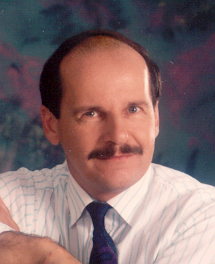
Last month in this column we featured Ruth Stanley, ASQ Canada’s former Regional Director. This month we are featuring one of our very longest serving members Rosaire Ratelle, B. Eng., ASQ CQE. April 1st saw Rosaire celebrate 46 years with the ASQ. Like Marcel Charbonneau featured two months ago, Rosaire was instrumental in the development and evolution of the Quality institutions in Quebec.

Rosaire has worked and consulted in various industries and companies. He had the opportunity to watch, act and share his thoughts on the evolution of various quality techniques at work and in various articles he authored. He was also a player in the Quebec quality movement.

You can read his story here.


If you enjoyed this article, send your comments to the Membership Chair.We will share them.

(2022-05-20)


Wisdom from our Wisest — Rosaire Ratelle Read More »

Student Outreach: AI innovations revolutionizing future of healthcare!

Student Outreach: AI innovations revolutionizing future of healthcare!

Farnoosh NaderkhaniBy Dr. Farnoosh Naderkhani, ASQ Member, Assistant Professor @ Concordia, Student Outreach Committee Chair

Artificial Intelligence (AI) innovations can change patients’ lives by improving diagnosis/treatment methods and assisting clinicians in making informed decisions. In this presentation, we introduced the general applications of AI in healthcare. More specifically, how AI models can assist radiologists in analyzing medical images for a more accurate and faster diagnosis/prognosis of diseases. Nastaran Enshaei was invited to speak about her work with AI at the ASQ Montreal Student Outreach series this May 19th, 2022.
Nastaran Enshaei

About the speaker: Nastaran Enshaei is a PhD candidate at Concordia Institute for Information System Engineering (CIISE). She holds a Master degree in Quality System Engineering from Concordia University and has been actively involved in performing research in the healthcare domain. In particular, she is working on deep learning-based solutions for analyzing medical images. Nastaran’s research contributions have been published in International Journals and Conferences of high caliber in engineering and healthcare venues including but not limited to Signal Processing magazine and Nature Scientific Reports.

(2022-05-20)


Student Outreach: AI innovations revolutionizing future of healthcare! Read More »

Wisdom from our Wisest | Sagesse de nos plus sages
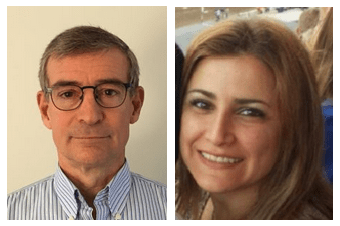

Eric Hosking & Samira Kazemi

Eric Hosking & Samira KazemiBy Eric Hosking, Section Treasurer, Membership Chair, ASQ CQE, CSSBB and CQA and Samira Kazemi, Program Committee Member

CLIQUEZ ICI POUR LIRE L’ARTICLE EN FRANCAIS

Last month in this column we featured Ruth Stanley, ASQ Canada’s former Regional Director. This month we are featuring one of our very longest serving members, Rosaire Ratelle. April 1st saw Rosaire celebrate 46 years with the ASQ. Like Marcel Charbonneau featured two months ago, Rosiare was instrumental in the development and evolution of the Quality institutions in Quebec.  This is his story:


ROSAIRE RATELLE

Rosaire Ratelle, B. Eng., ASQ CQE

Wisdom from our Wisest | Sagesse de nos plus sages Read More »
Voice of The Customer | Voix du Client

Tooraj Khalili 2022

Tooraj Khalili 2022By Tooraj Khalili, ASQ member  (texte en français suit)

Pecha Kucha Night | Nuit on 27 April, 2022. Three subjects:

1. A Pecha Kucha on the History of Quality by Craig Plain;
2. Computer Security: How to Find your Way Around by Chantale Farley and Paul Beaudoin;
3. Using Difference for Continual Improvement by Ruth Stanley.

You were 33 participants to respond to the survey during our “Pecha Kucha” bilingual webinar hosted by Michael Bournazian. The webinar event took place on April 27th, 2022 from 18:30 to 21:00 Eastern time, and had an overall satisfaction rate of 94%. Participants particularly appreciated the exchange with 96% satisfaction. As for the subject, the approach and the speaker, the satisfaction rate was 95% and 95% each.

The webinar began with an approximately 30-minute networking period. Then there was an interesting discussion on the role of Pecha Kucha as a sharing tool. It is too short to give a lot of details on a subject but just right to focus/share or like a “teaser” to learn more on a particular subject.

Basically, it was fun, one of the major take-aways, along with the subjects and discussions:

  • Craig lost a tooth crown just before the event and was, well, in pain. But he managed to keep up with his slides on the evolution of quality in North America.
  • Chantale ran out of breath as she tried to share with us the large variety of standards on her subject.
  • Ruth turned on the subtitle feature in PowerPoint. In English it did okay but, when she spoke in French (basically translating what she had said), the subtitle feature started inventing all types of weird words and phrases. This became very distracting and funny.

Also, it is important to underline that this bilingual webinar attracted people from Montreal and its surroundings, while the rest of the participants were from other Canadian regions (Ottawa and Toronto), the United States, and France. I take this opportunity to tell you that it’s always a pleasure for the whole team to have such a diverse crowd.

A large majority of you would attend another event, which is why we invite you to our next bilingual event on Benefit Corporations and B Corp Certification, with Carolee Rigsbee on 25 May, 2022 at 19:00 with a Networking Opportunity starting at 18:30. Information | Reservations.


Trois sujets pour notre Nuit de Pecha Kucha Night ce 27 avril, 2022:

1. Un Pecha Kucha sur l’histoire de la qualité par Craig Plain;
2. Sécurité informatique: comment s’y retrouver avec Chantale Farley et Paul Beaudoin ;
3. Utiliser la différence pour l’amélioration continue avec Ruth Stanley.

Vous étiez 33 participants à répondre à l’enquête lors de notre webinaire bilingue “Pecha Kucha” animé par Michael Bournazian. L’événement webinaire qui a eu lieu le 27 avril, 2022 de 18h30 à 21h00 heure de l’Est, et a eu un taux de satisfaction global de 94%. Les participants ont particulièrement apprécié l’échange avec 96% de satisfaction. Quant au sujet, à l’approche et à l’intervenant, le taux de satisfaction était de 95% et 95% chacun.

Le webinaire a débuté par une période de réseautage d’environ 30 minutes. Ensuite, une discussion intéressante a eu lieu sur le rôle du Pecha Kucha comme outil de partage. C’est trop court pour donner beaucoup de détails sur un sujet mais juste ce qu’il faut pour se concentrer/partager ou comme un “teaser” pour en apprendre plus sur un sujet particulier.

En fait, c’était amusant, et c’est l’une des principales choses à retenir, tout comme les sujets et les discussions:

  • Craig a perdu une couronne dentaire juste avant l’événement et a souffert. Mais il a réussi à suivre ses diapositives sur l’évolution de la qualité en Amérique du Nord.
  • Chantale s’est essoufflée en essayant de nous faire partager la grande variété de normes sur son sujet.
  • Ruth a activé la fonction de sous-titres dans PowerPoint. En anglais, cela fonctionnait bien, mais lorsqu’elle a parlé en français (traduisant essentiellement ce qu’elle avait dit), la fonction de sous-titre a commencé à inventer toutes sortes de mots et de phrases bizarres. C’est devenu très distrayant et amusant.

Il est également important de souligner que ce webinaire bilingue a attiré des personnes de Montréal et de ses environs, tandis que le reste des participants provenaient d’autres régions canadiennes (Ottawa et Toronto), des États-Unis et de France. Je profite de l’occasion pour vous dire que c’est toujours un plaisir pour toute l’équipe d’avoir une foule aussi diversifiée.

Une grande majorité voudrait participer à un autre webinaire et c’est pour cela que nous vous invitons à notre prochain événement sur Benefit Corporations and B Corp Certification (Les sociétés de bienfaisance et la certification B Corp), avec Carolee Rigsbee le 25 Mai, 2022 at 19:00. Une opportunité de réseautage débute a 18:30. Information | Reservations.


Voici quelques prochains événements | Here are some future events:
♦ 15 Juin | June 15: Bilingual e-Networking Workshop | Atelier bilingue e-réseautage:
What do Quality Professionals need/want to learn? | Que doivent/souhaitent apprendre les professionnels de la qualité?
avec|with Raymond E. Dyer. Information | Reservations
♦ 28 Septembre | September 28: Pharmaceutical data integrity and computer systems validation (Intégrité des données pharmaceutiques et validation des systèmes informatiques) with Kia Kahhali (Webinar in English | Webinaire en anglais)

Voice of The Customer | Voix du Client Read More »

ASQ Certifications Accredited | Accréditation des certifications

JP Amiel

By Jean-Pierre Amiel, ASQ Senior, CQA ret., Secretary, Web committee Chair and Audit Chair.

On April 14, 2022, ASQ announced that five of ASQ’s certification programs achieved ISO 17024 Personnel Certification Documentation Consultancy accreditation through the ANSI National Accreditation Board (ANAB). ANAB is the largest multi-disciplinary accreditation body in the western hemisphere, with more than 2,500 organizations accredited in approximately 80 countries.

By earning ISO 17024 accreditation for Personnel Certification, ASQ demonstrates to the Quality profession it represents and the general public it serves, that its credentialing programs have been reviewed by a panel of impartial experts who have determined that our CQA, CQE, CSSBB, CMQ/OE & CRE programs have met the stringent standards set by the credentialing community.

ISO 17024 accreditation adds additional credibility and value to your ASQ Certification.​​​ “Accreditation is not just an award – it’s critical to ensuring that there is an effective quality management system that affords greater process control, reduces risk, and ultimately results in increased customer satisfaction and sustainability of our products and services..” said ASQE CEO, Jim Templin.

More details…


Ce 14 avril 2022, ASQ a annoncé que cinq de ses programmes de certification ont obtenu l’accréditation ISO 17024 Conseil en documentation de certification du personnel par le biais du ANSI National Accreditation Board (ANAB). L’ANAB est le plus grand organisme d’accréditation multidisciplinaire de l’hémisphère occidental, avec plus de 2 500 organisations accréditées dans environ 80 pays.

En obtenant l’accréditation ISO 17024 pour la certification du personnel, ASQ démontre à la profession de la qualité qu’elle représente et au grand public qu’elle sert, que ses programmes d’accréditation ont été examinés par un groupe d’experts impartiaux qui ont déterminé que nos programmes CQA, CQE, CSSBB, CMQ/OE et CRE ont satisfait aux normes rigoureuses établies par la communauté d’accréditation.

L’accréditation ISO 17024 ajoute de la crédibilité et de la valeur à votre certification ASQ.L’accréditation n’est pas seulement une récompense – elle est essentielle pour garantir l’existence d’un système de gestion de la qualité efficace qui permet un meilleur contrôle des processus, réduit les risques et, en fin de compte, augmente la satisfaction des clients et la durabilité de nos produits et services…“, a déclaré Jim Templin, PDG d’ASQE.

Plus de détails…

ASQ Certifications Accredited | Accréditation des certifications Read More »

The Editor’s Corner | Mot de l’éditeur

Michael Bournazian

By Michael Bournazian, Eng., Newsletter Editor, ASQ Senior Member, Quality Management Professional, CSSGB

How things change.

If you had asked me in April 2020 if it would be possible to have an evening of Pecha Kucha presentations done virtually, I would have said “Nah, it won’t work, and it certainly would not be the same as having it in person.

In fact, I did say that at some point in 2020, when as a Section Leadership Team, we discussed what events would work in the new virtual reality (pun intended . . . I think).

Well, fast forward two years, and as of April 27, 2022, I can happily say that my statement was only 50% correct.

Our Pecha Kucha Night held on April 27th was definitely not the same as having it in person; and I do hope that we can soon start having face-to-face events again.

That said, the event did work! Three different speakers presenting three Pecha Kucha presentations with three separate Q&A sessions . . . it worked! After months and months of work within our Team to get the concept and practice of webinars just right, it was finally decided to give the Pecha Kucha Night a try. And although there were a few minor hiccups, I walked away from the evening (and over to my sofa to some television before going to bed ;-)) with a feeling of satisfaction and gratitude . . . gratitude to the speakers, the attendees and men and women of our Section Leadership Team who work “behind the scenes” to put it all together and then to pull it off.

Thank you to everyone involved. (Hopefully) see you in person next time.

EDITOR’S NOTE: Neither the “C” word nor the “P” word were used during the writing of this article.

**********************************************

Any feedback? Click on the link and let me know.

ALSO . . .  Please contact me or any one else on the Leadership team if you would like to:

1) Write and submit an article to be published in the Newsletter.

2) Write a review of one of the upcoming monthly webinars for the “Had You Been There” section.

Thank you, all the best and none of the worst.

The Editor’s Corner | Mot de l’éditeur Read More »

Word from the Chair | Mot du président

Raymond Dyer

Raymond DyerBy Raymond E. Dyer (Ray), ASQ Senior Member, CMQ/OE, & CQA (un texte en français suit)

I’m writing briefly about three topics this month:

    1. The “New normal” for Quality professionals;
    2. Topics of interest for the Quality professional;
    3. Call for volunteer ASQ section leaders.

1. Wikipedia defines a “New normal” as a state to which an economy, society, etc. settles following a crisis, when this differs from the situation that prevailed prior to the start of the crisis. This expression most recently has been used to reflect on how things have changed in the past two years due to the COVID-19 pandemic. However, the Quality profession has undergone significant and somewhat directional change (as have other professions) for quite some time due to several other factors including technology, aging workforce, economic, environmental, social, and political factors. Many of these changes are becoming increasingly resistant to returning to what they were before (just think about the “Great Resignation”) and Quality professionals will need to understand and develop the agility to cope with this “New normal”. As we’ve been saying for years, change is the only constant in life. More to come in future articles.

2. On June 15th, I’ll be moderating a networking workshop on topics for Quality professionals. I’m really looking forward to the suggestions and ideas we’ll be generating together. Two web pages that our webmaster J.P. Amiel has cleverly put together are: https://asqmontreal.qc.ca/past-events-2007-20xx and, if you really want to go back in time, https://asqmontreal.qc.ca/past-events-1957-2006. These sites will allow you to search on key words and see events our section has put on in the past. I typed in my family name and saw how many times I was involved in our section events. Really cool information and a useful resource of past ideas. (Thanks J.P.!)

3. We’re always on the lookout for new ASQ Montreal Section Leadership Team (SLT) candidates. There are several areas new leaders can get involved in, e.g. generating myASQ postings and newsletter articles, supporting various committees like the Program Committee and the Student Outreach Committee, etc. Once you get more familiar with how the SLT runs, even more interesting development opportunities lay ahead, e.g. Secretary, Treasurer, Vice-Chair, and Section Chair. If you’re interested in exploring this, please reach out to me (e.g. via LinkedIn at https://www.linkedin.com/in/redyer) or another senior leader of the ASQ Montreal SLT. Thanks!


J’écris brièvement sur trois sujets ce mois-ci:

  1. La “nouvelle normalité” pour les professionnels de la qualité;
  2. Les sujets d’intérêt pour le professionnel de la qualité;
  3. Un appel pour des bénévoles dans l’équipe de leadership de section de l’ASQ.

1. Wikipedia définit la “nouvelle normalité” comme l’état dans lequel une économie, une société, etc. s’installe après une crise, lorsque cet état diffère de la situation qui prévalait avant le début de la crise. Cette expression a été utilisée tout récemment pour réfléchir à la façon dont les choses ont changé au cours des deux dernières années en raison de la pandémie du COVID-19. Cependant, la profession de la qualité a subi des changements significatifs et quelque peu directionnels (comme d’autres professions) depuis un certain temps en raison de plusieurs autres facteurs, notamment la technologie, le vieillissement de la main-d’œuvre, les facteurs économiques, environnementaux, sociaux et politiques. Bon nombre de ces changements résistent de plus en plus à un retour à la situation antérieure (il suffit de penser à la “grande démission”) et les professionnels de la qualité devront comprendre et développer l’agilité nécessaire pour faire face à cette “nouvelle normalité”. Comme nous le répétons depuis des années, le changement est la seule constante de la vie. Nous vous en dirons plus dans nos prochains articles.

2. Le 15 juin, j’animerai un atelier de réseautage sur des thèmes destinés aux professionnels de la qualité. Je me réjouis vraiment des suggestions et des idées que nous allons générer ensemble. Deux pages web que notre webmaster JP Amiel a intelligemment mises en place sont: https://asqmontreal.qc.ca/fr/repertoire-devenements-fr-2007-20xx et, si vous voulez vraiment remonter le temps, https://asqmontreal.qc.ca/fr/repertoire-devenements-fr-1957-2006. Ces sites vous permettront de faire des recherches sur des mots-clés et de voir les événements que notre section a organisés dans le passé. J’ai tapé mon nom de famille et j’ai vu combien de fois j’ai participé à des événements de notre section. C’est une information vraiment cool et une ressource utile d’idées passées. (Merci J.P.!),

3. Nous sommes toujours à la recherche de nouveaux candidats pour l’équipe de leadership de section (ELS) de l’ASQ Montréal. Il y a plusieurs domaines dans lesquels les nouveaux leaders peuvent s’impliquer, par exemple en générant des affichages myASQ et des articles de bulletin, en soutenant divers comités comme le comité du programme et le comité de sensibilisation des étudiants, etc. Une fois que vous vous serez familiarisé avec le fonctionnement de l’ELS, des possibilités de développement encore plus intéressantes s’offriront à vous, par exemple en tant que secrétaire, trésorier, vice-président et président de section. Si vous êtes intéressé à explorer ces possibilités, n’hésitez pas à me contacter (par exemple via LinkedIn à https://www.linkedin.com/in/redyer) ou un autre dirigeant de l’ELS de l’ASQ Montréal. Merci!

Send me your comments / Envoyez-moi vos commentaires

Word from the Chair | Mot du président Read More »

Next Event | Prochain Événement

May 25th, 2022 | 25 Mai 2022 19:00

Networking opportunity | Opportunité de réseautage 18:30

Benefit corporations and
B Corp certification
(Les sociétés de bienfaisance et la certification B Corp)

English Webinar | Webinaire en anglais (Bilingual Q&A Bilingue)

B Corp Certification

Photo Bri Schneiter — Pexels

Some companies are building socially and environmentally responsible practices into their DNA by becoming a benefit corporation and/or B Corp certified. However, what this means is often misunderstood. This session aims to help clarify what being a "B Corp" is about while framing discussion in the context of the larger trend towards environmental, social, and governance reporting and auditing.

About our Presenter: Dr. Carolee Rigsbee, PhD is an Assistant Professor at the University of Illinois Springfield and a senior member of the ASQ. Carolee specializes in strategic management and draws on extensive industry and quality assurance leadership experience (nuclear, aerospace & defense, food manufacturing, and other industries) in her research, teaching, and service. These experiences and her deep interest in corporate social responsibility, collectively inform her academic work which is focused on novel organization designs that hold the potential to strengthen stakeholder voice and reduce obstacles to economic, social, and environmental goal achievement (e.g., benefit corporations, using blockchain as an enabling technology in value chain management and governance).

Join-us !


Certaines entreprises intègrent des pratiques socialement et écologiquement responsables dans leur ADN en devenant une société de bienfaisance et/ou en obtenant la certification "B Corp". Cependant, ce que cela signifie est souvent mal compris. Cette présentation vise à clarifier ce que signifie être une "B Corp" tout en encadrant la discussion dans le contexte de la tendance plus large des audits environnementaux, sociaux et de gouvernance.

Au sujet du conférencier: Dr. Carolee Rigsbee, PhD est professeur adjointe à l'Université de l'Illinois Springfield et membre senior de l'ASQ. Elle est spécialisée dans la gestion stratégique et s'appuie sur une vaste expérience de l'industrie et du leadership en matière d'assurance qualité (nucléaire, aérospatiale et défense, fabrication de produits alimentaires et autres industries) dans ses recherches, son enseignement et ses services. Ces expériences, ainsi que son profond intérêt pour la responsabilité sociale des entreprises, alimentent collectivement son travail académique qui se concentre sur les nouvelles conceptions d'organisation qui ont le potentiel de renforcer la voix des parties prenantes et de réduire les obstacles à la réalisation des objectifs économiques, sociaux et environnementaux (ex. les sociétés de bienfaisance, l'utilisation du ‘blockchain’ comme technologie habilitante dans la gestion de la chaîne de valeur et la gouvernance).

Rejoignez-nous!

Your participation will be worth 0.5 ASQ RU (Recertification Units).
Votre participation vaut 0.5 RU (Recertification Units) de l'ASQ.

For more information on this upcoming event, see our Newsletter, or myASQ.

Next Event | Prochain Événement Read More »

World Conference on Quality & Improvement (May 15-18, 2022)

Michael Bournazian

By Michael Bournazian, Eng., Newsletter Editor, ASQ Senior Member, Quality Management Professional, CSSGB

Just a reminder that the ASQ WCQI for 2022 is coming up this month! The event will be taking place this year in Anaheim, California from May 15-18, 2022, although it is being billed as a “Hybrid” event.

CLICK HERE to get more information and register.

World Conference on Quality & Improvement (May 15-18, 2022) Read More »

Student Outreach | Sensibilisation étudiante

Farnoosh Naderkhani

Farnoosh NaderkhaniBy Jean-Pierre Amiel (Web Committee Chair) for Dr. Farnoosh Naderkhani, ASQ Member, Assistant Professor @ Concordia, Student Outreach Committee Chair


Our next webinar in our series of presentations at Concordia University | Notre prochain webinaire de notre série de présentations à l’Université Concordia

AI Innovations are Revolutionizing the Future of Healthcare!
(Les innovations de l’IA révolutionnent l’avenir des soins de santé !)
May 19, 2022   17:00-18:00 PM

Artificial Intelligence (AI) innovations can change patients’ lives by improving diagnosis/treatment methods and assisting clinicians in making informed decisions. In this presentation, we introduce the general applications of AI in healthcare. More specifically, we discuss how AI models can assist radiologists in analyzing medical images for a more accurate and faster diagnosis/prognosis of diseases.

Nastaran EnshaeiAbout the speaker: Nastaran Enshaei is a PhD candidate at Concordia Institute for Information System Engineering (CIISE) and has a Masters’ degree in Quality System Engineering from Concordia University. She has been actively involved in performing research in healthcare domain. In particular, she is working on deep learning-based solutions for analyzing medical images. Nastaran’s research contributions have been published in International Journals and Conferences of high caliber in engineering and healthcare venues including but not limited to Signal Processing magazine and Nature Scientific Reports.


Les innovations de l’Inteligence Artificielle (IA) peuvent changer la vie des patients en améliorant les méthodes de diagnostic/traitement et en aidant les cliniciens à prendre des décisions éclairées. Dans cette présentation, nous introduisons les applications générales de l’IA dans les soins de santé. Plus spécifiquement, nous discutons de la façon dont les modèles d’IA peuvent aider les radiologues à analyser les images médicales pour un diagnostic/pronostic plus précis et plus rapide des maladies.

La conférencière: Nastaran Enshaei est candidate au doctorat à l’Institut Concordia d’ingénierie des systèmes d’information (CIISE) et est titulaire d’une maîtrise en ingénierie des systèmes de qualité de l’Université Concordia. Elle a participé activement à des recherches dans le domaine des soins de santé. En particulier, elle travaille sur des solutions basées sur l’apprentissage profond pour l’analyse d’images médicales. Ses travaux de recherche ont été publiés dans des revues et des conférences internationales de haut niveau dans les domaines de l’ingénierie et des soins de santé, y compris, mais sans s’y limiter, dans le magazine Signal Processing et dans Nature Scientific Reports.

Information | Reservations

If you are part of an educational institution and would like to have more visibility on quality-related topics, please contact us. We have a network of potential speakers that may be of interest to you. Contact Raymond Dyer on LinkedIn .

Si vous faites partie d’un établissement d’enseignement et que vous souhaitez avoir plus de visibilité sur les sujets liés à la qualité, veuillez nous contacter. Nous disposons d’un réseau de conférenciers potentiels qui pourraient vous intéresser. Contactez Raymond Dyer sur LinkedIn.

Student Outreach | Sensibilisation étudiante Read More »

N’oubliez Pas De Vous Recertifier | Recertification Is Right Around The Corner

JP Amiel

By Jean-Pierre Amiel, ASQ Senior, CQA ret., Secretary, Web committee Chair and Audit Chair.

Il est temps de collecter et de documenter vos
unités de recertification pour atteindre les 18 RUs requises afin d’éviter de repasser un examen de certification!

N’oubliez pas que vous disposez d’un “délai de grâce” de 6 mois à compter de votre date de recertification pour vous recertifier par journal. Après cette période, vous ne pourrez plus vous recertifier que par examen.

Si vous détenez plusieurs certifications ASQ, vous pouvez les synchroniser et les renouveler en une seule fois en soumettant un seul journal de recertification au lieu de renouveler séparément différentes certifications avec des dates de recertification différentes. Si vous êtes employé à plein temps et membre de l’ASQ, vous avez déjà atteint 68 % de votre objectif!

Alors n’attendez pas, commencez à faire le point dès aujourd’hui!
Visitez la page RECERTIFICATION de l’ASQ dès maintenant.

(Note : Le site de l’ASQ est seulement en anglais)


Rédiger son Journal en ligne ASQ Recerticiation How to use the Online Journal


It’s time to start collecting and documenting your
recertification units to hit the required 18 RUs in order to avoid retaking a certification exam!

Remember, you have a 6-month “grace period” from your recertification date to recertify by journal. After this period, you can only recertify by exam.

If you hold multiple ASQ certifications, they can be synchronized and renewed at once by submitting a single recertification journal instead of separately renewing different certifications with different recertification dates. If you are fully employed and an ASQ member – you’re already 68% of the way there!

So don’t wait, start keeping track today!
Visit the ASQ RECERTIFICATION page now.

N’oubliez Pas De Vous Recertifier | Recertification Is Right Around The Corner Read More »

Scroll to Top