ASQ Certification Study Group

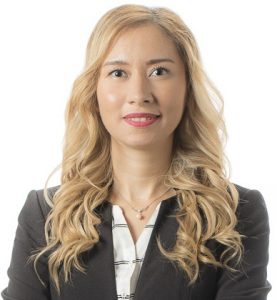
Dr David TozerBy Dr. David Tozer, Ph.D., ASQ CQE and SSBB, Education & Audit Chair.

Would you like to work with others to prepare for ASQ examinations? We have a Teams based section study group that is open every Tuesday evening from 7:00 pm to 8:30 pm, starting January 17, 2023.

Join the team and get to help each other. Contact the host Dr. David Tozer, Montreal Section Education Chair, to obtain a link.


Aimeriez-vous travailler avec d’autres personnes pour préparer les examens de l’ASQ ? Nous avons un groupe d’étude Teams ouvert tous les mardis soirs de 19 h à 20 h 30, à partir du 17 janvier 2023.

Rejoignez l’équipe et aidez-vous mutuellement. Contactez l’hôte, Dr. David Tozer, président de l’éducation de la section de Montréal, pour obtenir un lien.

ASQ Certification Study Group Read More »

Had You Connected to the Last Event | Si vous étiez connecté

Michelle Paquin

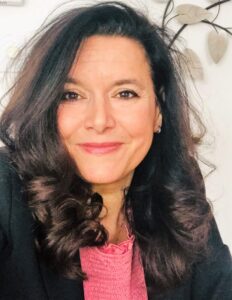
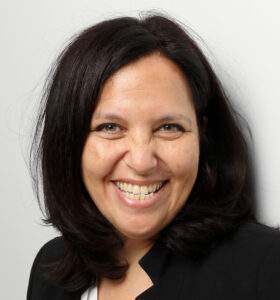
Michelle PaquinLe Toyota Kata: Un outil pour vous apprendre à pêcher!
(Toyota Kata: A tool to teach you how to fish!)

Par Michelle Paquin, MBA, M Sc. IT, and Digital Event Strategist (DES) Lecturer.   (English text follows)

“Si tu donnes un poisson à un homme, il se nourrit une fois. Si tu lui apprends à pêcher, il se nourrira toute sa vie . . .  enseigner le Toyota Kata, c’est comme apprendre à pêcher”

Voici un sommaire de la présentation Voyage au cœur du Kata et de la pensée scientifique (Journey to the heart of Kata and scientific thinking) par Sylvain Landry, le 22 février 2023.

Depuis plusieurs années, on parle d’organisation apprenante, comment les technologies révolutionnent les entreprises, cependant, notre cerveau est-il réellement adapté à la vie du 21ième siècle? Cette question a été soulevée par M. Landry lors de sa présentation sur le Toyota Kata et la pensée scientifique. En utilisant le raisonnement par l’absurde, notre conférencier débute en soulignant plusieurs erreurs qui ont fait les manchettes: en passant par l’intervention SWAT à la mauvaise adresse, une fausse victoire de “La La Land” aux Oscars, jusqu’à un demi-tour d’un vol Los Angeles–Tokyo puisqu’un passager s’était trompé d’avion. Ces exemples soulèvent la question de savoir si nous apprenons réellement de nos erreurs.

Depuis les années 80 et 90, plusieurs se sont penchés sur les raisons du succès de Toyota. Bien que l’entreprise soit souvent associée à la méthode Lean Manufacturing et à sa boîte à outil, il est intéressant de se demander pourquoi nous n’arrivons pas à atteindre cette efficience organisationnelle.

Mike Rother a étudié la logique sous-jacente afin d’arriver à reproduire ce modèle tant analysé: “Le dénominateur commun de leur enseignement était l’apprentissage de l’amélioration continue des processus réels, jour après jour, avec un retour d’information sur les processus de la part du coach/manager”.

Tel que présenté par Sylvain Landry, le Toyota Kata est basé sur deux concepts principaux: soit le modèle de pensé scientifique, exprimé sous la forme bien connue du “Plan-Do-Check-Act”, et la pratique délibérée. Chaque améliorateurs (appelé apprenant dans le contexte) peut développer une pensée scientifique grâce une routine et apporter des améliorations continues par l’expérimentation afin d’avancer vers une condition cible. La condition cible est établie à très court terme afin d’arriver vers la vision de l’organisation (ou le défi) qui lui est à plus long terme. Cette méthode itérative repose sur des questions prédéfinies posées par un coach (souvent supervisé par un second coach), ce qui permet à l’apprenant de raisonner un problème plutôt que de sauter aux conclusions. C’est d’ailleurs un élément très intéressant qui est présenté, soit le lien entre le Kata et la neuroscience. Notre cerveau est conçu pour prendre des décisions qui sont basées sur des expériences, des habitudes et même des peurs: “dans 43% des cas, nos actions sont réalisées sans réflexion consciente”. Le Kata nous apprend à désapprendre. Tel un musicien qui pratique ses gammes, en répétant la démarche scientifique, les organisations peuvent devenir des organisations apprenantes.

Kata Pensée scientifique 20230222, Benoit Leclair https://benoitleclair.com/fr/

Sylvain a présenté des exemples concrets de l’application de cette méthode dans les organisations telles que l’hôpital NEA Baptist, IBM et SigmaPoint Technologies. Cela permet de démystifier, bien que cette technique ait été initialement analysée chez Toyota, celle-ci peut être appliquée dans tous les domaines. La seule aberration pourrions-nous penser du Kata, est qu’elle n’est pas appliquée de manière explicite chez Toyota. Pour eux, cette façon de réfléchir fait partie intégrante de leur ADN: “les poissons ne savent pas qu’ils vivent dans l’eau”.

Un autre buzzword certains penserons; au contraire le Kata devrait être à la base de toutes vos histoires de pêche!

Merci encore à Sylvain Landry, sommité dans le domaine, mais surtout conférencier hors pair, qui a su nous transmettre sa passion pour le Toyota Kata et la pensée scientifique.


Here is a summary of the presentation Voyage au cœur du Kata et de la pensée scientifique (Journey to the Heart of Kata and Scientific Thinking) by Sylvain Landry, on 22 February 2023.

For several years now, we have been talking about the learning organization, how technologies are revolutionizing businesses, but is our brain really adapted to life in the 21st century? This question was raised by Mr. Landry during his presentation on the Toyota Kata and Scientific Thinking. Using reasoning by the absurd, our speaker began by pointing out several mistakes that have made headlines: from a SWAT intervention at the wrong address, the false victory of “La La Land” at the Oscars, to a Los Angeles-Tokyo flight U-turn because a passenger had taken the wrong plane. These examples raise the question of whether we really learn from our mistakes.

Since the 1980s and 1990s, many people have looked at the reasons for Toyota’s success. Although the company is often associated with Lean Manufacturing and its toolbox, it is interesting to ask why we cannot achieve this organizational efficiency.

Mike Rother has studied the logic behind how to replicate this much-analyzed model: “The common denominator of their teaching was learning to continuously improve the actual processes, day by day, with feedback on the processes from the coach/manager”.

As presented by Sylvain Landry, the Toyota Kata is based on two main concepts: the scientific thinking model, expressed in the well-known form of “Plan-Do-Check-Act”, and deliberate practice. Each improver (called a learner in the context) can develop scientific thinking through a routine and make continuous improvements through experimentation in order to move towards a target condition. The target condition is established in the very short term in order to arrive at the organization’s longer term vision (or challenge). This iterative method relies on pre-defined questions asked by a coach (often supervised by a second coach), which allows the learner to reason through a problem rather than jump to conclusions. This is a very interesting element that is presented, namely the link between Kata and neuroscience. Our brains are designed to make decisions based on experiences, habits and even fears: “43% of the time, our actions are carried out without conscious thought“. Kata teaches us to unlearn. Like a musician practicing his scales, by repeating the scientific approach, organizations can become learning organizations.

Sylvain presented concrete examples of the application of this method in organizations such as NEA Baptist Hospital, IBM and SigmaPoint Technologies. This helps to demystify that although this technique was initially analyzed at Toyota, it can be applied in all areas. The only aberration we can think of with Kata is that it is not explicitly applied at Toyota. For them, this way of thinking is an integral part of their DNA: “fish don’t know they live in water“.

Another buzzword some will think; on the contrary the Kata should be the basis of all your fishing stories!

Thanks again to Sylvain Landry, a leading expert in the field, but above all an outstanding speaker, who was able to pass on his passion for the Toyota Kata and Scientific Thinking.

Had You Connected to the Last Event | Si vous étiez connecté Read More »

Event Information

MARCH | MARS
TWO EVENTS —— DEUX ÉVÉNEMENTS

ASQ Creativity Event

(Photo by Canva)

Webinar in English | Webinaire en anglais

#1. Applying Intentional Creativity to Quality Management
(Appliquer la créativité intentionnelle à la gestion de la qualité)

2023.03.22 | 19:00
Opportunité de réseautage | Networking Opportunity 18:30
(Bilingual Q&A Bilingue)

Ruth Stanley 2020With Ruth Stanley.

We need to intentionally find ways to think differently to achieve continuous improvement.

When we think of quality management, we often think about compliance with standards. We forget that Deming also said, "The most valuable “currency” of any organization is the initiative and creativity of its members. Every leader has the solemn moral responsibility to develop these to the maximum in all his people." Just think, without creativity, there can be no continuous improvement. We need to intentionally find ways to think differently, change our mindset, or tap into our innate creativity. At the same time, we can learn to enable creativity in others. In this workshop, we will consider quality tools and how they can be used for creative insights. There will also be time for exercises to help you practice ways of thinking differently.

About our speaker: Ruth Stanley is a former Region Director for ASQ,Canada Greenland Region. She is a co-author of Your Creativity Sprint: The Five-Week Challenge to Better Insights and author of A Different Type of Bombshell: The Tin Hats' Journey Through World War II 2021. Ruth also hosts Boann Imagination Flow Creativity Podcast. At Boann Consulting, Ruth's greatest pleasures are hearing words sing, watching data dance, and enabling people to grow.


Nous devons trouver intentionnellement des moyens de penser différemment pour parvenir à une amélioration continue.

Lorsque nous pensons à la gestion de la qualité, nous pensons souvent à la conformité aux normes. Nous oublions que Deming a également dit : "La "monnaie" la plus précieuse de toute organisation est l'initiative et la créativité de ses membres. Chaque dirigeant a la responsabilité morale solennelle de les développer au maximum chez tous ses collaborateurs." Pensez-y, sans créativité, il ne peut y avoir d'amélioration continue. Nous devons trouver intentionnellement des moyens de penser différemment, de changer notre état d'esprit ou de puiser dans notre créativité innée. Dans le même temps, nous pouvons apprendre à favoriser la créativité chez les autres. Dans cet atelier, nous examinerons les outils de qualité et la façon dont ils peuvent être utilisés pour des idées créatives. Il y aura également du temps pour des exercices afin de vous aider à pratiquer des façons de penser différemment.

À propos de notre conférencière : Ruth Stanley est une ancienne directrice régionale de l'ASQ, région Canada-Groenland. Elle est co-auteur de Your Creativity Sprint: The Five-Week Challenge to Better Insights et auteure de A Different Type of Bombshell: The Tin Hats' Journey Through World War II. Ruth anime également le podcast Boann Imagination Flow Creativity. Chez Boann Consulting, les plus grands plaisirs de Ruth sont d'entendre les mots chanter, de regarder les données danser et de permettre aux gens de se développer.

Your participation will be worth 0.5 ASQ RU (Recertification Units).

For more information on this upcoming event, see our Newsletter or myASQ.

Event Information Read More »

ASQ Montreal Section – Education Program 2023

Dr David TozerBy Dr. David Tozer, Ph.D., ASQ CQE and SSBB, Education & Audit Chair.
ASQ Certification often leads to higher paying employment. The money invested in education and certification increases chances of finding employment quickly in the down sizing environment we live in.  People who take the section sponsored refresher courses, and spend at least twice as much time as spent in the classroom on self study, have an 80%, or better, chance of passing the examination on the first attempt.

Having ASQ certification gives you an edge in the market and can significantly increase your income.
Courses are now available online as well | Courses now available online

    • Certified Quality Engineer : quality concepts, cost of quality, human resources, team formation and group dynamics, inspection, metrology, sampling, reliability, quality standards, quality audit, statistics, design of experiments, process improvement, liability, and modern management methods for improving quality.
    • Certified Six Sigma Black Belt: quality concepts, cost of quality, enterprise wide deployment, business process management, project management, team formation and group dynamics, define, measure, analyze, improve, control, lean enterprise, statistics, design of experiments, and design for six sigma.
    • Certified Six Sigma Green Belt: quality concepts, cost of quality, enterprise wide deployment, business process management, project management, team formation and group dynamics, define, measure, analyze, improve, control, and statistics.
    • Certified Manager of Quality/Organizational Excellence: quality concepts, quality planning, customer focus, quality standards, project management, cost of quality, team formation and group dynamics, human resources and improvement.
    • Certified Quality Auditor: quality concepts, team formation and group dynamics, management responsibility, audit objectives, audit preparation, audit conduct, audit reporting, sampling, and basic statistics.
    • Certified Quality Inspector: quality concepts, team formation and group dynamics, geometry, metrology, reading drawings, mechanical processes, statistical process control, inspection, and sampling.

    Calendar and Registration Online Form
    Questions? Cours en site/In house courses, etc. Contact: Dr. David Tozer (514) 694-2830

ASQ Montreal Section – Education Program 2023 Read More »

World Conference on Quality & Improvement (May 7-10, 2023)

Michael Bournazian

By Michael Bournazian, Eng., Newsletter Editor, ASQ Senior Member, Quality Management Professional, CSSGB

ASQ will be holding their World Conference on Quality & Improvement very shortly (May 7-10, 2023) in Philadelphia, Pennsylvania, and it will be “In Person”.

If you wish to have more information or to register, please click HERE.

World Conference on Quality & Improvement (May 7-10, 2023) Read More »

Word from the Chair | Mot du président

Raymond Dyer

Raymond DyerBy Raymond E. Dyer (Ray), ASQ Senior Member, CMQ/OE, & CQA (Texte en français suit)

For those of you that use LinkedIn, this post from Karen Martin might be of interest. The reason it is interesting is that it demonstrates, in an easy to understand manner, how individual efficiencies and improvements might seem like a good thing, but can actually harm the overall efficiency and effectiveness of a process. The example involves a row boat with four rowers, two rowing on each side. If one of these rowers finds a way of becoming much more effective, but does not bring the other three rowers up to the same level, the row boat veers off course. That can so easily happen with process improvements if not implemented keeping in mind the impact on parallel, downstream, and upstream processes. So remember, improvements need to keep in mind the overall impact, not just a specific component of it. Think of the impact on the overall system. Also, please continue to reach out and share these good notions with our Quality community. Thank you!


Pour ceux d’entre vous qui utilisent LinkedIn, cet article de Karen Martin pourrait vous intéresser. La raison pour laquelle il est intéressant est qu’il démontre, d’une manière facile à comprendre, comment les efficacités et les améliorations individuelles peuvent sembler être une bonne chose, mais peuvent en fait nuire à l’efficacité globale d’un processus. L’exemple est celui d’un bateau à rames avec quatre rameurs, deux rameurs de chaque côté. Si l’un de ces rameurs trouve un moyen de devenir beaucoup plus efficace, mais n’amène pas les trois autres rameurs au même niveau, le bateau à rames dévie de sa route. Cela peut facilement arriver avec des améliorations de processus si elles ne sont pas mises en œuvre en gardant à l’esprit l’impact sur les processus parallèles, en aval et en amont. N’oubliez donc pas que les améliorations doivent tenir compte de l’impact global, et pas seulement d’un élément spécifique. Pensez à l’impact sur l’ensemble du système. Nous vous invitons également à continuer à partager ces bonnes notions avec notre communauté de qualité. Merci!

Send me your comments | Envoyez-moi vos commentaires

Word from the Chair | Mot du président Read More »

Lean: A catalyst for sustainable businesses — Guest appearance in Indianapolis

Lean: A catalyst for sustainable businesses — Guest appearance in Indianapolis

This Valentine’s Day, February 14th, 2023, while we were enjoying little chocolates with our significant others, our Social media Chair and resident knows-a-lot-about-sustainability, Veronica Marquez, M.Sc., CSSBB, ASQ Member, President, Founder and Senior Consultant of Aristeio was sharing her knowledge and experience on Lean: A catalyst for sustainable businesses with participants at an event put on by the ASQ Indianapolis Section. Her presentation aimed at showing the synergy that exists between Lean management and realizing a sustainable organisation. Here are some notes on that presentation.

UN Sustainable Development Goals

Recent unusual extreme weather events in our southern neighbour’s regions, probably peaked her audience’s curiosity to learn more on how “human actions still have the potential to determine the future course of climate”. Veronica, a believer that lean tools are in the forefront of solutions, proposed ways for participants to instigate the necessary changes in their organisation so that sustainability becomes part of their Lean path and evolution.

Her basis is from various European studies in 2019 which showed that ten countries produced more than 68% of global greenhouse gas emissions (!!). In that report, China was the largest, followed by the US, India, the European Union (27 countries counted as one), Russia, Japan, Brazil, Indonesia, Iran and Canada. It also showed that for the US and Canada (in similar proportions but not quantities), the majority of the effects were from Electricity/Heat, Transportation, Building and Manufacturing/Construction. It was proposed that in 2016, globally, energy use represented 73,2% of the 50 billion tonnes of greenhouse gas emissions. Having made that statement, it followed that there goals must be set and solutions found. The United Nations (UN) set 17 goals. Veronica proposes that Sustainability in Supply Chain management — the orchestration and continuous improvement of planning and execution of processes on strategic, tactical and operational level along a value chain end-to-end, operating within economic, environmental, and social thresholds — should be one of them.

The emissions throughout the supply chain may be identified and then reduced or eliminated by thinking in terms of Lean and Green processes — economic growth is combined with continued reductions of greenhouse gas emissions and other environmental impacts. This may be achieved by the use of effective demand management and efficiency measures, the efficient use of energy, water, and other natural resources, optimized inputs to production processes, and a decrease/elimination of the level of waste to landfill.

Lean   Green
  • Management System
  • Improve performance
  • Create value for the customer
  • True north
  • Efficiency
  • Waste reduction
  • People involvement
  • Cost reduction
 
  • Reducing hazardous emissions
  • Eliminating wasteful resources
  • Recycling
  • Minimizing health risks and environmental footprint during the whole life-cycle.

VSM Green CharacteristicsVisual Stream MappingBecause “linking Lean and Green is a real advantage as opposed to implementing two distinct approaches”, Veronica explained that of the various tools currently available to the professional (5S, ANDON, JIT, KANBAN, POKE-YOKE, SMED and TPM), shared examples of 5S and TPM could work to solve productivity and environmental issues as part of  a strategic vision for Lean and Green. In that regard, the US Environmental Protection Agency (EPA) proposed adding a “Green” layer perspective to the traditional Visual Stream Mapping (VSM) typically used in Lean to document every step in the process. This “Green” layer perspective could then be applied to environmental projects and help instigate the necessary changes in an organisation so that sustainability becomes part of their Lean path and evolution.

Veronica then proposed how to integrate the Lean-Green deployment as a strategic sustainability, the integration into the corporate bottom-line and discussed steps to overcome barriers. An interesting presentation indeed.


Some further ressources:


Lean: A catalyst for sustainable businesses — Guest appearance in Indianapolis Read More »

Word from the Chair | Mot du président

Raymond Dyer

Raymond DyerBy Raymond E. Dyer (Ray), ASQ Senior Member, CMQ/OE, & CQA (un texte en français suit)

So many thoughts roam through my head. As ASQ Montreal Section Chair, one of the major ones is ensuring our membership and section leadership team grows and is sustained. No easy tasks given life’s priorities in general and the state of professional involvement such as in Quality with ASQ.

I guess it really comes down to why invest funds and time into an organization like ASQ? There are as many that tried and left as those that have been at it for years. What makes the difference? Commitment, involvement, social passion for the cause, true caring for interpersonal support, and the list goes on. It really has to do with commitment, the appreciation for the value of the professional networking that surfaces, and the pride of feeling you’ve made a difference.

To all those out there sitting on the fence and wondering how they can really make a difference in our Quality profession, reach out and exchange with us. Many of us have been at this for a while and are more than willing to share what inspires us to continue being an ASQ member and a section leadership team player.


Tant de pensées tournent dans ma tête. En tant que président de la section de l’ASQ Montréal, l’une des principales est de veiller à ce que notre équipe de direction de la section et de ses membres augmente et soit maintenue. Ce n’est pas une tâche facile compte tenu des priorités de la vie en général et de l’état de l’engagement professionnel, comme dans le domaine de la qualité avec l’ASQ.

Je suppose que cela revient à se demander pourquoi investir des fonds et du temps dans une organisation comme l’ASQ. Il y en a autant qui ont essayé et sont partis que ceux qui sont là depuis des années. Qu’est-ce qui fait la différence? L’engagement, l’implication, la passion sociale pour la cause, le véritable souci du soutien interpersonnel, et la liste est longue. C’est vraiment une question d’engagement, d’appréciation de la valeur du réseau professionnel qui en découle, et de la fierté de sentir qu’on a fait une différence.

Pour tous ceux qui hésitent et se demandent comment ils peuvent vraiment faire une différence dans notre profession de la qualité, contactez-nous et échangez avec nous. Beaucoup d’entre nous le font depuis un certain temps et sont plus que désireux de partager ce qui nous inspire à continuer à être un membre de l’ASQ et un membre de l’équipe de direction de la section.

Send me your comments | Envoyez-moi vos commentaires

Word from the Chair | Mot du président Read More »

ASQ Certification Study Group

Dr David TozerBy Dr. David Tozer, Ph.D., ASQ CQE and SSBB, Education & Audit Chair.
Would you like to work with others to prepare for ASQ examinations? We have a Teams based section study group that is open every Tuesday evening from 7:00 pm to 8:30 pm, starting January 17, 2023.

Join the team and get to help each other. Contact the host Dr. David Tozer, Montreal Section Education Chair, to obtain a link.


Aimeriez-vous travailler avec d’autres personnes pour préparer les examens de l’ASQ ? Nous avons un groupe d’étude Teams ouvert tous les mardis soirs de 19 h à 20 h 30, à partir du 17 janvier 2023.

Rejoignez l’équipe et aidez-vous mutuellement. Contactez l’hôte, Dr. David Tozer, président de l’éducation de la section de Montréal, pour obtenir un lien.

ASQ Certification Study Group Read More »

Student Outreach | Sensibilisation étudiante

Farnoosh Naderkhani

Farnoosh NaderkhaniBy Dr. Farnoosh Naderkhani, ASQ Member, Assistant Professor @Concordia, Student Outreach Committee Chair  (un texte en français suit)

We are working to organize another successful seminar/webinar series for 2023.

Our first guest will be Dr Mohammad R. Faghani, PhD, a Director at Price-Waterhouse-Coopers Canada (PwC), whose role is to advise clients in financial, public sector and technology services on various cybersecurity initiatives. As the final details will not be available in time for this Newsletter, please visit our Student Outreach bulletins on our LinkedIn and EventBrite pages for this very interesting exchange.

___________________________________________________

Nous travaillons à l’organisation d’une autre série de séminaires/webinaires réussis pour 2023.

Notre premier invité sera le Dr Mohammad R. Faghani, PhD, un directeur chez Price-Waterhouse-Coopers Canada (PwC), dont le rôle est de conseiller les clients des services financiers, du secteur public et de la technologie sur diverses initiatives de cybersécurité. Comme les détails définitifs ne seront pas disponibles à temps pour cette infolettre, veuillez consulter nos bulletins de Sensibilisation des étudiants sur nos pages LinkedIn et EventBrite pour cet échange très intéressant.


If you are part of an educational institution and would like to have more visibility on quality-related topics, please contact us. We have a network of potential speakers that may be of interest to you. Contact Raymond Dyer on LinkedIn.

Si vous faites partie d’un établissement d’enseignement et que vous souhaitez avoir plus de visibilité sur les sujets liés à la qualité, veuillez nous contacter. Nous disposons d’un réseau de conférenciers potentiels qui pourraient vous intéresser. Contactez Raymond Dyer sur LinkedIn.


Student Outreach | Sensibilisation étudiante Read More »

Voice of The Customer | Voix du Client

Chantale Farley 2023

Chantale FarleyPar Chantale Farley, Responsable VoC (English text follows)

La présentation du 25 janvier offerte par Sophie Gagnon du Groupe Filia portant sur la norme ISO 37001 Système de Gestion anticorruption a connu un franc succès. En effet, 16 répondants ont complété le sondage et le taux de satisfaction a atteint 95%. Le sujet, ainsi que la présentatrice, ont particulièrement été appréciés par les participants avec un taux de 97%.  La satisfaction sur l’approche et les échanges ont également été confirmés avec un taux de 94%.

L’activité débutait à 18h30 avec une période de réseautage où il a été possible d’échanger sur divers sujets.  Parmi le groupe, nous avons pu remarquer une belle représentation de tous les secteurs d’affaires.  Par ailleurs, une grande majorité des participants provenaient de la Grande région Métropolitaine alors que d’autres de Trois-Rivières, Québec et Mexico.

Merci à tous pour votre participation à cet évènement.


The January 25th presentation given by Sophie Gagnon of Groupe Filia on the ISO 37001 Système de Gestion anticorruption (ISO 37001 Anti-Corruption Management System) standard was a great success. Indeed, 16 participants completed the survey and the satisfaction rate reached 95%. The subject, as well as the presenter, were particularly appreciated by the participants with a rate of 97%. Satisfaction with the approach and the exchanges were also confirmed with a rate of 94%.

The activity began at 6:30 p.m. with a networking period where it was possible to discuss various topics. Among the group, we noticed a good representation from all business sectors. In addition, a large majority of participants came from the Greater Metropolitan Area while others from Trois-Rivières, Quebec and Mexico City.

Thank you all for your participation in this event.

Voice of The Customer | Voix du Client Read More »

ASQ Montreal Section – Education Program 2023

Dr David TozerBy Dr. David Tozer, Ph.D., ASQ CQE and SSBB, Education & Audit Chair.

ASQ Certification often leads to higher paying employment. The money invested in education and certification increases chances of finding employment quickly in the down sizing environment we live in.  People who take the section sponsored refresher courses, and spend at least twice as much time as spent in the classroom on self study, have an 80%, or better, chance of passing the examination on the first attempt.

Having ASQ certification gives you an edge in the market and can significantly increase your income.
Courses are now available online as well | Courses now available online

    • Certified Quality Engineer : quality concepts, cost of quality, human resources, team formation and group dynamics, inspection, metrology, sampling, reliability, quality standards, quality audit, statistics, design of experiments, process improvement, liability, and modern management methods for improving quality.
    • Certified Six Sigma Black Belt: quality concepts, cost of quality, enterprise wide deployment, business process management, project management, team formation and group dynamics, define, measure, analyze, improve, control, lean enterprise, statistics, design of experiments, and design for six sigma.
    • Certified Six Sigma Green Belt: quality concepts, cost of quality, enterprise wide deployment, business process management, project management, team formation and group dynamics, define, measure, analyze, improve, control, and statistics.
    • Certified Manager of Quality/Organizational Excellence: quality concepts, quality planning, customer focus, quality standards, project management, cost of quality, team formation and group dynamics, human resources and improvement.
    • Certified Quality Auditor: quality concepts, team formation and group dynamics, management responsibility, audit objectives, audit preparation, audit conduct, audit reporting, sampling, and basic statistics.
    • Certified Quality Inspector: quality concepts, team formation and group dynamics, geometry, metrology, reading drawings, mechanical processes, statistical process control, inspection, and sampling.

    Calendar and Registration Online Form
    Questions? Cours en site/In house courses, etc. Contact: Dr. David Tozer (514) 694-2830

ASQ Montreal Section – Education Program 2023 Read More »

The Editor’s Corner | Mot de l’éditeur

Michael Bournazian

By Michael Bournazian, Eng., Newsletter Editor, ASQ Senior Member, Quality Management Professional, CSSGB
When we talk about QUALITY in our domain, it more often than not involves the quality of the parts we manufacture or the services we provide. Fair enough, but many other things require similar focus and energy, one of those things being QUALITY OF LIFE.

A friend of mine (both on and off Facebook) recently posted the following statement, in advance of the bone-chillingly cold days we had in Quebec at the start of February 2023:

“I typically don’t mind winter, but we’re getting to the portion of the program that always makes me question certain life choices”.

Aside from the laugh it gave me, it did make me think about how we all make big, important choices during the course of one’s life: what career to have, buying a home, getting married, where to live, etc. And in the end, all of these choices will affect your quality of life.

My life philosophy for many years has been: get up each day, be grateful that you got up, and do your best with whatever the day brings. Or perhaps worded differently . . . today, have the best quality of life that you can.

Does this mean that my quality of life each day is excellent? Hardly. But it does mean that I will do my utmost to have the best day possible. I don’t know who said it first, but the expression “Every day above ground is a good day” is one that I fully subscribe to.

Was the recent cold snap fun? You guessed it . . . hardly. But I got through it, and if you are reading this, so did you.

So congratulations on having the best quality of life you could under those circumstances.

EDITOR’S NOTE: Neither the “C” word nor the “P” word were used during the writing of this article.

**********************************************

Any feedback? Click on the link and let me know.

ALSO . . .  Please contact me or any one else on the Leadership team if you would like to:
1) Write and submit an article to be published in the Newsletter.
2) Write a review of one of the upcoming monthly webinars for the “Had You Been There” section.

Thank you, all the best and none of the worst.

The Editor’s Corner | Mot de l’éditeur Read More »

Had You Connected to the Last Event | Si vous étiez connecté

JP Amiel

Sophie GagnonISO 37001: Système de gestion anticorruption
(ISO 37001: Anti-corruption Management System)

Par Jean-Pierre Amiel, ASQ Senior, CQA ret., Responsable comité web. (English text follows)

Vous pensiez tout savoir sur les normes ISO? Eh bien, comme 72% des participants, nous ne savions pas qu’ISO avait publié en 2016 une norme sur la gestion anticorruption et qu’on s’apprêtait à en faire sa mise à jour. En réalité, Sophie Gagnon, notre conférencière invitée nous a expliqué qu’il ne fallait pas vraiment se fier au titre de cette norme parce qu’elle traite surtout sur l’ensemble des valeurs de l’entreprise, donc l’éthique. Elle a partagé son parcours professionnel d’ingénieure dans le domaine manufacturier et d’amélioration continue, d’innovation des processus et ce qu’il l’a enfin amené à faire une maîtrise en éthique appliquée, son dada favori.

Selon sa présentation, nous avons appris qu’il y aurait plus de 7,900 sites (2,996 entreprises) de certifiés mondialement à cette norme et que 28% sont en Italie, 17% en Indonésie, 10% en Corée. Le reste sont surtout dans des pays asiatiques et Amérique latine. Et le Québec alors? Il y a Hydro Québec et la municipalité de Granby (!) et il semble que la firme Pomerleau est en phase de développement. Pourrait-on être choqué si l’on en croit les “unes” des contrats de construction ici? En 2018, suite à la Commission d’enquête sur l’octroi et la gestion des contrats publics dans l’industrie de la construction, le gouvernement du Québec a passé une loi permettant à la Régie du bâtiment du Québec (RBQ) la latitude de participer à la prévention et la lutte contre les pratiques frauduleuses et la corruption dans la construction. Cette approche volontaire, se base sur les grand principes de la norme pour évaluer et décerner des Certificats d’intégrité.

Il y a eu beaucoup de discussions et d’échanges sur l’approche quant à la mise en oeuvre d’un tel système et aussi comment un organisme pourrait s’auditer, se faire auditer et certifier son intégrité. Sophie nous a ramener aux principes de la norme, celle-ci “. . . définit des exigences pour les systèmes de management conçus pour aider les organismes à prévenir, détecter et lutter contre la corruption, et à respecter les lois anti-corruption et leurs engagements volontaires applicables à leurs activités“.  Donc, une prévention par la mise en place de l’analyse des risques d’opportunités de dérapage afin de mettre en place les systèmes et mécanismes qui peuvent les réduire ou les éliminer. C’est à dire, évaluer les divers risques: gouvernance; éthique; non-respect des lois et des règlements; ressources humaines; personnes; sécurité de l’information; appels d’offres; comités de sélection; collusion et vérification inadéquate. Ensuite, de s’assurer de développer une vision commune des valeurs de l’entreprise, les définir, les faire connaitre au personnel et en valider son respect. Être moralement correct non seulement à l’interne, mais aussi vu de l’externe.

Sophie nous a ensuite présenté et rappelé les quatre phases de la mise en oeuvre d’un système: Planifier – Déployer – Contrôler – Agir, mais pas nécessairement en ligne continue, plutôt en boucle de validations afin d’assurer l’atteinte de chaque bloc. Elle a ensuite dressé un portrait de l’approche au Québec du développement des systèmes internes permettant de se qualifier à un Certificat d’intégrité. Elle a terminé en présentant une autre vision de l’éthique – Savoir quant et comment réfléchir — en référence au processus qu’un professionnel met en oeuvre lorsqu’il agit avec pertinence en situation.

Vous avez raté une bonne présentation.

Nous nous réjouissons de poursuivre les discussions sur ce sujet ainsi que sur d’autres à l’avenir.


And you thought you knew everything about ISO standards? Well, like 72% of the participants, we didn’t know that ISO had published a standard on anti-corruption management in 2016 and that it was about to be updated. In fact, Sophie Gagnon, our guest speaker, explained to us that we should not really rely on the title of this standard because it deals mainly with all the values of the company, i.e. ethics. She shared her career path as a manufacturing engineer and in continuous improvement/process innovation and what finally led her to do a master’s degree in applied ethics, her favourite hobby.

From his presentation, we learned that there are over 7,900 sites (2,996 companies) certified to this standard worldwide and that 28% are in Italy, 17% in Indonesia, 10% in Korea. The rest are mostly in Asian countries and Latin America. What about Quebec? There is Hydro Quebec and the municipality of Granby (!) and it seems that Pomerleau is in the development phase. Could we be shocked if we believe the front pages of construction contracts here? In 2018, following the Commission of Inquiry into the awarding and management of public contracts in the construction industry, the Quebec government passed a law allowing the Régie du bâtiment du Québec (RBQ) the latitude to participate in the prevention and fight against fraudulent practices and corruption in construction. This voluntary approach is based on the main principles of the standard for evaluating and awarding Integrity certificates.

There was a lot of discussion and exchange on the approach to implementing such a system and also how an organisation could audit itself, be audited and certify its integrity. Sophie took us back to the principles of the standard, which sets out “. . . requirements for management systems designed to help organisations prevent, detect and combat corruption, and to comply with anti-bribery laws and voluntary commitments applicable to their activities“. Thus, prevention through the implementation of risk analysis of opportunities for slippage in order to put in place systems and mechanisms that can reduce or eliminate them. This means assessing the various risks: governance; ethics; non-compliance with laws and regulations; human resources; people; information security; tenders; selection committees; collusion and inadequate auditing. Secondly, to ensure that a common vision of the company’s values is developed, defined, communicated to staff and validated. To be morally correct not only internally, but also externally.

Sophie then presented and reminded us of the four phases of the implementation of a system: Plan – Deploy – Control – Act, but not necessarily in a continuous line, but rather in a loop of validations in order to ensure the achievement of each block. She then presented a portrait of the approach used in Quebec to develop internal systems so as to qualify for a Certificate of Integrity. She concluded by presenting another view of ethics – Knowing when and how to think – in reference to the process a professional uses when acting appropriately in a situation.

You missed a good presentation.

We look forward to continuing discussions on this and other topics in the future.

Had You Connected to the Last Event | Si vous étiez connecté Read More »

ASQ Career Pathways — Map your professional career

By Jean-Pierre Amiel, ASQ Senior, CQA ret., Web committee Chair.

Plan your career today: where would you like to go with Career Pathways?

ASQ has developed a tool that will allow you to “map out” your career journey, now available in beta test form for you to provide feedback on. The Career Pathways tool is full of resources and learning to help you reach your desired role, field, and experience level, as well as find new and exciting opportunities on our job board. Click on the links below to find basic information about typical quality field roles, the skills required and potential advancement opportunities.

Mid-level icon tile and button Mid-level icon tile and button Advanced icon tile and button

More information…


ASQ Career Pathways — Map your professional career Read More »

Scroll to Top