The Editor’s Corner | Mot de l’éditeur

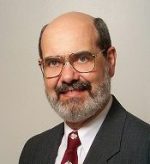
Michael Bournazian

By Michael Bournazian, Eng., Newsletter Editor, ASQ Senior Member, Quality Management Professional, CSSGB with Rolls-Royce

As is customary for me in the June newsletter, I would like to thank you, the reader, for taking the time to read this newsletter. I do hope that the effort that goes into putting it together by myself and many others shows, and that you get something positive out of it every time you read it.

I wish you a safe, happy and QUALITY summer season. We will be back in September 2026 with the next newsletter. All the best to you, and none of the worst. 

    **********************************************

Any feedback? Click on the link and let me know.

ALSO . . .  Please contact me or any one else on the Leadership team if you would like to:
1) Write and submit an article to be published in the Newsletter.
2) Write a review of one of the upcoming monthly webinars for the “Had You Been There” section.

Thank you, all the best and none of the worst.

The Editor’s Corner | Mot de l’éditeur Read More »

ASQ Montreal Section – Education Program 2026

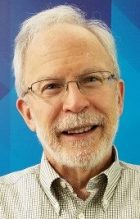
Dr David TozerBy Dr. David Tozer, Ph.D., ASQ CQE and SSBB, Education & Audit Chair.

Having ASQ certification gives you an edge in the market and can significantly increase your income.

ASQ Certification often leads to higher paying employment.  The money invested in education and certification increases chances of finding employment quickly in the downsizing environment we live in.

For advice on the program, contact David Tozer at davidtozer@qualitiqua.com or call 514-694-2830.

The following is a list of the certifications and some of the topics covered.

Certified Quality Engineer: Topics include: quality concepts, cost of quality, human resources, team formation and group dynamics, inspection, metrology, sampling, reliability, quality standards, quality audit, statistics, design of experiments, process improvement, liability, and modern management methods for improving quality.

Certified Reliability Engineer: Topics include: reliability management, probability and statistics, modelling and prediction, data collection and analysis, design for reliability, maintainability and availability, reliability testing, product safety and liability.

Certified Software Quality Engineer: Topics include: cost of quality and return on investment, team formation and group dynamics, Life Cycles and Process Models, Systems Architecture, Requirements Engineering, Requirements Management, Audits, Maintenance Management, Software Analysis, Tracking and Controlling, Risk Management, Process and Product Measurement, Analysis and Reporting Techniques, Software Verification and Validation, Software Configuration Management.

 Certified Quality Inspector: Topics include: quality concepts, team formation and group dynamics, geometry, metrology, reading drawings, mechanical processes, statistical process control, inspection, and sampling.

Certified Quality Technician: Topics include: quality concepts, team formation and group dynamics, planning for sampling, problem solving, procedure and instruction preparation, statistical methods, cost of quality.

Certified Calibration Technician: Topics include: testing, calibration, repair, maintenance, environment, electrical, mechanical and electro-mechanical equipment.

Certified Quality Improvement Associate: Topics include: quality tools, improvement projects and teams.

Certified Quality Process Analyst: Topics include: problem solving methods, quality tools, improvement projects and teams,

Certified Master Black Belt: Requirements: Many years experience at the Six Sigma Black Belt level, portfolio of achievements, demonstration of practice and advancing the quality field.

Certified Six Sigma Black Belt: Topics include: quality concepts, cost of quality, enterprise-wide deployment, business process management, project management, team formation and group dynamics, define, measure, analyze, improve, control, lean enterprise, statistics, design of experiments, and design for six sigma.

Certified Six Sigma Green Belt: Topics include: quality concepts, cost of quality, enterprise-wide deployment, business process management, project management, team formation and group dynamics, define, measure, analyze, improve, control, and statistics.

Certified Six Sigma Yellow Belt: Topics include: problem solving using Define, Measure, Analyse, Improve, Control.

Certified Manager of Quality/Organizational Excellence: Topics include: quality concepts, quality planning, customer focus, quality standards, project management, cost of quality, team formation and group dynamics, human resources and improvement. 

Certified Quality Auditor: Topics include: quality concepts, team formation and group dynamics, management responsibility, audit objectives, audit preparation, audit conduct, audit reporting, sampling, and basic statistics.

Certified Food Safety and Quality Auditor: Topics include: auditing for Food Safety, HACCP, managing methods for food safety, reporting on food safety.

Certified Medical Device Auditor: Topics include: standards, regulations, directives, guidance, systems and controls, auditing.

Certified Pharmaceutical GMP Professional: Topics include: human and veterinarian, standards and regulations, raw material management, manufacturing control, pharmaceutical delivery methods, packaging and labeling, auditing,

Certified Construction Quality Manager: Topics include: contract management, quality planning, resource management, documentation, closing the contract, risk management, environment, safety, team building, quality tools and statistical methods.

Certified Supplier Quality Professional: Topics include: supply chain quality, quality assurance plans, scrap reduction, repair and rework cycle time.

ASQ Montreal Section – Education Program 2026 Read More »

Voice of The Customer | Voix du Client

By Claudio Sasseron, Responsable VoC, (English text follows)

Poursuivant notre cheminement vers l’amélioration continue, nous avons abordé en mai l’un des topic les plus demandés de l’actualité: l’intelligence artificielle (IA).

Au cours de la présentation, je me suis interrogé sur la manière de rester à jour et, surtout, sur la vitesse à laquelle nous devons assimiler de nouvelles connaissances afin de suivre l’évolution du marché. Un commentaire qui m’a particulièrement marqué est qu’il n’est pas nécessaire de se plonger dans toutes les nouvelles technologies d’IA qui émergent constamment, mais plutôt de comprendre les concepts fondamentaux, la philosophie qui les sous-tend, et la manière de les appliquer concrètement dans ce que nous connaissons et faisons déjà au quotidien.

En fin de compte, la pensée critique et l’expérience demeurent essentielles. Il est important de rester à jour, certes, mais toujours avec prudence, une intention claire et un focus sur le comment et le pourquoi utiliser l’IA afin de générer une valeur réelle et durable. Une fois de plus, l’ASQ démontre sa capacité à offrir des rencontres riches en apprentissages et en perspectives.

À la prochaine!

Claudio Sasseron


Continuing our journey toward continuous improvement, in May we addressed one of today’s most in-demand topics: Artificial Intelligence (AI).

During the presentation, I reflected on how we can stay current and, more importantly, on the pace at which we must absorb new knowledge to keep up with market evolution. One comment that particularly caught my attention  was that it is not necessary to dive into every new AI technology that constantly emerges, but rather to understand the fundamental concepts, the philosophy behind these tools, and how to apply them practically within what we already know and do in our daily work.

In the end, critical thinking and experience remain essential. Staying up to date is certainly important, but it must always be done with caution, a clear intention, and a strong focus on how and why AI is being used to generate real and sustainable value. Once again, ASQ demonstrates its ability to foster meaningful discussions and provide valuable learning opportunities.

See you soon!

Claudio Sasseron

Voice of The Customer | Voix du Client Read More »

Student Outreach | Sensibilisation étudiante

Pierre Marquis, Membership Chair Section Montréal, Student Outreach Committee Member (An English text follows)

Activités de sensibilisation des étudiants – juin 2026

Aucune activité du Comité de rayonnement étudiant n’a eu lieu en avril et mai, mais nous préparons un panel de six sigma à l’université Concordia, pour le 10 août (rien de prévu en juin-juillet). Ce panel de discussion inclura trois ou quatre LSSBB, qui parleront de leurs expériences et répondront aux questions des étudiants. C’est l’enseignante Marzieh Ghiyasinasab qui nous accueillera, dans la cadre du cours six sigma aux étudiants en génie mécanique, industriel et aérospatial.

Lors de cet événement, nous parlerons aussi des avantages de l’adhésion étudiante à l’ASQ, accessible pour 31 $US, et sur les formations certifiées offertes.

ACADEMIA:

  • Contactez-nous si vous souhaitez organiser un événement avec vos étudiants et discutons de la manière dont nous pouvons aborder le sujet de la qualité dans le monde universitaire.
  • Si vous faites partie d’un établissement d’enseignement et que vous souhaitez avoir plus de visibilité sur les sujets liés à la qualité, contactez Pierre Marquis sur LinkedIn. Nous disposons d’un réseau de conférenciers potentiels qui pourraient vous intéresser.

Student Outreach Activities – June 2026

No Student Outreach Committee activities took place in April and May, but we are preparing a Six Sigma panel at Concordia University for August 10 (nothing is planned for June or July). This panel discussion will include three or four LSSBB, who will share their experiences and answer student questions. We will be hosted by instructor Marzieh Ghiyasinasab, who teaches the Six Sigma course for students in Mechanical, Industrial, and Aerospace Engineering.

During this event, we will also discuss the benefits of ASQ student membership, which costs $31 US, and the certified training programs offered.

ACADEMIA:

  • Contact us if you are organizing a student event and wish to discuss how to present quality-related topics in the university.
  • If you are part of an educational institution and would like to have more visibility on quality-related topics, please contact Pierre Marquis on LinkedIn. We have a network of potential speakers that may be of interest to you.

Student Outreach | Sensibilisation étudiante Read More »

Si vous étiez présent | Had You Been There

RÉSUMÉ DU WEBINAIRE “AI: The Good, the Bad and the Ugly

Par Pierre Marquis, spécialiste en qualité et gestion (An English text follows)

Organisé par Ray DYER et Samira KAZEMI sur la plateforme Zoom

Présentateur: Jean MASSARDI, PhD en informatique, expert IA, gestion de projet et innovation. Il vient d’être nommé responsable de l’intelligence des données chez Airbus des processus.

Introduction:

Le 27 mai dès 18h30, une vingtaine de participants ont pris le temps d’assister à un webinaire de 2,5 heures, afin de faire le point sur les plus récents développement en matière d’intelligence artificielle (IA), relatant aussi bien les avantages que les risques associés.

De 18h30 à 19h les participants ont pu réseauter en mode virtuel sous la direction de M. Ray DYER, et rencontrer une partie de l’équipe de leadership d’ASQ Montréal et plusieurs participants des USA tels que Barbara de Chicago, Lisha de New-York, Celina de Virginie, Dorit de San Diego, Demetrius d’Ohio et Francisca de Dallas. Les 19 certifications d’ASQ, la mission et le code d’éthique d’ASQ ont été mentionnés par Samira. Un sondage d’ouverture a révélé que la majorité des participants sont membres séniors d’ASQ, de la région de Montréal et travaillent en qualité manufacturière, plusieurs étant consultants. Samira a présenté l’agenda de la soirée et introduit le conférencier, M. Jean MASSARDI.

Déroulement, dès 19h:

Dans l’introduction, le présentateur se questionne sur la valeur ajoutée de l’IA pour les entreprises canadiennes, incluant les bienfaits mais aussi les mensonges et le risque de gouffre financier. La conférence porte principalement sur l’IA générative (Chat GPT, Gemini, CoPilot, etc.) versus l’IA spécialisée. Voyons maintenant le bon, le mauvais et l’effrayant de l’IA.

1) Le bon: Parmi les avantages on note la rapidité d’exécution, la capacité de manipuler de larges quantités de données et la grande adaptabilité. Quant aux limites, on remarque les hallucinations (cas non-réels), les problèmes d’évolutivité et l’incertitude numérique. Au Québec, 80% des grandes entreprises utilisent l’IA, les PME seulement 30%, dont 25% ont adopté l’IA sur mesure; les problèmes de pénurie de main d’œuvre et de perte d’expertise sont résolus par l’IA qui peut répondre aux questions des nouveaux employés et aider à leur formation. L’IA génère des diagrammes de flux et des résumés de réunions, ce qui améliore la productivité. La Suède est le pays avec la plus grande pénétration d’IA dans le domaine de la production, soit 60%.

2) Le mauvais: La métrique (KPI) d’utilisation de l’IA sous forme de jetons (“tokens”) vient fausser les données sur les avantages concrets de l’IA et sur la performance des entreprises. Certains dirigeants se vantent que les coûts des jetons sont plus élevés que le salaire d’ingénieurs, alors que le simple fait d’utiliser l’IA à grande échelle ne signifie en rien que c’est productif. La fiabilité des métriques basée sur des hallucinations est illusoire. Un cas d’IA avec le jeu vidéo World Warcraft a fait perdre des sommes importantes au producteur pour ne pas l’avoir traduit en plusieurs langues.

3) L’effrayant: L’IA vit en ce moment une saturation du marché par une explosion des intégrateurs de faible qualité. On retrouve aussi de la spéculation, i.e. une bulle IA qui rappelle celle du début 2000, ce qui pourrait affecter la stabilité à long terme. On est inquiet par l’absurde mesure du succès via l’utilisation de jetons versus la valeur ajoutée. La perte de compétences, avec un impact sur la qualité, la formation et les futurs salaires; par exemple, en programmation l’IA remplace les juniors, donc quand les intermédiaires ont des promotions, aucun candidat ne peut les remplacer!

Pendant la période de question qui a suivie, M. Massardi a mentionné, à propos de la confidentialité des données d’entreprise en utilisant Chat GPT, que c’est risqué d’avoir des fuites même si autorisé par l’entreprise. Un participant a parlé avoir essayé la fonction ‘minutes de réunion automatique’ sur Webex, ce qui a généré du contenu intéressant mais truffé d’erreurs.

Conclusion:

L’audience du webinaire, qui a atteint jusqu’à 28 participants, a été très satisfaite de la qualité de la présentation et de la pertinence des cas d’IA discutés par le présentateur. Les résultats du sondage témoignent de la satisfaction des répondants, avec un résultat global de satisfaction de 4.75/5.

Finalement, Samira a annoncé que c’est le 17 juin qu’aura lieu une soirée de réseautage en présentiel pour les membres en règle seulement, au Novotel Montréal Aéroport. Samira, Chantale et Ray ont sincèrement remercié Jean pour sa prestation et les participants pour leur présence, dont un certain François Pageau qui effectuait un retour.


WEBINAR SUMMARY “AI: The Good, the Bad and the Ugly”

Organized by Samira Kazemi and Ray Dyer, on the Zoom platform. Presenter: Jean Massardi, PhD in Computer Science, AI expert, project management and innovation specialist. He was recently appointed Head of Data Intelligence at Airbus.

Introduction: On May 27th, starting at 6:30 PM, approximately twenty participants attended a 2.5-hour webinar to review the latest developments in artificial intelligence (AI), discussing both the advantages and associated risks.

From 6:30 p.m. to 7:00 p.m., participants were able to network virtually under the guidance of Mr. Ray Dyer, and meet some of the ASQ Montreal leadership team and several participants from the USA, including Barbara from Chicago, Lisha from New York, Celina from Virginia, Dorit from San Diego, Demetrius from Ohio, and Francisca from Dallas. Samira presented ASQ’s 19 certifications, mission, and code of ethics. An opening survey revealed that the majority of participants are senior ASQ members from the Montreal area and work in manufacturing quality, many of them as consultants. Samira then presented the evening’s agenda and introduced the speaker, Mr. Jean Massardi.

Schedule, starting at 7 p.m.:

In the introduction, the presenter discussed the added value of AI for Canadian businesses, including its benefits, but also its misconceptions and the risk of financial ruin. The conference focused primarily on generative AI (Chat GPT, Gemini, CoPilot, etc.) versus specialized AI. Let’s now examine the good, the bad, and the ugly aspects of AI.

1) The Good: Among the advantages are speed of execution, the ability to handle large amounts of data, and high adaptability. As for limitations, we note hallucinations (non-realistic scenarios), scalability issues, and numerical uncertainty. In Quebec, 80% of large companies use AI, while only 30% of SMEs do, of which 25% have adopted custom AI solutions. Problems of labor shortages and loss of expertise are addressed by AI, which can answer questions from new employees and assist with their training. AI generates flowcharts and meeting summaries, thus improving productivity. Sweden has the highest AI penetration in the manufacturing sector, at 60%.

2) The Bad: The use of tokens as a key performance indicator (KPI) for AI usage distorts the data on the concrete benefits of AI and on business performance. Some executives boast that the cost of AI tokens is higher than engineers’ salaries, but simply using AI on a large scale doesn’t guarantee productivity. Reliable metrics based on wishful thinking are illusory. The case of AI in the video game World of Warcraft resulted in significant losses for the producer due to its failure to translate the game into multiple languages.

3) The Ugly: The AI ​​market is currently experiencing saturation due to an explosion of low-quality integrators. There is also speculation, i.e., an AI bubble reminiscent of the early 2000s, which could affect long-term stability. There is concern about the absurd measurement of success through the use of tokens versus added value. The loss of skills impacts quality, training, and future salaries; for example, in programming, AI is replacing junior programmers, so when intermediate programmers are promoted, no other candidates can replace them!

During the ensuing question period, Mr. Massardi mentioned, regarding the confidentiality of company data when using GPT Chat, that leaks are risky even with company authorization. One participant spoke about trying the “automatic meeting minutes” feature on Webex, which generated interesting content but was riddled with errors.

Conclusion:

The webinar audience, which reached up to 28 participants, was very satisfied with the quality of the presentation and the relevance of the AI ​​case studies discussed by the presenter. The survey results reflect this satisfaction, with an overall rating of 4.75/5.

Finally, Samira announced that an in-person networking event for members in good standing will be held on June 17th at the Novotel Montreal Airport. Samira, Chantale, and Ray sincerely thanked Jean for his presentation and the participants for their attendance, including François Pageau, who was returning.

Si vous étiez présent | Had You Been There Read More »

Mot de la présidente | Word from the Chair

Par Chantale Simard, MBA, ASQ Senior Member, CSSGB (English text follows)

La qualité est souvent associée aux systèmes, aux outils et aux indicateurs de performance. Elle repose également sur les personnes qui, chaque jour, cherchent à améliorer les processus, à résoudre les problèmes et à créer davantage de valeur pour leurs clients.

À l’ASQ Montréal, nous croyons que l’apprentissage continu, le partage des connaissances et la collaboration sont essentiels pour faire progresser notre profession. Chaque rencontre, chaque échange et chaque expérience contribuent à renforcer notre communauté de la qualité.

Nous espérons vous accueillir en grand nombre à notre soirée de réseautage du 17 juin afin d’échanger, d’apprendre et de créer de nouvelles connexions au sein de la communauté de la qualité.

Envoyez-moi vos commentaires


Quality is often associated with systems, tools, and performance indicators. It also relies on the people who, every day, strive to improve processes, solve problems, and create greater value for their customers.

At ASQ Montreal, we believe that continuous learning, knowledge sharing, and collaboration are essential to advancing our profession. Every meeting, conversation, and experience helps strengthen our quality community.

We look forward to welcoming many of you to our networking event on June 17, where you will have the opportunity to connect, learn, and build new relationships within the quality community.

Send me your comments


Suivez-nous sur LinkedIn

Explorez NOTRE site myASQ Montréal |  Explore OUR Montreal myASQ site.

Mot de la présidente | Word from the Chair Read More »

ASQ Certification Study Group

Dr David TozerBy Dr. David Tozer, Ph.D., ASQ CQE and SSBB, Education & Audit Chair.

Would you like to work with others to prepare for ASQ examinations? We have a Teams based section study group that is open every Tuesday evening from 7:00 pm to 8:30 pm.

Join the team and get to help each other. Contact the host Dr. David Tozer, Montreal Section Education Chair, to obtain a link.


Aimeriez-vous travailler avec d’autres personnes pour préparer les examens de l’ASQ ? Nous avons un groupe d’étude Teams ouvert tous les mardis soirs de 19 h à 20 h 30.

Rejoignez l’équipe et aidez-vous mutuellement. Contactez l’hôte, Dr. David Tozer, président de l’éducation de la section de Montréal, pour obtenir un lien.

ASQ Certification Study Group Read More »

Unemployed Members – Dues

Any individual Full or Senior, or a Fellow member may participate in ASQ’s unemployment dues relief program if they want to continue maintaining their ASQ membership. For more information:

  • Log-in to your ASQ account, go to the My Account page, select Unemployed Members on the left panel. The Unemployed Member Dues page appears.
  • Download the ASQ Unemployment Program Application, complete and submit to ASQ-HQ.
  • Don’t forget to Log-out.

Tout membre individuel Titulaire, Senior ou Fellow peut participer au programme d’allègement des cotisations de chômage de l’ASQ s’il souhaite continuer à maintenir son adhésion à l’ASQ. Pour plus d’informations:

  • Connectez-vous à votre compte ASQ, allez sur la page Mon compte (My Account), sélectionnez Membres chômeurs (Unemployed Members) sur le panneau de gauche. La page Cotisations des membres chômeurs (Unemployed Member Dues) s’affiche.
  • Téléchargez la Demande d’adhésion au programme de chômage de l’ASQ (ASQ Unemployment Program Application), remplissez et envoyez à ASQ-HQ.
  • N’oubliez pas de vous déconnecter.

Unemployed Members – Dues Read More »

Si vous étiez présent | Had You Been There

RÉSUMÉ DU WEBINAIRE “Expérimenter pour s’améliorer – KATA: Une routine pratiquée délibérément

Par Claudio Sasseron, expert en Qualité et Amélioration Continue (An English text follows)

Organisé par Ray Dyer sur la plateforme Zoom

Présentateur: Julie Savage-Fournier, consultant et coach KATA en amélioration continue et optimisation des processus.

Le 22 avril, nous avons eu une excellente conférence avec Julie Savage-Fournier sur la méthode Kata et l’importance de la routine dans l’amélioration continue.

Le Kata propose une pratique délibérée et répétée, capable de transformer des comportements conscients en habitudes durables, tout comme apprendre à conduire ou à cuisiner demande toute notre attention au début, puis devient automatique avec le temps. La méthode équilibre deux modes de fonctionnement du cerveau: l’automatique, celui des habitudes bien ancrées, et le rationnel, celui de l’analyse et de la décision consciente. Bien pratiquer est essentiel: répéter un geste incorrect crée la mauvaise habitude.

Pendant la conférence, nous avons eu plusieurs breakout rooms avec des activités et des discussions en groupe, ce qui a enrichi le débat et mis à l’épreuve nos points de vue dans la pratique.

Le Kata d’amélioration s’articule en quatre étapes: comprendre le défi à long terme, mesurer la situation actuelle avec des données concrètes, définir une condition cible intermédiaire atteignable, et réaliser de petites expériences quotidiennes en apprenant de chaque résultat avant de préparer la suivante. Le cycle est scientifique: on formule une hypothèse, on teste, on compare avec ce qui s’est vraiment passé, et on met à jour nos connaissances.

Le rôle du coach est central dans cette démarche. Plutôt que de donner des réponses, il encourage les bonnes questions. Les mots utilisés ont de l’importance: répéter et capturer les termes exacts du praticien révèle son niveau réel de compréhension et indique où se trouve la prochaine étape à explorer.

Plus qu’un outil, le Kata est une culture, celle d’équipes qui expérimentent, apprennent et progressent ensemble, chaque jour.

Nous remercions ASQ Montreal et Julie pour cette excellente initiative.


WEBINAR SUMMARY “Experimenting to Improve – KATA: A Deliberately Practiced Routine”

Organized by: Ray Dyer, on the Zoom platform.
Speaker: Julie Savage-Fournier, consultant and KATA coach in continuous improvement and process optimization.

On April 22nd, we had an excellent talk with Julie Savage-Fournier on the Kata method and the importance of routine in continuous improvement.

Kata proposes a deliberate and repeated practice, capable of transforming conscious behaviours into lasting habits — just like learning to drive or cook requires full attention at first, then becomes automatic over time. The method balances two modes of brain functioning: the automatic, made up of deeply ingrained habits, and the rational, driven by analysis and conscious decision-making. Practicing correctly is essential: repeating a wrong action builds the wrong habit.

During the talk, we had several breakout rooms with group activities and discussions, which enriched the debate and put our perspectives to the test in a very practical way.

The Improvement Kata is structured around four steps: understanding the long-term challenge, measuring the current situation with concrete data, defining an achievable intermediate target condition, and running small daily experiments — learning from each result before preparing the next one. The cycle is scientific: we form a hypothesis, we test it, we compare it with what actually happened, and we update our knowledge accordingly.

The coach’s role is central to this process. Rather than providing answers, the coach encourages the right questions. The words used matter: repeating and capturing the practitioner’s exact terms reveals their actual level of understanding and points to where the next step needs to be explored.

More than a tool, Kata is a culture — one of teams that experiment, learn, and grow together, every single day.

Thanks to ASQ Montreal and Julie for this excellent initiative.

Si vous étiez présent | Had You Been There Read More »

Unemployed Members – Dues

Any individual Full or Senior, or a Fellow member may participate in ASQ’s unemployment dues relief program if they want to continue maintaining their ASQ membership. For more information:

  • Log-in to your ASQ account, go to the My Account page, select Unemployed Members on the left panel. The Unemployed Member Dues page appears.
  • Download the ASQ Unemployment Program Application, complete and submit to ASQ-HQ.
  • Don’t forget to Log-out.

Tout membre individuel Titulaire, Senior ou Fellow peut participer au programme d’allègement des cotisations de chômage de l’ASQ s’il souhaite continuer à maintenir son adhésion à l’ASQ. Pour plus d’informations:

  • Connectez-vous à votre compte ASQ, allez sur la page Mon compte (My Account), sélectionnez Membres chômeurs (Unemployed Members) sur le panneau de gauche. La page Cotisations des membres chômeurs (Unemployed Member Dues) s’affiche.
  • Téléchargez la Demande d’adhésion au programme de chômage de l’ASQ (ASQ Unemployment Program Application), remplissez et envoyez à ASQ-HQ.
  • N’oubliez pas de vous déconnecter.

Unemployed Members – Dues Read More »

Voice of The Customer | Voix du Client

By Claudio Sasseron, Responsable VoC, (English text follows)

En avril, nous avons poursuivi nos activités à l’ASQ Montréal en explorant un thème fondamental: l’importance du comportement et de la routine pour l’amélioration de nos processus et de nos vies.

Nous avons découvert que le comportement d’amélioration doit devenir une routine. En analysant nos activités quotidiennes, nous trouvons toujours des opportunités de perfectionnement. Cependant, cette transformation ne commence que lorsque nous changeons notre routine et que nous nous ouvrons à des critiques constructives et à des questions sincères sur le “pourquoi” nous faisons les choses de cette manière.

La perspective et l’observation sont des éléments cruciaux dans ce processus. En écoutant différents points de vue, nous élargissons notre capacité à poser de meilleures questions et à identifier des opportunités pour des changements significatifs.

À la prochaine!

Claudio Sasseron


In April, we continued our activities at ASQ Montreal by exploring a fundamental theme: the importance of behavior and routine in improving our processes and our lives.

We discovered that improvement behavior must become a routine. When we analyze our daily activities, we always find opportunities for enhancement. However, this transformation only begins when we change our routine and open ourselves to constructive criticism and genuine questions about the “why” behind how we do things.

Perspective and observation are crucial elements in this process. By listening to different viewpoints, we expand our ability to ask better questions and identify opportunities for meaningful change.

See you soon!

Claudio Sasseron

Voice of The Customer | Voix du Client Read More »

ASQ Certification Study Group

Dr David TozerBy Dr. David Tozer, Ph.D., ASQ CQE and SSBB, Education & Audit Chair.

Would you like to work with others to prepare for ASQ examinations? We have a Teams based section study group that is open every Tuesday evening from 7:00 pm to 8:30 pm.

Join the team and get to help each other. Contact the host Dr. David Tozer, Montreal Section Education Chair, to obtain a link.


Aimeriez-vous travailler avec d’autres personnes pour préparer les examens de l’ASQ ? Nous avons un groupe d’étude Teams ouvert tous les mardis soirs de 19 h à 20 h 30.

Rejoignez l’équipe et aidez-vous mutuellement. Contactez l’hôte, Dr. David Tozer, président de l’éducation de la section de Montréal, pour obtenir un lien.

ASQ Certification Study Group Read More »

Mot de la présidente | Word from the Chair

Par Chantale Simard, MBA, ASQ Senior Member, CSSGB (English text follows)

Une belle reconnaissance pour notre section

Je suis très fière d’annoncer que notre section a reçu la reconnaissance Argent dans le cadre du programme Performance Excellence Program (PEP) 2025 de American Society for Quality.

Cette reconnaissance souligne le travail et l’engagement de notre équipe de bénévoles ainsi que la participation active de nos membres tout au long de l’année. Le programme PEP vise à reconnaître les sections qui contribuent au rayonnement de la profession, à l’engagement des membres, à l’atteinte des objectifs organisationnels et à une saine gestion de leur section.

Je souhaite remercier chaleureusement tous les membres, bénévoles, conférenciers et partenaires qui contribuent au dynamisme de notre communauté. Cette reconnaissance appartient à toute notre section.

L’intérêt de nos membres pour les sujets émergents continue également de se démarquer, notamment en ce qui concerne l’intelligence artificielle. C’est dans cette continuité que nous proposerons au mois de mai une nouvelle conférence sur l’IA, et nous aurons ainsi le plaisir d’accueillir Jean Massardi pour une troisième présentation au sein de notre section.

J’invite également nos membres à réserver la date du 17 juin pour notre prochain événement de réseautage en personne. Ce sera une excellente occasion d’échanger avec d’autres professionnels et de poursuivre les discussions dans un cadre convivial avant la pause estivale.

Envoyez-moi vos commentaires


A Great Recognition for Our Section

I am very proud to announce that our section has received the Silver recognition as part of the 2025 Performance Excellence Program (PEP) from the American Society for Quality.

This recognition highlights the hard work and commitment of our volunteer leadership team, as well as the active participation of our members throughout the year. The PEP program recognizes sections that contribute to the advancement of the profession, member engagement, achievement of organizational objectives, and sound section management.

I would like to sincerely thank all members, volunteers, speakers, and partners who contribute to the vitality of our community. This recognition belongs to our entire section.

The strong interest of our members in emerging topics continues to stand out, especially regarding artificial intelligence. In this spirit, we will be offering another conference on AI in May, and we will once again have the pleasure of welcoming Jean Massardi for his third presentation within our section.

I also invite our members to reserve June 17 for our next in-person networking event. It will be an excellent opportunity to connect with other professionals and continue discussions in a friendly setting before the summer break.

Send me your comments


Suivez-nous sur LinkedIn

Explorez NOTRE site myASQ Montréal |  Explore OUR Montreal myASQ site.

Mot de la présidente | Word from the Chair Read More »

The Editor’s Corner | Mot de l’éditeur

Michael Bournazian

By Michael Bournazian, Eng., Newsletter Editor, ASQ Senior Member, Quality Management Professional, CSSGB with Rolls-Royce

The second and final supplier conference that I helped organize took place in Birmingham, U.K. from April 28-29, 2026 at the Hyatt Regency in the city center.

The conference was attended by Siemens Energy suppliers from across the United Kingdom and Europe (and even a few from the United States), and once again gave the suppliers a chance to meet directly and engage with customer representatives, discuss current and future business opportunities, and even air the occasional grievance (diplomatically, of course).

Instead of bore with another set of conference pictures like I did in March, here are some pictures I took in and around Birmingham during conference downtime.


    **********************************************

Any feedback? Click on the link and let me know.

ALSO . . .  Please contact me or any one else on the Leadership team if you would like to:
1) Write and submit an article to be published in the Newsletter.
2) Write a review of one of the upcoming monthly webinars for the “Had You Been There” section.

Thank you, all the best and none of the worst.

The Editor’s Corner | Mot de l’éditeur Read More »

Student Outreach | Sensibilisation étudiante

Pierre Marquis, Membership Chair Section Montréal, Student Outreach Committee Member (An English text follows)

Activités de sensibilisation des étudiants – avril 2026

Aucune activité de sensibilisation des étudiants n’a eu lieu en avril 2026. Restez à l’écoute pour plus d’informations!

ACADEMIA:

  • Contactez-nous si vous souhaitez organiser un événement avec vos étudiants et discutons de la manière dont nous pouvons aborder le sujet de la qualité dans le monde universitaire.
  • Si vous faites partie d’un établissement d’enseignement et que vous souhaitez avoir plus de visibilité sur les sujets liés à la qualité, contactez Pierre Marquis sur LinkedIn. Nous disposons d’un réseau de conférenciers potentiels qui pourraient vous intéresser.

Student Outreach Activities – April 2026

There were no student outreach activities that took place in April 2026. Stay tuned for more news!

ACADEMIA:

  • Contact us if you are organizing a student event and wish to discuss how to present quality-related topics in the university.
  • If you are part of an educational institution and would like to have more visibility on quality-related topics, please contact Pierre Marquis on LinkedIn. We have a network of potential speakers that may be of interest to you.

Student Outreach | Sensibilisation étudiante Read More »

Scroll to Top