Student Outreach | Sensibilisation étudiante

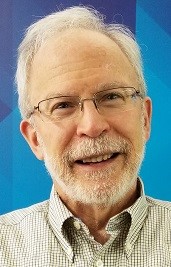
Farnoosh Naderkhani

Farnoosh NaderkhaniBy Dr. Farnoosh Naderkhani, ASQ Member, Assistant Professor @Concordia, Student Outreach Committee Chair  (un texte français suit)

Our third student webinar series held on March 23rd, 2023 was a highly successful event with around 20 participants. The distinguished speaker, Dr. Mohammad Reza Faghani, delivered a talk on “Learning how adversaries infiltrate highly secured environment.” The webinar was highly informative and engaging, providing valuable insights into the challenges of securing highly sensitive environments and the tactics that adversaries may use to breach them.

A closing survey was conducted and the response rate was quite impressive, with 10 attendees sharing their feedbacks. The average satisfaction rating for the subject matter was 4.9 out of 5, while the satisfaction with the approach and presenter was rated at 4.7 out of 5, demonstrating the high level of enjoyment and engagement among the attendees.

The overwhelmingly positive feedback from the attendees motivates us to continue to organize more student webinar series to provide students with valuable knowledge and learning opportunities. Overall, the third student webinar series was a resounding success, and we look forward to hosting many more such events in the future.

Until next time.


Notre troisième série de webinaires pour les étudiants, qui s’est tenue le 23 mars 2023, a été un événement très réussi, avec une vingtaine de participants. Le Dr. Mohammad Reza Faghani, a présenté un exposé sur le thème “Apprendre comment les adversaires s’infiltrent dans un environnement hautement sécurisé“. Le webinaire a été très instructif et engageant, fournissant des informations précieuses sur les défis de la sécurisation des environnements hautement sensibles et les tactiques que les adversaires peuvent utiliser pour les pénétrer.

Pour l’enquête de clôture menée, le taux de réponse a été assez impressionnant, avec 10 participants partageant leurs commentaires. Le taux de satisfaction moyen pour le sujet traité était de 4,9 sur 5, tandis que le taux de satisfaction pour l’approche et le présentateur était de 4,7 sur 5, ce qui démontre le niveau élevé de plaisir et d’engagement des participants.

À la prochaine.


If you are part of an educational institution and would like to have more visibility on quality-related topics, please contact us. We have a network of potential speakers that may be of interest to you. Contact Raymond Dyer on LinkedIn.

Si vous faites partie d’un établissement d’enseignement et que vous souhaitez avoir plus de visibilité sur les sujets liés à la qualité, veuillez nous contacter. Nous disposons d’un réseau de conférenciers potentiels qui pourraient vous intéresser. Contactez Raymond Dyer sur LinkedIn.

Student Outreach | Sensibilisation étudiante Read More »

The Editor’s Corner | Mot de l’éditeur

Michael Bournazian

By Michael Bournazian, Eng., Newsletter Editor, ASQ Senior Member, Quality Management Professional, CSSGB with Rolls-Royce

Back in March 2021, I wrote in this very section about the ice storm that had hit Texas. I concluded in the end that it was not really my place to point the finger at the state’s lack of preparedness, given eastern Canada’s lack of preparedness during the 1998 ice storm that affected us 25 years ago (happy silver anniversary!).

In present day Quebec (and Montreal specifically), we  experienced an unexpected sense of deja-vu when, low-and-behold, another ice storm hit the area on April 5th. Not as severe as 1998, but still a large proportion of the Montreal region was once again plunged into darkness, which meant no electricity and, unlike in 1998, no Internet as well (yes, I know, the Internet was around in 1998, but without the stranglehold it has on our lives like it does now).

So did Hydro Quebec do a better job of dealing with the emergency this time around compared to 1998? If I strictly look at my own personal situation, I went 4 days with power this time around, as opposed to 2 weeks as I did in 1998. So by those numbers, I should be happy. That of course did not stop me from cursing (loudly in my mind) every 5 minutes or so that my power was still off yet I was seeing other neighbourhoods regain their power almost immediately.

But overall I do feel that Hydro Quebec dealt with this storm better than the previous one, so kudos where they are due for lessons learnt and improvements made. That said, this ice storm took place during the warmer month of April, whereas the 1998 storm occurred in January and continued into February, the veritable “dead of winter”, so not exactly the same “test conditions”. And no, I am not wishing for an ice storm to strike in January 2024 😉

Hopefully by the time you read this, your power has returned and you are back to surfing Internet-style and not sleeping under 2 blankets and wearing 3 layers of clothing. All the best for a warm summer.

EDITOR’S NOTE: Neither the “C” word nor the “P” word were used during the writing of this article.

**********************************************

Any feedback? Click on the link and let me know.

ALSO . . .  Please contact me or any one else on the Leadership team if you would like to:
1) Write and submit an article to be published in the Newsletter.
2) Write a review of one of the upcoming monthly webinars for the “Had You Been There” section.

Thank you, all the best and none of the worst.

The Editor’s Corner | Mot de l’éditeur Read More »

Word from the Chair | Mot du président

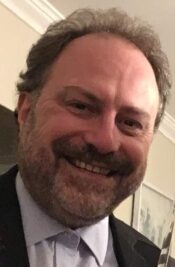
Raymond Dyer 2020

Raymond DyerBy Raymond E. Dyer (Ray), ASQ Senior Member, CMQ/OE, & CQA (Texte en français suit)

We were busy in March. We had three events:

              1. Our regular Wednesday evening section event held March 22nd entitled “Applying Intentional Creativity to Quality Management” presented by Ruth Stanley who is well known by our section;
              2. A Student Outreach event held March 23rd entitled “Adversary Simulation, Threats Against Financial Institutions” presented by Dr. Mohammad Reza Faghani and organized by our section’s Student Outreach Committee Chair and Concordia University Assistant Professor Farnoosh Naderkhani; and
              3. A special noon hour event held March 28th entitled “Learning Culture Helps Transformation” presented by Anastasia Sayegh (in Lebanon) and Samer Hamadeh (in England).

All three virtual events were very interesting and highly appreciated. Thanks to all those that helped organize these events!

Next I’d like to spend a few minutes on Quality related tools and skills. ASQ sends to members, that wish to receive, various e-mails containing links to ASQTV, Quality Progress, etc. It’s a wealth of knowledge. In cleaning up old e-mails, I came across a couple of topics that I thought were interesting to share.

The first was an ASQTV video called CI and RCA with A3 and 8D that correlates the A3 form as being focused on Continuous Improvement (CI) and the 8D form being focused on Root Cause Analysis (RCA). It’s an interesting video if you have access, i.e. are an ASQ member.

The second involved a Quality Progress article on Building An Army Of Problem Solvers – Add Frontline Workers To Your Problem-Solving Ranks With Coaching Questions. Again, you’ll likely need ASQ membership to access. In summary, even though it may take a little more time, to ensure involvement of colleagues in the problem-solving process, the author suggests asking three types of coaching questions; open-ended, non-leading, and non-judgmental. There’s a lot more guidance in the article, but I felt the summary was a good point to share.

Thank-you!


Nous avons été très occupés en mars car nous avons organisé trois événements:

  1. Notre événement habituel du mercredi soir, le 22 mars, intitulé “Applying Intentional Creativity to Quality Management“, présenté par Ruth Stanley, bien connue de notre section;
  2. Un événement de sensibilisation des étudiants organisé le 23 mars et intitulé “Adversary Simulation, Threats Against Financial Institutions“, présenté par le Dr. Mohammad Reza Faghani et organisé par le président du comité de sensibilisation des étudiants de notre section et le professeur adjoint de l’Université Concordia, Farnoosh Naderkhani; et,
  3. Un événement spécial organisé le 28 mars à midi, intitulé “Learning Culture Helps Transformation“, présenté par Anastasia Sayegh (au Liban) et Samer Hamadeh (en Angleterre).

Ces trois événements virtuels ont été très intéressants et très appréciés. Merci à tous ceux qui ont participé à l’organisation de ces événements!

J’aimerais ensuite consacrer quelques minutes aux outils et compétences liés à la qualité. L’ASQ envoie, aux membres qui le souhaitent, divers courriels contenant des liens vers ASQTV, Quality Progress, etc. C’est une mine de connaissances. En nettoyant d’anciens courriels, je suis tombé sur quelques sujets qui m’ont semblé intéressants à partager.

La première était une vidéo d’ASQTV intitulée CI and RCA with A3 and 8D qui établit une corrélation entre le formulaire A3, axé sur l’amélioration continue (CI), et le formulaire 8D, axé sur l’analyse des causes profondes (RCA). C’est une vidéo intéressante si vous y avez accès, c’est-à-dire si vous êtes membre de l’ASQ.

Le second concerne un article de Quality Progress intitulé Building An Army Of Problem Solvers – Add Frontline Workers To Your Problem-Solving Ranks With Coaching Questions (Construire une armée de résolveurs de problèmes – Ajouter des travailleurs de première ligne à vos rangs de résolution de problèmes grâce à des questions de coaching). Là encore, vous devrez probablement être membre de l’ASQ pour y accéder. En résumé, même si cela peut prendre un peu plus de temps, l’auteur suggère de poser trois types de questions de coaching: des questions ouvertes, des questions non suggestives et des questions qui ne portent pas de jugement, afin de garantir l’implication des collègues dans le processus de résolution des problèmes. L’article contient bien d’autres conseils, mais j’ai pensé que ce résumé était un bon point à partager.

Merci!

Send me your comments | Envoyez-moi vos commentaires

Word from the Chair | Mot du président Read More »

Voice of The Customer | Voix du Client

Chantale Farley 2023

Chantale Farley 2023Par Chantale Farley, Responsable VoC (English text follows)

Ce mois-ci nous avons été choyé en présentations: une le 22 mars et la seconde le 28 mars.

Applying Intentional Creativity to Quality Management (Appliquer la créativité intentionnelle à la gestion de la qualité) présentée le 22 mars dernier par Ruth Stanley co-auteure de Your Creativity Sprint: The Five Week Challenge to Better Insights et auteure de A Different Type of Bombshell a connu un franc succès. L’activité débutait à 18h30 avec une période de réseautage où il a été possible d’échanger sur divers sujets.  Parmi les 43 participants, 25 ont complété le sondage, démontrant un taux de satisfaction de 90%. Le thème ainsi que la présentatrice ont été également apprécié avec un taux de 89%. Parmi les participants, plusieurs secteurs d’affaire étaient représentés; nous avons pu également observer une plus grande audience provenant du domaine manufacturier. Par ailleurs, cette présentation bilingue a attirée une audience provenant de la Grande région Métropolitaine et des États-Unis.

Ensuite, le 28 mars se tenait l’évènement Learning Culture Assessment Helps Transformation (L’évaluation de la culture d’apprentissage contribue à la transformation) présenté par Anastasia Sayegh et Samer Hamadeh, partenaires  de l’Institute for Learning Organizations. Parmi les 27 participants, 19 ont complété le sondage, démontrant un taux de satisfaction de 87%. Le thème ainsi que le présentateur ont été également apprécié avec un taux de 88%. Cette présentation  a attirée une audience internationale; de la Grande région de Montréal, de Québec également des États-Unis, Allemagne et la France.

Chantale,
Merci à tous pour votre participation à cet évènement.


This month we were treated to two great presentations: one on March 22nd, and the other on March 28th.

Applying Intentional Creativity to Quality Management presented on March 22nd by Ruth Stanley, co-author of Your Creativity Sprint: The Five Week Challenge to Better Insights and author A Different Type of Bombshell, has been a great success. The activity started at 6:30 p.m. with a networking period where it was possible to exchange on various subjects. The event attracted an audience of over 53 participants. 25 respondents confirmed an overall satisfaction rate of 90%. The theme and the presenter were also appreciated with a rate of 89%. Among the participants, several business sectors were represented; we were also able to observe a larger audience from the manufacturing field. In addition, this bilingual conference attracted an audience mainly from the Greater Montreal Area and from the United States.

Then, on March 28th, Learning Culture Assessment Helps Transformation was presented by Anastasia Sayegh and Samer Hamadeh, partners of the Institute of Learning Organizations. Of the 27 participants, 19 completed the survey demonstrating a satisfaction rate of 87%. The theme as well as the  presenter were also appreciated  with a rate of 88%. This presentation attracted an international audience from the Greater Montreal region, Quebec City, United States, Germany and France.

Chantale,
Thank you all for your participation in this event.

Voice of The Customer | Voix du Client Read More »

ASQ Montreal Section – Education Program 2023

Dr David TozerBy Dr. David Tozer, Ph.D., ASQ CQE and SSBB, Education & Audit Chair.

ASQ Certification often leads to higher paying employment. The money invested in education and certification increases chances of finding employment quickly in the down sizing environment we live in.  People who take the section sponsored refresher courses, and spend at least twice as much time as spent in the classroom on self study, have an 80%, or better, chance of passing the examination on the first attempt.

Having ASQ certification gives you an edge in the market and can significantly increase your income.
Courses are now available online as well | Courses now available online

    • Certified Quality Engineer : quality concepts, cost of quality, human resources, team formation and group dynamics, inspection, metrology, sampling, reliability, quality standards, quality audit, statistics, design of experiments, process improvement, liability, and modern management methods for improving quality.
    • Certified Six Sigma Black Belt: quality concepts, cost of quality, enterprise wide deployment, business process management, project management, team formation and group dynamics, define, measure, analyze, improve, control, lean enterprise, statistics, design of experiments, and design for six sigma.
    • Certified Six Sigma Green Belt: quality concepts, cost of quality, enterprise wide deployment, business process management, project management, team formation and group dynamics, define, measure, analyze, improve, control, and statistics.
    • Certified Manager of Quality/Organizational Excellence: quality concepts, quality planning, customer focus, quality standards, project management, cost of quality, team formation and group dynamics, human resources and improvement.
    • Certified Quality Auditor: quality concepts, team formation and group dynamics, management responsibility, audit objectives, audit preparation, audit conduct, audit reporting, sampling, and basic statistics.
    • Certified Quality Inspector: quality concepts, team formation and group dynamics, geometry, metrology, reading drawings, mechanical processes, statistical process control, inspection, and sampling.

    Calendar and Registration Online Form
    Questions? Cours en site/In house courses, etc. Contact: Dr. David Tozer (514) 694-2830

ASQ Montreal Section – Education Program 2023 Read More »

Radical Transformation Kaikaku – A personal Story

Radical Transformation Kaikaku – A personal Story

By Jean-Pierre Amiel,  ASQ Senior, CQA ret., Web Committee Chair

On the 30th of November 2022 we had the privilege to meet and hear Albanesa Ymaya, CLSSBB, TPS, Kaikaku Practitioner describe her approach on transformation in Kaikaku Before Kaizen. What I didn’t know then, was that Albanesa had also had her own personal radical transformation. In 2019, she survived a terrible car accident. Today, on LinkedIn, she reports in her own philosophical way how that day caused her to reflect that on life — not personal or professional — but both. This reflection set her on a dream to visit Japan, the place where the Toyota Production System began…. Here’s part of that post, translated from Spanish:

Albanesa Ymaya Accident Picture-2019

😱 4 years ago in that vehicle! Where my life could have ended in a minute and thus many of my dreams. But if this is a professional network (LinkedIn) why am I sharing something so intimate and personal? Simple. Over the years I have discovered that there is no real separation between the professional and the personal, because all we have is a life. A life that we occupy at different times.
Our professional life is completely tied to who we are as a person. Well, there is only one life!
After that fateful accident, I promised myself that I would live every moment as if it were the last day of my life and fight with all my might to achieve every dream I had… Four years ago, I made a firm decision not to keep waiting and today, thanks to God and the work of my team and family, I will be able to realize another big dream…. I will be in the place where one of the most admired business models in the world (the Toyota Production System) began …. I will finally be in Japan!
Today I invite you to fight with all your heart for each of your dreams ….. I invite you to take one action each day that will bring you closer to achieving them….. Never give up!


Radical Transformation Kaikaku – A personal Story Read More »

ASQ Montreal —Women in Quality Initiative

ASQ Montreal — Women in Quality Initiative

By Women in Quality InitiativeVeronica marquez, M.Sc., CSSBB, ASQ Member, Social media Chair.

Today, March 22, 2023, the Montreal Section introduces our Women in Quality Initiative. We want to showcase women, their accomplishments, their successes, and inspire the next generation of Women in Quality.
Will you join us?

Click here for a silent video or access the survey.


ASQ Montreal —Women in Quality Initiative Read More »

ASQ — Supply Chain Management (Quality Progress March 2023)

Quality Progress 2023-03 Cover Mutual Attraction

Consider these five determinants to find true alignment between companies and strategic suppliers, which can lead to high-performance quality.

This article by Alon Schonberger, a quality manager in Israel who holds a master’s degree in mechanical engineering from Technion—Israel Institute of Technology and an MBA from the Open University in Israel, presents the facts:

  • In most scenarios, companies must align themselves with the right suppliers and strategically approach these partnerships.
  • Strategic suppliers must look at these partnerships with buying companies and consider five determinants to achieve total satisfaction of the buying company, which leads to performance quality.
  • In addition, there are ways the buying company can make itself more attractive to find strategic suppliers.

ASQ — Supply Chain Management (Quality Progress March 2023) Read More »

Business Plan 2023 | Plan d’affaires 2023

ASQ Montreal — Business Plan 2023 | Plan d’affaires 2023

Jean-Pierre Amiel, ASQ Senior, CQA ret., Secrétaire

Business Plan 2023 Plan d’affaires 2023

In 2023, ASQ-HQ continues its Business Plan based on four major strategic goals. In order to support those strategic goals, the ASQ Regions, Divisions and Sections developed an overall strategic plan aligned with those goals and based on four major priorities: Drive thought leadership; Provide an advanced and comprehensive education experience; Enhance the member experience, and Institute best practices.

For your Montreal Section Section Leadership Team (SLT), this then translated into the development of local action plans and objectives. They are aligned with ASQ-HQ’s Strategic Goals and briefly described HERE along with the results as of 2023-03-03.

En 2023, l’ASQ-HQ poursuit son Plan d’affaires basé sur quatre objectifs stratégiques majeurs. Afin de soutenir ces objectifs stratégiques, les régions, divisions et sections de l’ASQ ont élaboré un plan stratégique global aligné sur ces objectifs et basé sur quatre priorités majeures : Stimuler le leadership éclairé ; Fournir une expérience d’éducation avancée et complète ; Améliorer l’expérience des membres, et Instituer les meilleures pratiques.

Pour votre équipe de direction de la section de Montréal (EDS), cela s’est ensuite traduit par l’élaboration de plans d’action et d’objectifs locaux. Ils sont alignés sur les objectifs stratégiques de l’ASQ-HQ et brièvement décrits ICI ainsi que les résultats en date du 2023-03-03.


Business Plan 2023 | Plan d’affaires 2023 Read More »

The Editor’s Corner | Mot de l’éditeur

Michael Bournazian

By Michael Bournazian, Eng., Newsletter Editor, ASQ Senior Member, Quality Management Professional, CSSGB with Rolls-Royce

Expiry dates. Best before dates. They are in our everyday lives all the time, and as anyone who has done audits during their Quality career knows, they can come up regularly during these activities as well: calibration dates on measuring equipment, expiry dates on chemical products, even certain documents (ex. quality plans, workmanship criteria) may be valid for only a certain period of time or for a certain quantity of product.

But if you have read these posts of mine long enough, you know that I love it when my work life finds a way of barging into my personal life 😉

During my regular weekly grocery shopping recently (March 5, 2023 to be exact), I wanted to buy some Cheez Whiz (yes, I can be a sucker for punishment). I usually buy the light variety with the blue label, however the first jar I grabbed contained the following surprise:

An even bigger surprise was the fact that every single jar that was there (approximately 10 in total) had the same expired Best Before date of February 15, 2023.

Of course, the Quality practitioner in me (as well as someone with a weak stomach) was outraged, although not to the point of losing my cool in the middle of the store. I found the manager on duty and pointed the issue out to him. When I asked him if the grocery store chain had a process on assuring that products with expiry dates get removed once the date is passed, he gave an answer that left me with raised eyebrows . . . “We should”.

I have since raised a customer complaint on the store’s official website and I am awaiting a reply. I know that they are good at responding, as I had raised a complaint back in 2020 when I noticed that some employees were not capable of properly wearing face masks.

We’ll see how this latest complaint (aka FINDING, in AuditorSpeak) gets resolved. In the meantime, you don’t really need Cheez Whiz in your diet, right?

EDITOR’S NOTE: Neither the “C” word nor the “P” word were used during the writing of this article.

**********************************************

Any feedback? Click on the link and let me know.

ALSO . . .  Please contact me or any one else on the Leadership team if you would like to:
1) Write and submit an article to be published in the Newsletter.
2) Write a review of one of the upcoming monthly webinars for the “Had You Been There” section.

Thank you, all the best and none of the worst.

The Editor’s Corner | Mot de l’éditeur Read More »

Voice of The Customer | Voix du Client

Chantale Farley 2023

Chantale FarleyPar Chantale Farley, Responsable VoC (English text follows)

Le 22 février dernier se tenait l’évènement Voyage au cœur du Kata et de la pensée scientifique présenté par Monsieur Sylvain Landry professeur au Département de gestion des opérations et de la logistique à HEC Montréal. L’activité débutait à 18h30 avec une période de réseautage où il a été possible d’échanger sur divers sujets. La participation a cet évènement a attiré une audience de plus d’une cinquantaine de participants. 37 répondants ont confirmé un taux de satisfaction global de 93%. Le thème ainsi que le présentateur ont été particulièrement appréciés avec un taux de 95%. Parmi les participants, nous avons pu remarquer une représentation de la plupart des secteurs d’affaires. D’autre part, la grande majorité de l’audience provenait de la Grande région Métropolitaine avec quelques-uns des États-Unis.

Chantale,
Merci à tous pour votre participation à cet évènement.


On February 22nd, the event Journey to the Heart of Kata and Scientific Thinking was presented by Mr. Sylvain Landry, professor in the Department of Operations Management and Logistics at HEC Montreal. The activity started at 6:30 p.m. with a networking period where it was possible to have an exchange on various subjects. The event attracted an audience of over 50 participants. 37 respondents confirmed an overall satisfaction rate of 93%. The theme and the presenter were particularly appreciated with a rate of 95%. Among the participants, we noticed a representation of most business sectors. On the other hand, the vast majority of the audience came from the Greater Montreal area with a few from the United States.

Chantale,
Thank you all for your participation in this event.

Voice of The Customer | Voix du Client Read More »

_Event Information


LUNCH-TIME WEBINAR | WEBINAIRE À MIDI

(Photo by Mimi Thian on Unsplash)

Webinar in English | Webinaire en anglais

#2. Learning Culture Assessment Helps Transformation
(L'évaluation de la culture d'apprentissage contribue à la transformation)

2023.03.28 | 12:00
(Bilingual Q&A Bilingue)

A presentation by the Institute for Learning Organization (ILO) (https://www.learnorg.global/)
Learning how to learn - Learning Culture Mirror

Prior to the webinar, participants will be asked to answer a six questions survey which will be used to explain how the collation of the results will help them see a framework to think and a tool to act.
To meet the disruptive challenges in the future, all organizations need to strengthen the ability to adapt through learning. The session will cover the key criteria for a strong learning culture and the results of the learning culture survey taken by registered attendees. Breakout groups will discuss the results and will be given the opportunity to come back and share insights and feedback.

Our speakers:

  • Anastasia Sayegh (Lebanon): Master certification In LSSBB from Villanova/Certified Lean master from PES Ohio. Founder and owner of Process Excellence Systems in the Middle East. Lecturer and keynote speaker at universities and conferences OpEx and CI. She completed assignments at BTS Sydney as well as at different Lebanese hospitals. Co-author of “Roadmap for a Lean Hospital” with Leonardo Group Americas LLC. Her focus is to transfer her knowledge and experience with the Lean Mastery Program. Anastasia works with clients to help transform the organizational culture to one of employee involvement and continuous improvement. Partner with the Institute for Learning Organization (ILO Norway) since 2019.
  • Samer Hamadeh (England): Partner at ILO, helping companies sustain Lean and adapt to change through stronger learning culture. Samer experienced in Lean and Toyota Way, worked over many years with leaders and specialists from Toyota Motor, Sharp, and Toyota Tsusho. Led process improvement function, supply chain, and product development. He gained knowledge in a wide range of business sectors to find and evaluate new technology-related investment opportunities. Samer was a founding member of the Industry Advisory Board at KAUST University. Since 2018, he has been focusing on digitization, digital Lean, and learning culture transformation.

Une présentation de l'Institute for Learning Organization (ILO) (https://www.learnorg.global/)
Apprendre à apprendre - Miroir de la culture d'apprentissage

Avant le webinaire, les participants seront invités à répondre à une enquête en six questions qui sera utilisée pour expliquer comment la compilation des résultats les aidera à voir un cadre pour penser et un outil pour agir.
Pour relever les défis perturbateurs de l'avenir, toutes les organisations doivent renforcer leur capacité d'adaptation par l'apprentissage. La session couvrira les critères clés d'une culture d'apprentissage forte et présentera les résultats de l'enquête sur la culture d'apprentissage menée auprès des participants inscrits. Des groupes de travail discuteront des résultats et auront l'occasion de revenir et de partager leurs idées et leurs commentaires.

Nos conférenciers:

  • Anastasia Sayegh (Liban) : Fondatrice et propriétaire de Process Excellence Systems au Moyen-Orient, conférencière et oratrice principale dans plusieurs universités et conférences sur des sujets liés à l'OpEx et à l'IC. Réalisé des missions chez BTS Sydney et différents hôpitaux libanais. Co-auteur de " Roadmap for a Lean Hospital " avec Leonardo Group Americas LLC. Partenaire de ILO depuis 2019.
  • Samer Hamadeh (Angleterre) : Partenaire de ILO qui aide les entreprises à soutenir le Lean et à s'adapter au changement grâce à une culture d'apprentissage plus forte. Expérimenté en Lean et Toyota Way, travaillé de nombreuses années avec des dirigeants et des spécialistes de Toyota, Sharp et Toyota Tsusho. Dirigé la fonction d'amélioration des processus, la chaîne d'approvisionnement et le développement de produits. Acquis une connaissance substantielle d'un large éventail de secteurs d'activité dans son travail de recherche et d'évaluation de nouvelles opportunités d'investissement liées à la technologie. Membre fondateur du Conseil consultatif de l'industrie de l'université KAUST. Depuis 2018, se concentre sur la numérisation, le Lean numérique et la trans

Your participation will be worth 0.2 ASQ RU (Recertification Units).

For more information on this upcoming event, see our Newsletter or myASQ.

_Event Information Read More »

Student Outreach | Sensibilisation étudiante

Farnoosh Naderkhani

Farnoosh NaderkhaniBy Dr. Farnoosh Naderkhani, ASQ Member, Assistant Professor @Concordia, Student Outreach Committee Chair  (un texte français suit)

We are excited to invite you to join our upcoming Student Webinar Series. This series is designed to provide students with valuable insights and skills to help them succeed in their academic and personal pursuits. As student outreach committee, we try our best to offer student webinar series on diverse topics which will be led by experts in their respective fields, ensuring that you receive the highest quality advice and guidance.

We invite you to join us for a webinar series Adversary Simulation, Learning Trending Threats Against Financial Institutions, with Dr. Mohammad Reza Faghani who will share his insights and experiences on how adversaries infiltrate highly secured environments. See below for a description. The webinar will conducted online via Zoom, making it convenient and accessible for everyone.


Mohammad Reza Faghani

Adversary simulation, Threats against financial institutions

Thursday, March 23, 2023 – 5:00 PM to 7:00 PM EDT

Learning how adversaries infiltrate highly secured environment

As financial institutions continue to strengthen their security measures, adversaries have become more sophisticated in their attempts to infiltrate highly secured banks. In this presentation, we will examine the various techniques, tactics, and procedures that adversaries use to breach bank security systems. We will discuss common attack vectors such as phishing, social engineering, and malware, and explore how these methods are used to compromise user credentials and gain access to sensitive systems. Additionally, we will cover advanced persistent threats (APTs) and their use of complex strategies to avoid detection and persist within target networks. By understanding these tactics and techniques, we can better defend against them and develop more effective security strategies to protect against future attacks.

About our speaker: Dr Mohammad (Mo) R. Faghani, PhD, is a Director at Price-Waterhouse-Coopers Canada (PwC) and leads technical delivery of Cyber Incident Response at PwC Canada. He has over 15 years of experience delivering Incident Response (IR) projects in different countries. Before PwC, Mohammad was the head of technical operations at a National CSIRT (Computer Security Incident Response Team). At PwC, Mo works with teams of consultants delivering services in IR, threat hunting, malware analysis, advanced persistent threats simulations and red teaming. He has first-hand experience responding to high-profile state-sponsored and organized crime incidents globally.

As part of his Ph.D. in cybersecurity, Mo created a new mechanism to detect malware in its early stages of propagation at a large scale. His research results are reflected in news venues such as BBC, CNN, and The Guardian and a variety of security vendors’ blogs such as Palo Alto, McAfee and Trend Micro.

18e13d12153ef78ab697be26451a218c-huge-bu
Attendance will be worth 0.2 RU (Recertification Units) for ASQ.
Certificate will be sent by email after the event to the attending participants. Visit our Student outreach LinkedIn and EventBrite pages for this very interesting exchange.


Nous travaillons sur l’organisation d’une autre série de séminaires/webinaires réussis pour 2023. Vous êtes invités à notre premier webinaire, en anglais, le jeudi 23 mars 2023, de 17h00 à 19h00 EDT. Notre invité sera le Dr Mohammad R. Faghani, PhD, qui dirige la prestation technique de Réponse aux incidents cybernétiques chez Price-Waterhouse-Coopers Canada (PwC).

Apprendre comment les adversaires s’infiltrent dans un environnement hautement sécurisé

Alors que les institutions financières continuent de renforcer leurs mesures de sécurité, les adversaires sont devenus plus sophistiqués dans leurs tentatives d’infiltrer les banques hautement sécurisées. Dans cette présentation, nous examinerons les différentes techniques, tactiques et procédures utilisées par les adversaires pour violer les systèmes de sécurité des banques. Nous aborderons les vecteurs d’attaque courants tels que le phishing, l’ingénierie sociale et les logiciels malveillants, et nous étudierons comment ces méthodes sont utilisées pour compromettre les informations d’identification des utilisateurs et accéder à des systèmes sensibles. En outre, nous aborderons les menaces persistantes avancées (APT) et leur utilisation de stratégies complexes pour éviter la détection et persister dans les réseaux cibles. En comprenant ces tactiques et techniques, nous pouvons mieux nous défendre contre elles et développer des stratégies de sécurité plus efficaces pour nous protéger contre de futures attaques.

Notre conférencier: Dr Mohammad (Mo) R. Faghani, PhD, est directeur chez Price-Waterhouse-Coopers Canada (PwC) et dirige la prestation technique de réponse aux incidents cybernétiques chez PwC Canada. Il a plus de 15 ans d’expérience dans la réalisation de projets de réponse aux incidents dans différents pays. Avant PwC, Mohammad était responsable des opérations techniques au sein d’un CSIRT (Computer Security Incident Response Team) national. Chez PwC, Mohammad travaille avec des équipes de consultants qui fournissent des services dans les domaines de la réponse aux incidents, de la chasse aux menaces, de l’analyse des logiciels malveillants, des simulations de menaces persistantes avancées et du red teaming. Il a acquis une expérience de première main en répondant à des incidents très médiatisés liés à la criminalité organisée et parrainée par l’État à l’échelle mondiale.

Dans le cadre de son doctorat en cybersécurité, Mo a créé un nouveau mécanisme pour détecter les logiciels malveillants aux premiers stades de leur propagation à grande échelle. Les résultats de ses recherches ont été publiés dans des journaux tels que la BBC, CNN et The Guardian, ainsi que sur les blogs de divers fournisseurs de solutions de sécurité tels que Palo Alto, McAfee et Trend Micro.

Votre participation vaudra 0.2 RU (Recertification Units) de l’ASQ.
Un certificate sera envoyé au participants par courriel après l’événement. Consulter nos pages de sensibilisation étudiante sur LinkedIn et EventBrite pour cet échange très intéressant.


If you are part of an educational institution and would like to have more visibility on quality-related topics, please contact us. We have a network of potential speakers that may be of interest to you. Contact Raymond Dyer on LinkedIn.

Si vous faites partie d’un établissement d’enseignement et que vous souhaitez avoir plus de visibilité sur les sujets liés à la qualité, veuillez nous contacter. Nous disposons d’un réseau de conférenciers potentiels qui pourraient vous intéresser. Contactez Raymond Dyer sur LinkedIn.

Student Outreach | Sensibilisation étudiante Read More »

ASQ Certification Study Group

Dr David TozerBy Dr. David Tozer, Ph.D., ASQ CQE and SSBB, Education & Audit Chair.

Would you like to work with others to prepare for ASQ examinations? We have a Teams based section study group that is open every Tuesday evening from 7:00 pm to 8:30 pm, starting January 17, 2023.

Join the team and get to help each other. Contact the host Dr. David Tozer, Montreal Section Education Chair, to obtain a link.


Aimeriez-vous travailler avec d’autres personnes pour préparer les examens de l’ASQ ? Nous avons un groupe d’étude Teams ouvert tous les mardis soirs de 19 h à 20 h 30, à partir du 17 janvier 2023.

Rejoignez l’équipe et aidez-vous mutuellement. Contactez l’hôte, Dr. David Tozer, président de l’éducation de la section de Montréal, pour obtenir un lien.

ASQ Certification Study Group Read More »

Had You Connected to the Last Event | Si vous étiez connecté

Michelle Paquin

Michelle PaquinLe Toyota Kata: Un outil pour vous apprendre à pêcher!
(Toyota Kata: A tool to teach you how to fish!)

Par Michelle Paquin, MBA, M Sc. IT, and Digital Event Strategist (DES) Lecturer.   (English text follows)

“Si tu donnes un poisson à un homme, il se nourrit une fois. Si tu lui apprends à pêcher, il se nourrira toute sa vie . . .  enseigner le Toyota Kata, c’est comme apprendre à pêcher”

Voici un sommaire de la présentation Voyage au cœur du Kata et de la pensée scientifique (Journey to the heart of Kata and scientific thinking) par Sylvain Landry, le 22 février 2023.

Depuis plusieurs années, on parle d’organisation apprenante, comment les technologies révolutionnent les entreprises, cependant, notre cerveau est-il réellement adapté à la vie du 21ième siècle? Cette question a été soulevée par M. Landry lors de sa présentation sur le Toyota Kata et la pensée scientifique. En utilisant le raisonnement par l’absurde, notre conférencier débute en soulignant plusieurs erreurs qui ont fait les manchettes: en passant par l’intervention SWAT à la mauvaise adresse, une fausse victoire de “La La Land” aux Oscars, jusqu’à un demi-tour d’un vol Los Angeles–Tokyo puisqu’un passager s’était trompé d’avion. Ces exemples soulèvent la question de savoir si nous apprenons réellement de nos erreurs.

Depuis les années 80 et 90, plusieurs se sont penchés sur les raisons du succès de Toyota. Bien que l’entreprise soit souvent associée à la méthode Lean Manufacturing et à sa boîte à outil, il est intéressant de se demander pourquoi nous n’arrivons pas à atteindre cette efficience organisationnelle.

Mike Rother a étudié la logique sous-jacente afin d’arriver à reproduire ce modèle tant analysé: “Le dénominateur commun de leur enseignement était l’apprentissage de l’amélioration continue des processus réels, jour après jour, avec un retour d’information sur les processus de la part du coach/manager”.

Tel que présenté par Sylvain Landry, le Toyota Kata est basé sur deux concepts principaux: soit le modèle de pensé scientifique, exprimé sous la forme bien connue du “Plan-Do-Check-Act”, et la pratique délibérée. Chaque améliorateurs (appelé apprenant dans le contexte) peut développer une pensée scientifique grâce une routine et apporter des améliorations continues par l’expérimentation afin d’avancer vers une condition cible. La condition cible est établie à très court terme afin d’arriver vers la vision de l’organisation (ou le défi) qui lui est à plus long terme. Cette méthode itérative repose sur des questions prédéfinies posées par un coach (souvent supervisé par un second coach), ce qui permet à l’apprenant de raisonner un problème plutôt que de sauter aux conclusions. C’est d’ailleurs un élément très intéressant qui est présenté, soit le lien entre le Kata et la neuroscience. Notre cerveau est conçu pour prendre des décisions qui sont basées sur des expériences, des habitudes et même des peurs: “dans 43% des cas, nos actions sont réalisées sans réflexion consciente”. Le Kata nous apprend à désapprendre. Tel un musicien qui pratique ses gammes, en répétant la démarche scientifique, les organisations peuvent devenir des organisations apprenantes.

Kata Pensée scientifique 20230222, Benoit Leclair https://benoitleclair.com/fr/

Sylvain a présenté des exemples concrets de l’application de cette méthode dans les organisations telles que l’hôpital NEA Baptist, IBM et SigmaPoint Technologies. Cela permet de démystifier, bien que cette technique ait été initialement analysée chez Toyota, celle-ci peut être appliquée dans tous les domaines. La seule aberration pourrions-nous penser du Kata, est qu’elle n’est pas appliquée de manière explicite chez Toyota. Pour eux, cette façon de réfléchir fait partie intégrante de leur ADN: “les poissons ne savent pas qu’ils vivent dans l’eau”.

Un autre buzzword certains penserons; au contraire le Kata devrait être à la base de toutes vos histoires de pêche!

Merci encore à Sylvain Landry, sommité dans le domaine, mais surtout conférencier hors pair, qui a su nous transmettre sa passion pour le Toyota Kata et la pensée scientifique.


Here is a summary of the presentation Voyage au cœur du Kata et de la pensée scientifique (Journey to the Heart of Kata and Scientific Thinking) by Sylvain Landry, on 22 February 2023.

For several years now, we have been talking about the learning organization, how technologies are revolutionizing businesses, but is our brain really adapted to life in the 21st century? This question was raised by Mr. Landry during his presentation on the Toyota Kata and Scientific Thinking. Using reasoning by the absurd, our speaker began by pointing out several mistakes that have made headlines: from a SWAT intervention at the wrong address, the false victory of “La La Land” at the Oscars, to a Los Angeles-Tokyo flight U-turn because a passenger had taken the wrong plane. These examples raise the question of whether we really learn from our mistakes.

Since the 1980s and 1990s, many people have looked at the reasons for Toyota’s success. Although the company is often associated with Lean Manufacturing and its toolbox, it is interesting to ask why we cannot achieve this organizational efficiency.

Mike Rother has studied the logic behind how to replicate this much-analyzed model: “The common denominator of their teaching was learning to continuously improve the actual processes, day by day, with feedback on the processes from the coach/manager”.

As presented by Sylvain Landry, the Toyota Kata is based on two main concepts: the scientific thinking model, expressed in the well-known form of “Plan-Do-Check-Act”, and deliberate practice. Each improver (called a learner in the context) can develop scientific thinking through a routine and make continuous improvements through experimentation in order to move towards a target condition. The target condition is established in the very short term in order to arrive at the organization’s longer term vision (or challenge). This iterative method relies on pre-defined questions asked by a coach (often supervised by a second coach), which allows the learner to reason through a problem rather than jump to conclusions. This is a very interesting element that is presented, namely the link between Kata and neuroscience. Our brains are designed to make decisions based on experiences, habits and even fears: “43% of the time, our actions are carried out without conscious thought“. Kata teaches us to unlearn. Like a musician practicing his scales, by repeating the scientific approach, organizations can become learning organizations.

Sylvain presented concrete examples of the application of this method in organizations such as NEA Baptist Hospital, IBM and SigmaPoint Technologies. This helps to demystify that although this technique was initially analyzed at Toyota, it can be applied in all areas. The only aberration we can think of with Kata is that it is not explicitly applied at Toyota. For them, this way of thinking is an integral part of their DNA: “fish don’t know they live in water“.

Another buzzword some will think; on the contrary the Kata should be the basis of all your fishing stories!

Thanks again to Sylvain Landry, a leading expert in the field, but above all an outstanding speaker, who was able to pass on his passion for the Toyota Kata and Scientific Thinking.

Had You Connected to the Last Event | Si vous étiez connecté Read More »

Event Information

MARCH | MARS
TWO EVENTS —— DEUX ÉVÉNEMENTS

ASQ Creativity Event

(Photo by Canva)

Webinar in English | Webinaire en anglais

#1. Applying Intentional Creativity to Quality Management
(Appliquer la créativité intentionnelle à la gestion de la qualité)

2023.03.22 | 19:00
Opportunité de réseautage | Networking Opportunity 18:30
(Bilingual Q&A Bilingue)

Ruth Stanley 2020With Ruth Stanley.

We need to intentionally find ways to think differently to achieve continuous improvement.

When we think of quality management, we often think about compliance with standards. We forget that Deming also said, "The most valuable “currency” of any organization is the initiative and creativity of its members. Every leader has the solemn moral responsibility to develop these to the maximum in all his people." Just think, without creativity, there can be no continuous improvement. We need to intentionally find ways to think differently, change our mindset, or tap into our innate creativity. At the same time, we can learn to enable creativity in others. In this workshop, we will consider quality tools and how they can be used for creative insights. There will also be time for exercises to help you practice ways of thinking differently.

About our speaker: Ruth Stanley is a former Region Director for ASQ,Canada Greenland Region. She is a co-author of Your Creativity Sprint: The Five-Week Challenge to Better Insights and author of A Different Type of Bombshell: The Tin Hats' Journey Through World War II 2021. Ruth also hosts Boann Imagination Flow Creativity Podcast. At Boann Consulting, Ruth's greatest pleasures are hearing words sing, watching data dance, and enabling people to grow.


Nous devons trouver intentionnellement des moyens de penser différemment pour parvenir à une amélioration continue.

Lorsque nous pensons à la gestion de la qualité, nous pensons souvent à la conformité aux normes. Nous oublions que Deming a également dit : "La "monnaie" la plus précieuse de toute organisation est l'initiative et la créativité de ses membres. Chaque dirigeant a la responsabilité morale solennelle de les développer au maximum chez tous ses collaborateurs." Pensez-y, sans créativité, il ne peut y avoir d'amélioration continue. Nous devons trouver intentionnellement des moyens de penser différemment, de changer notre état d'esprit ou de puiser dans notre créativité innée. Dans le même temps, nous pouvons apprendre à favoriser la créativité chez les autres. Dans cet atelier, nous examinerons les outils de qualité et la façon dont ils peuvent être utilisés pour des idées créatives. Il y aura également du temps pour des exercices afin de vous aider à pratiquer des façons de penser différemment.

À propos de notre conférencière : Ruth Stanley est une ancienne directrice régionale de l'ASQ, région Canada-Groenland. Elle est co-auteur de Your Creativity Sprint: The Five-Week Challenge to Better Insights et auteure de A Different Type of Bombshell: The Tin Hats' Journey Through World War II. Ruth anime également le podcast Boann Imagination Flow Creativity. Chez Boann Consulting, les plus grands plaisirs de Ruth sont d'entendre les mots chanter, de regarder les données danser et de permettre aux gens de se développer.

Your participation will be worth 0.5 ASQ RU (Recertification Units).

For more information on this upcoming event, see our Newsletter or myASQ.

Event Information Read More »

ASQ Montreal Section – Education Program 2023

Dr David TozerBy Dr. David Tozer, Ph.D., ASQ CQE and SSBB, Education & Audit Chair.

ASQ Certification often leads to higher paying employment. The money invested in education and certification increases chances of finding employment quickly in the down sizing environment we live in.  People who take the section sponsored refresher courses, and spend at least twice as much time as spent in the classroom on self study, have an 80%, or better, chance of passing the examination on the first attempt.

Having ASQ certification gives you an edge in the market and can significantly increase your income.
Courses are now available online as well | Courses now available online

    • Certified Quality Engineer : quality concepts, cost of quality, human resources, team formation and group dynamics, inspection, metrology, sampling, reliability, quality standards, quality audit, statistics, design of experiments, process improvement, liability, and modern management methods for improving quality.
    • Certified Six Sigma Black Belt: quality concepts, cost of quality, enterprise wide deployment, business process management, project management, team formation and group dynamics, define, measure, analyze, improve, control, lean enterprise, statistics, design of experiments, and design for six sigma.
    • Certified Six Sigma Green Belt: quality concepts, cost of quality, enterprise wide deployment, business process management, project management, team formation and group dynamics, define, measure, analyze, improve, control, and statistics.
    • Certified Manager of Quality/Organizational Excellence: quality concepts, quality planning, customer focus, quality standards, project management, cost of quality, team formation and group dynamics, human resources and improvement.
    • Certified Quality Auditor: quality concepts, team formation and group dynamics, management responsibility, audit objectives, audit preparation, audit conduct, audit reporting, sampling, and basic statistics.
    • Certified Quality Inspector: quality concepts, team formation and group dynamics, geometry, metrology, reading drawings, mechanical processes, statistical process control, inspection, and sampling.

    Calendar and Registration Online Form
    Questions? Cours en site/In house courses, etc. Contact: Dr. David Tozer (514) 694-2830

ASQ Montreal Section – Education Program 2023 Read More »

Scroll to Top