Quality Progress – A Beginner’s Guide to Virtual Events

Quality Progress – April 2021: A Beginner’s Guide to Virtual Events

QP LogoMichael Bournazian, Eng., Newsletter Editor, ASQ Senior Member, CSSGB

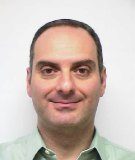
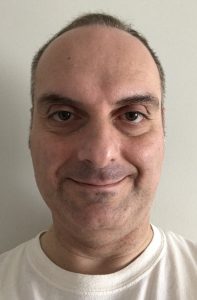
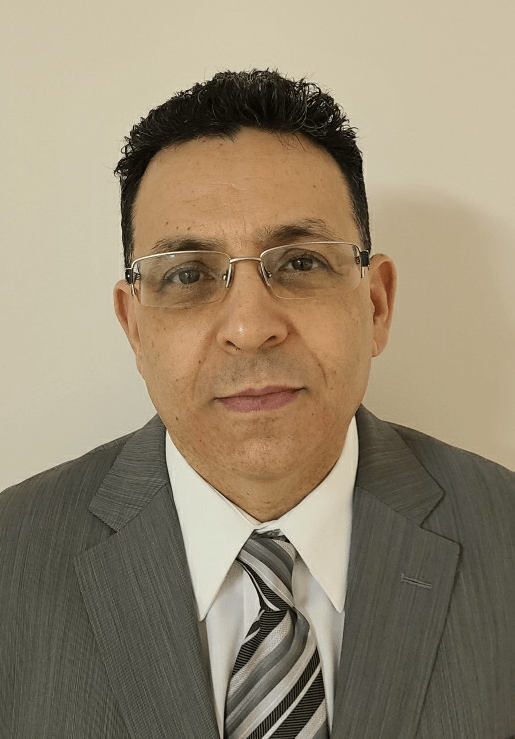
If you are a member of ASQ, then certainly you receive the monthly ASQ magazine Quality Progress. And if you read closely the April 2021 issue, then surely you realized that a few of our ASQ Montreal committee members were part of a group of four people who authored the article entitled “A Beginner’s Guide to Virtual Events“.

I am very proud of both J.P. Amiel and Raymond Dyer, who have both worked very hard to make sure that our current situation of “Virtual Webinar Events only” is well executed every last Wednesday of the month. As well, they have shown an openness to ideas and a regular drive to continuously improve the process of doing these kinds of events, and making them fruitful for everyone attending.

If you have not already read the article, then I encourage you to Click Here and start reading (You must login to your ASQ account first to access the full article).

Congratulations as well to the other two co-authors, Ruth Stanley and Michel Guenette.
Great job everyone!


Quality Progress – A Beginner’s Guide to Virtual Events Read More »

Next Event – Prochain Événement

Vers L’amélioration Continue 4.0, Un Petit Pas à La Fois

Mercredi 28 Avril, 2021 à 19:00

Towards Continuous Improvement 4.0, One Small Step at A Time — Webinar in French

– WEBINAIRE EN FRANÇAIS –

Le réseautage débute à 18h30.

Robert VadeboncoeurUne présentation par Robert Vadeboncoeur, B. ing. et president de Optigén Maintenance Inc. "Une donnée est un élément brut, qui n’a pas encore été interprétée ou mise en contexte".
La démarche IoT (Internet of Things) et l'entretien prédictif suscite beaucoup d’espoir dont l’amélioration du service, la productivité, la fiabilité, etc. Cependant en 2020, seulement 8% des entreprises ont implanté la démarche (Bain & cie 2018). Les principaux points d’achoppement sont la sécurité des informations, l’intégration Ti/To (Technologies de l'information et des opérations), le RSI (Retour sur l'investissement) incertain et l’expertise technique interne. Robert expliquera les différents concepts du 4.0 en maintenance suivi d'une démarche d’implantation progressive avec équipes de production/maintenance.

Robert Vadeboncoeur a été ingénieur principal aux équipements fixes de la STM pendant 30 ans et a été responsable technique d'un projet majeur d’optimisation de la maintenance (4M$, 500 employés). Depuis 2018, il réalise une maitrise à l'ÉTS sur l’Amélioration des processus de maintenance à l’aide des outils 4.0. Il a développé une expertise en résolution de problème et d’optimisation basé sur l’analyse prévisionnel incluant les senseurs IIoT (Industrial Internet of Things) pour extraire le plein potentiel des informations de maintenance recueillis.

Nous espérons vous y voir.

Attendance will be worth 0.5 RU (Recertification Units) for ASQ.
La participation vaut 0.5 RU (Recertification Units) de l'ASQ.

For more information on this upcoming event, see our Newsletter, myASQ or myASQ-FR.

Next Event – Prochain Événement Read More »

Word from the Chair

By Chantale Simard, MBA, Quality Assurance Analyst, Bombardier Aviation, ASQ CMQOE and CSSGB

Mini-survey and VOC Chair announcement

I am announcing a change in the ASQ Montreal Section Leadership Team. I would like to thank, from the bottom of my heart, Amine Djeffal who has been our VOC (Voice of the Customer) Chair over the past year. He gives way to Mauricio Figueroa, who will officially become our new VOC Chair in a few weeks. Mauricio has been attending our meetings and has been helping us out for several months. He is also a member of the committee that is organizing the ASQ Canada Conference to be held on October 4 and 5. We will miss Amine, at the same time, I am sure that he will remain a very involved member in the activities of the section.

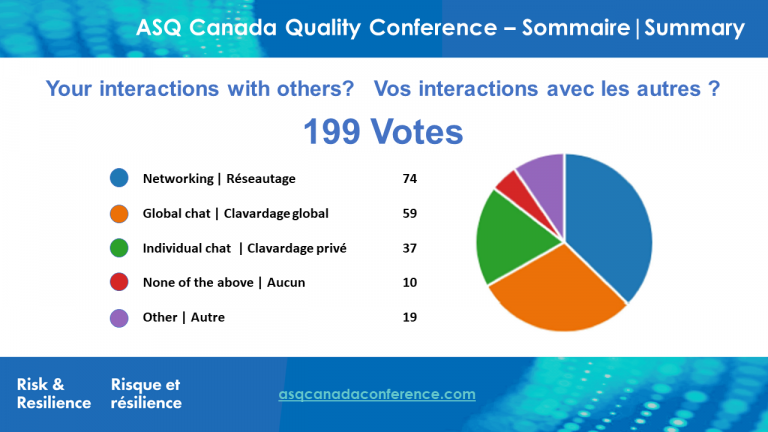
This month, I propose that you complete a mini survey. We use multiple platforms to reach Section members and friends, and I’d like to know which ones you’re using. Here is the link to the survey (you can choose to see it in English or French): Short Survey

Thank you very much for you help, I will give you the results next month!

FR

Give me your comments

Word from the Chair Read More »

The Editor’s Corner

Michael Bournazian

Michael BournazianBy Michael Bournazian, Eng., Newsletter Editor, ASQ Senior Member, CSSGB

If you are a member of ASQ, then certainly you receive the monthly ASQ magazine “Quality Progress”. And if you read closely the April 2021 issue, then surely you realized that a few of our ASQ Montreal committee members were part of a group of 4 people who authored the article entitled “A Beginner’s Guide to Virtual Events“.

I am very proud of both J.P. Amiel and Raymond Dyer, who have both worked very hard to make sure that our current situation of “Virtual Webinar Events only” is well executed every last Wednesday of the month. As well, they have shown an openness to ideas and a regular drive to continuously improve the process of doing these kinds of events, and making them fruitful for everyone attending.

If you have not already read the article, then I encourage you to CLICK HERE and start reading. You must login to your ASQ account first to access the full article.

Congratulations as well to the other 2 co-authors, Ruth Stanley and Michel Guenette. Great job everyone!

EDITOR’S NOTE: Neither the “C” word nor the “P” word were used during the writing of this article.

**********************************************

Any feedback? Click on the link and let me know.

Thank you, all the best and none of the worst.

The Editor’s Corner Read More »

ASQ Region Webinar-Webinaire

Lean as a Lever for a Sustainable Supply Chain – Le Lean comme levier pour une chaîne d’approvisionnement durable

Lean Supply Chain

What is your organization doing to positively impact the SDG goals?
Que fait votre organisation pour avoir un effet positif sur les ODD?

May 19, 2021 – 19 mai, 2021 (12h00)
(Webinar-Webinaire bilingue)

In 2015, the UN adopted a plan for achieving a better future for all with sustainable development goals (SDG) to end extreme poverty, fight inequality and injustice, and protect our planet. If this seems like a daunting task, join us to discuss what you can do in your organization to make the world a better place with Veronica Marquez, Certified Lean Six Sigma Black Belt with ASQ and Certified Sustainable Supply Chain Professional from ISCEA.


En 2015, les Nations Unies ont adopté un plan pour parvenir à un avenir meilleur pour tous avec des objectifs  de développement durable (ODD) visant à mettre fin à l’extrême pauvreté, à lutter contre les inégalités et l’injustice et à protéger notre planète. Si cela vous semble insurmontable, joignez-vous à nous pour discuter de ce que vous pouvez faire dans votre organisation pour rendre le monde meilleur avec Veronica Marquez, Certified Lean Six Sigma Black Belt avec l’ASQ et Certified Sustainable Supply Chain Professional de l’ISCEA. Looking forward to see you there. On vous y attends.

ASQ RU Recertification Units:
Attendance will be worth 0.5 RU (Recertification Units) for ASQ. A certificate will be sent by email after the event to the participants.
La participation vaut 0.5 RU (Recertification Units) de l’ASQ. Un certificat sera envoyé par courriel aux participants après l’événement.

ASQ Region Webinar-Webinaire Read More »

Had You Connected to the Last Event

Panel

Avrum Goldman

By Avrum Goldman, System Safety & Reliability Engineering, Pratt & Whitney Canada, ASQ CQE, CRE

Webinar: Women in Quality, Wednesday, March 31, 2021.

On March 31st, 2021, The Montreal section of the ASQ presented an amazing discussion with a talented and diverse panel of women who have made their careers in the field of Quality.

Veronica Marquez, M. Sc., CSSBB of Aristeío Consulting and member of the ASQ Montreal Section Leadership Team, moderated the panel discussion and networking event with the following panel members:

  • Marjaneh (Marsha) Pourmand: Senior Consultant with 7S Knowledge Express Inc.
  • Véronique Boucher: Independent Quality System Consultant and ASQ Certified Auditor with experience in medical devices, manufacturing and pharmaceutical sectors.
  • Carolee Rigsbee: Assistant Professor at University of Illinois at Springfield and senior member of the ASQ.
  • Farnoosh Naderkhani: Assistant Professor at the Concordia Institute for Information System Engineering (CIISE) at Concordia University.

Through the webinar access, in addition to panelists at remote locations, we were able to welcome participants from across Canada, USA, Brazil, India and Mexico!

The free-ranging and passionate discussion covered a number of key themes, including:

• Attracting women to Quality: To some extent, these are the universal challenges of raising awareness of career opportunities in Quality for all young people at the high school/university level. To this is added a general cultural bias steering women away from careers in STEM fields. Even awareness of STEM typically does not promote Quality. We need to demonstrate the excitement possible with a career in Quality, and the fulfillment that comes from solving challenging problems and making (your corner of) the world better. Consider supporting more student ASQ branches. Farnoosh and Veronica are leading a student outreach chapter of the Montreal ASQ to reach students “in their natural habitat” at school events, and promoting summer camp activities. Many of us have started our career in other fields and gravitated towards Quality. We need to keep our “outreach” going for our peers across our organizations.

• Challenges faced by women with careers in Quality: The challenge for women to be taken seriously and treated as equals can be even greater in technical fields. Is Quality perceived (by both women and men) as a “men’s field”? How to address this perception? Cultural biases can lead to women getting less understanding for failure and less credit for their accomplishments, and to being excluded from consideration for promotion and networking opportunities. Working remote adds challenges to networking and building informal work relationships. Even other women peers and managers can perpetuate the biases in their environments. 

• Guidance for women in their careers in Quality: Seek out mentors and leaders (both technical and managerial) that you can learn from, and who can identify opportunities and encourage you to take on challenges. Build credibility through lifelong learning and credentials (such as ASQ certification). Lack of credentials may be used as a barrier to progress. Demonstrated capability speaks for itself. Don’t box yourself in or build your own ceiling: view your credentials, skills and experiences as a “portfolio” of capabilities that you can bring to bear on whatever challenges and opportunities arise. Take a systems-level view of complex projects and organizations. Working in complex fields requires “soft skills” as much as technical knowledge. Change leadership is often the biggest challenge in a project.

• How we (both men and women) can support women in Quality: This is not just a “women’s issue”: Build awareness to recognize your organizations’ conscious and unconscious biases (and your own), and take steps to overcome them. Promote bias awareness, for example through use of gender-neutral terms and practices. Accommodate work-family balance and challenges that most often fall harder on women. This can be especially hard with current COVID-19 challenges. Promote networking opportunities for women, with both other women peers and with men. Build transparency and objectivity into the processes for training and advancement. Clear guidelines on what capabilities are needed for each position, and how to obtain them will eliminate preferential treatment. Recognize the need to mentor and develop people as a key part of your role as leader/manager. In Academia, the teaching/mentoring aspect of the professor’s role is institutionalized: help bring the same emphasis to other organizations.

Had You Connected to the Last Event Read More »

Voice of the Customer – Voix du client

Par Mauricio Figueroa, Voix du client

Le Panel de discussion virtuelle “Women in Quality” du 31 mars a eu une présence record avec plus de 60 participants, venus des quatre coins du monde. La majorité des participants (40%) résidait à Montréal et ses alentours (Laval, Pointe-Claire, Boisbriand), mais nous comptions également sur des personnes de la Capital Nationale et Mont-St-Hilaire. Pour le reste du Canada (15%), nous avons eu des représentants de la Nouvelle-Écosse (Halifax), de l’Ontario (Durham, Toronto, Windsor), du Manitoba (Winnipeg), et de l’Alberta (Calgary). À l’international, nous avons eu des représentants des États-Unis (Augusta, Bellevue, Bloomington, Clarksville, Edwardsville, Grand Rapids, Lafayette, Middletown, Orange County, Rochester, San Diego, Seattle and Washougal), qui comptent pour 25% de l’audience. Pour le reste des Amériques, nous comptions le Mexique (Mexico City) et le Brésil (Campinas) et enfin, par-delà les mers, nous avions les Émirats Arab Unis (Abu Dhabi), l’Iran et l’Inde (Chandigarh).

En général, vous avez été engoué par l’événement avec des niveaux d’appréciation de 95% pour la Qualité de la présentation, de 91% pour le sujet, et de 87% pour l’approche et l’Échange. Certaines personnes auraient toute foi voulue moins d’interventions de l’auditoire masculin et plus d’intervention de l’auditoire féminin, étant donné qu’elles étaient à l’honneur.

Comme la grande majorité (95%) est disposée à participer à un autre événement, nous vous invitons le 28 avril, 2021 à la conférence Vers l’amélioration Continue 4.0, un Petit Pas à la Fois avec Robert Vadeboncoeur.

Voice of the Customer – Voix du client Read More »

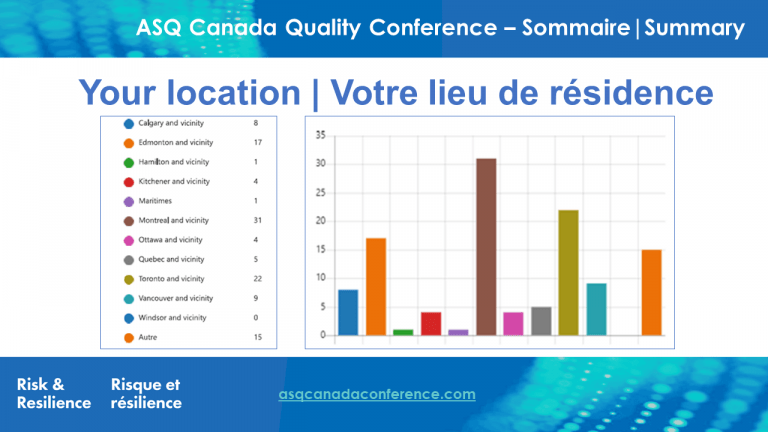
ASQ 2021 Canadian Conference | Conférence canadienne

Call for Papers | Appel de conférenciers

The Montreal Section will be hosting the 2021 ASQ Canadian Conference, which will take place on the 4th and 5th of October in virtual mode. The theme is Risk and Resilience and would be illustrated by various conferences and workshops with hands-on experiences, each rated by ‘knowledge levels’. Three objectives close to our hearts have been selected:

  • An interactive experience;
  • Activities categorized by level of knowledge of the subject;
  • A bilingual conference.

See the Call for paper details and to ask to present an article, please submit an abstract by 30 June 2021 to David Tozer, Technical Committee Chair. The committee will review the submissions and select papers for presentation.


La section de Montréal accueillera la Conférence canadienne de l’ASQ 2021 les 4 et 5 octobre en mode virtuel. Le thème est le Risque et résilience et sera illustré par diverses conférences et ateliers avec des expériences pratiques, chacune étant évaluée en fonction de “niveaux de connaissance”. Trois objectifs qui nous tiennent à cœur ont été identifié :

  • Une expérience interactive ;
  • Des activités classées par niveau de connaissance du sujet ;
  • Une conférence bilingue.

Voir les détails de l’Appel à conférenciers pour demander à présenter un article et soumettre un résumé avant le 30 juin 2021 à David Tozer, président du comité technique. Le comité examinera les soumissions et sélectionnera les articles à présenter.

ASQ 2021 Canadian Conference | Conférence canadienne Read More »

ASQ Montreal Welcome

Welcome | Bienvenue

Dedicated to quality since 1950

Je suis ravie de vous accueillir dans la section de Montréal, et j’espère pouvoir vous rencontrer bientôt. Pour nous aider à mieux vous connaître, veuillez répondre à ces brèves questions (choisir la langue de votre choix en haut à droite de la page).
Profitez des avantages que vous offre la section Montréal. Au plaisir de vous rencontrer!
Chantale Simard

—————

I am delighted to welcome you to the Montreal section, and I hope to be able to meet you soon.To help us get to you know better, please answers these short questions.
Please take advantage of the things Montreal Section has to offer you. Looking forward to meeting you!
Chantale Simard
Chantale Simard

VISION — MISSION

The vision of the ASQ Montreal Section is to function as a resource for learning, networking and fellowship for individuals, organizations, and the Quebec-wide community with an interest and passion for Quality. To promote and enhance the quality profession by providing support to our Section membership, offering information, educational programs and events and promoting the awareness and value of quality in the community.
Quality Drive

OUR EVENTS

We hold regular events from September through June, except for December, typically on the last Wednesday evening of the month.
These include individual speakers who talk on a range of subjects of interest to Quality Professionals, but we also organize:
  • • Tours, whenever possible;
  • • Mentoring events;
  • • Networking events;
  • • Events for our student population;
  • • Panel events and workshops.
Note that our events are virtual now, but when we are back live, it will be our pleasure to offer you a free meal at the first event you attend.
To learn more about our next events, please visit our website.
Learning

INTERESTED IN AN ASQ CERTIFICATION?

We can help you prepare to certify through teaching or exam preparation.
Have a certification already? Recertification
Participation in events contributes to your recertification. Otherwise, you have to retake the exam which is costly both in time and money. For more information, please visit ASQ’s website.

SECTION LEADERSHIP TEAM

Dedicated to the advancement of Montreal Quality Professionals. The team includes our:
  • • Section Chair
  • • Vice Chair
  • • Secretary
  • • Treasurer
As well as the following Committee Chairs and members:
  • • Program and Arrangements
  • • Auditing
  • • Certification / Recertification
  • • Education
  • • History of the section
  • • Internet Liaison
  • • Membership
  • • Newsletter Editor
  • • Nominations
  • • Social Media
  • • Student Outreach
  • • Voice of the Customer
  • • Web Site Committee
We are all volunteers! Offering your time to ASQ Montreal provides a great opportunity for networking and developing new skills. Contact us and we will gladly answer your questions and welcome you to the leadership team.

WE SUCCEED IF WE ADDRESS YOUR NEEDS

We are looking forward to hearing your opinions and any ideas you may have.
You can share them with the leadership team through the contact addresses.

OTHER SECTION BENEFITS

Newsletter - The section circulates a newsletter within its membership 9 times per year, primarily covering local quality initiatives, events, and training opportunities.See our past newsletters.
Mentoring Program - We can help you improve technical knowledge or leadership skills. Seasoned members can increase their network and advancement opportunities.

TO LEARN MORE ABOUT US AND OUR EVENTS

Our monthly Newsletter myASQ anglais myASQ français
Information about events and sections across the ASQ network.
ASQ Montreal ASQ Students ASQ Montreal

We hope we can be a key part of your quality journey!

Quality Journey

Subscribe/Opt out: You are receiving this e-mail because you are registered to the ASQ Montreal Section. You must login at ASQ to change your communications preferences.

Copyright © 2021 ASQ Montreal.
Articles may be reproduced/used if the source is credited to ASQ Montreal Section.

ASQ Montreal Welcome Read More »

Had You Connected to the Last Event

Debbie Sears Barnard

By Fatima Al-Roubaiai, Graduate Student, School of Nursing, UBC Okanagan

Had You Connected . . . Can Continuous Improvement Impact the Reduction of Systemic Racism in Healthcare

On February 24th, 2021, Debbie Sears Barnard gave an informative and inspirational talk via TEAMS from her home in Dubai about what Continuous Improvement (CI) professionals can do about systemic racism in healthcare. Debbie began by giving a special shout out to the Women in Lean, an online community of improvers, as well as Deondra Wardelle of #rootcauseracism for their power and energy towards ending racism around the world. This is part of what I love about learning with Debbie – she begins from a place of purpose, a place of community, and invites you in with arms wide open. I first met Debbie in Northern Ontario ten years ago. She was my first mentor in quality and improvement, and she continues to be a support for me today. One of her reminders to all of us working for change was to “get comfortable being uncomfortable,” and she found a way to bring that into her presentation.

One point that I continue to reflect on is how in 2021, we still cannot ensure that all patients will be treated with respect and dignity. Not in the United States, not in Canada, and not around the world. It has been decades since the Institute of Medicine report and To Err is Human were published, and in this time, there have been infinite references to the social determinants of health, yet still the frustration with our failure to move the needle on equity is real. Healthcare has a long history of racism to work through. The Tuskegee Syphilis Study in which researchers experimented on Black men enrolled in the study for 40 years and knowingly allowed them to die when a treatment became available. Or myths about physical racial differences that doctors still believe today, and that lead to racial profiling in healthcare and differences in treatment. All of this is unnerving and can bring about all types of feelings, so now what do we do about it?

Debbie made an excellent point around CI professionals being perfectly positioned to help move us from the current to an idealized state. She challenged us to learn and act. Do we know the key terms around this topic: racism, implicit bias, intersection of racism and health, equality, equity? She challenged us as CI professionals to use the language, to use what we know to help the teams we work with. Do we really know what our baseline is? Where are the gaps? Go and see! When we approach equity, let’s apply the same steps to problem-solving – identify, analyze, develop, test/implement, sustain.

The most impactful recommendation had to be around making equity the priority. Equity infuses all of quality care. That work needs to happen at an organizational and leadership level. We need to identify and promote the conditions that support equity and quality in healthcare. Is there a lens of diversity, equity, and inclusion? Do the members of the health system represent the communities that they serve? Do staff feel taken care of and safe? And do they understand their role towards the overall strategy?

This past year, with the pandemic spreading around the world; the killing of George Floyd (and so many others) by police in the US; the deaths of Chantel Moore, Ejaz Choudry, and other fatal encounters with police and RCMP during wellness checks in Canada; and the anti-Indigenous, anti-Asian, anti-Black, anti-other racism happening across our country – this talk helped to focus me towards action. I am so grateful to Debbie for taking the time to research and prepare this talk, and I thank ASQ Montreal for hosting and encouraging my small contribution with this article.

I have compiled a list of a few of the many resources Debbie shared in her talk to pass on to my fellow CI and quality professionals:

Had You Connected to the Last Event Read More »

Turning Data into Useful Information

Dr David TozerBy Dr. David Tozer, Ph.D., ASQ CQE and SSBB, Education & Audit Chair.

Over the years I have seen many presentations where people collect data to perform evaluations and then try to draw conclusions from the data.  In many cases it is difficult to draw conclusions from the data collected.  A common reason for this difficulty is the data were collected by an experiment or evaluation that did not use designed experiment methodology to guide how to collect data.

For almost 100 years, we have been teaching Design of Experiments (DOE) to students.  These methods are more efficient and effective, from an economic perspective, than other methods.  In some industries, designed experiments are used regularly.  Examples include agriculture, chemical and pharmaceutical safety and efficacy testing (pre-clinical and clinical trials).  In other parts of industry, designed experiments are uncommon.  Many of us are involved in doing experiments or evaluations.  I think it would be useful to use a scientific method to perform experiments or evaluations.

Scientific work is based on having standards.  I am not referring to ISO standards, but the physical standards that are the basis for commerce, physics, chemistry, biology, engineering and medicine.  Standards reduce bias and allow us to use a common language to describe the world.  These physical standards include the degree (temperature), ampere, kilogram, metre, second and mole.  In the case of biological and social systems, we often do not have well-defined physical standards when performing experiments or evaluations.  In these circumstances we designate a sample from the population as a control to serve as the standard.  Controls receive a reference treatment and can include placebos (sugar pill), untreated subjects or a current treatment.

Designed experiments can be used in almost all industries and get useful results. The simplest experiment that could be used by many organizations is described in the following example. 

An activity that is done in almost all industries is training.  Another thing that is common to many industries: the money spent on training does not seem to yield the expected results in increased productivity or effectiveness. 

So, to assess training effectiveness the following process could be used:

1) Before training begins:

  • Training methods are developed and documented;
  • Important performance metrics are identified;
  • People being sent on training are evaluated to access current performance, the control, and data collected on the current performance. 

2) The people are then trained in the required skill using the developed methods. 

3) After training is completed, the trained people are evaluated for their performance of the required skill, the treatment effect. 

4) The difference in performance between the control and the treatment is assessed to see if there is a training effect.

In more technical terms, this set up is a single factor (training) repeated measures (repeated on the same people) two level experiment (control and treatment). 

The analysis of the results requires the use of the first statistical test discovered in the early 1900s.  It too is the simplest possible statistical test.

We also need to make sure the environment and selection of trainees is done in as uniform a manner as possible.  It is important to ensure the environment, in which any experiment or evaluation is done, is understood and documented.  All results are conditional on the environment the data were collected in.  In the case of the training example the results are conditional on the training methods.

An important take away from this short discussion is the idea of a control as a reference standard.  It is not the same as a physical standard, but it is a standard nonetheless.  Standards in the form of controls should form the basis for evaluations and experiments in many business situations.

As mentioned earlier, the example demonstrates the simplest designed experiment possible.  The real world is a lot more complicated.  For more complicated systems, more complicated designs need to be used.  Many economical methods have been developed over the years to handle complicated situations.  The methods can be used for evaluation, screening and optimization.  Some designs look for relative changes and may not, at first glance, appear to have a standard or control.  It is always a useful exercise to determined what the actual control is when doing an experiment or evaluation.

By performing designed experiments, data collected during the evaluation are turned into information about the effectiveness of an intervention.  By using information, we can make better informed decisions.

Turning Data into Useful Information Read More »

Word from the Chair

By Chantale Simard, MBA, Quality Assurance Analyst, Bombardier Aviation, ASQ CMQOE and CSSGB

This month, I would like to share with you a summary of our Business Plan for 2021. First, all objectives of Geographic Community (GC) level entities such as the Montreal Section and the Canada and Greenland Region must be aligned with the ASQ Strategic objectives. Those are:

  • Improve the individual member experience
  • Institute best practices in governance, operations, and risk management
  • Drive thought leadership in excellence through quality
  • Deliver new, tailored solutions to organizational members and customers.

Your section business plan includes metrics and targets. Here is a list of our main targets for this year:

  • Support the Canada Conference 2021 in October: This one just changed to Hosting the Canada Conference 2021. You may remember my February article where I told you about our main objectives for this big event!
  • Host one of the 9 Regional Webinars
  • Host 8 Montreal events and 2 Student events
  • Publish 8 newsletters per year
  • Increase in myASQ activity over 2020 with a focus on new joins and downloads.
  • Minimum 3 French-language events in the Montreal area and minimum one of the events of the Student Outreach committee in French.
  • Find new ways for promotion of ASQ certifications and make investments

If you want to volunteer on the Section Leadership Team (SLT), we always need extra help. You need to be a “Full”, “Senior” or “Fellow” member to join. We hold a meeting at the beginning of every month (except during the summer). Our meetings are all virtual for the moment. But, even when we were holding face to face meetings, we started using technology to accommodate SLT members to join electronically. This makes it easier for members outside the Montreal area or people with different or busy schedules to get involve. Some of us are giving a lot of time to the Section and others have less time to invest and it is really good; all help is welcome.

All volunteers are adding value to Section members and help attain our mission: To promote and enhance the quality profession by providing support to our Section membership, offering information, educational programs and events, and promoting the awareness and value of  quality in the community.

Contact me if you would like to help the Montreal Section by taking up a role on the SLT.

Give me your comments

Word from the Chair Read More »

2021 ASQ Canadian Conference

2021 ASQ Canadian Conference

The Montreal Section will be hosting the 2021 ASQ Canadian Conference, which will probably take place in October, traditionally Quality Month, but in virtual mode. A planning team has started work and has identified many ideas. The working theme for the Conference is Risk and Resilience and it would be illustrated by various conferences and workshops with hands-on experiences, each rated by “knowledge levels”. We have already identified three objectives close to our hearts:

  • An interactive experience;
  • Activities categorized by level of knowledge of the subject;
  • A bilingual conference.

Stay tuned for further developments.

2021 ASQ Canadian Conference Read More »

Voice of the Customer – Voix du client

Amine Djeffal

Amine DjeffalBy Amine Djeffal, ASQ CQA, RAC, Quality and Regulatory Affairs Professional.

Can the Continuous Improvement (CI) Professional Influence the Reduction of Systemic Racism in Healthcare (24 February 2021).

Interestingly 38% of the audience declared themselves as ASQ senior members. If we take a look at poll results in terms of field and responsability, non-managerial roles and manufacturing areas are what defined the audience the most.

Participants expressed interest in attending other webinars. Many topics were proposed such as Risk management, Human error, Audits and Quality standards offered by registrars.

Based on poll results nearly 29% of the participants heard about the event through the section’s newsletter which demonstrates it is still the perfect communication channel to reach a maximum of ASQ members and to keep them informed about the section’s events. In addition, using Eventbrite to inform members about our section’s events was efficient, since 18% of the attendees heard about the event through this platform. Finally 07:00 pm to 9:00 pm was the best time to join webinar.

We would like to thank all the attendees for their enthousiasm, as usual. We look forward to connecting with you soon at one of our events.

Since this Voice of the Customer report is my last one, I would like to take this opportunity to bid farewell to the Section Leadership Team and to all ASQ Montreal section members.

Amidst the pandemic that we continue to endure we’ve learnt a lot. We should continue to see the value in the positive and encouraging lessons of resilience.

Stay safe and healthy.

Voice of the Customer – Voix du client Read More »

Scroll to Top