World Conference on Quality & Improvement (May 7-10, 2023)

Michael Bournazian

By Michael Bournazian, Eng., Newsletter Editor, ASQ Senior Member, Quality Management Professional, CSSGB

ASQ will be holding their World Conference on Quality & Improvement very shortly (May 7-10, 2023) in Philadelphia, Pennsylvania, and it will be “In Person”.

If you wish to have more information or to register, please click HERE.

World Conference on Quality & Improvement (May 7-10, 2023) Read More »

Word from the Chair | Mot du président

Raymond Dyer

Raymond DyerBy Raymond E. Dyer (Ray), ASQ Senior Member, CMQ/OE, & CQA (Texte en français suit)

For those of you that use LinkedIn, this post from Karen Martin might be of interest. The reason it is interesting is that it demonstrates, in an easy to understand manner, how individual efficiencies and improvements might seem like a good thing, but can actually harm the overall efficiency and effectiveness of a process. The example involves a row boat with four rowers, two rowing on each side. If one of these rowers finds a way of becoming much more effective, but does not bring the other three rowers up to the same level, the row boat veers off course. That can so easily happen with process improvements if not implemented keeping in mind the impact on parallel, downstream, and upstream processes. So remember, improvements need to keep in mind the overall impact, not just a specific component of it. Think of the impact on the overall system. Also, please continue to reach out and share these good notions with our Quality community. Thank you!


Pour ceux d’entre vous qui utilisent LinkedIn, cet article de Karen Martin pourrait vous intéresser. La raison pour laquelle il est intéressant est qu’il démontre, d’une manière facile à comprendre, comment les efficacités et les améliorations individuelles peuvent sembler être une bonne chose, mais peuvent en fait nuire à l’efficacité globale d’un processus. L’exemple est celui d’un bateau à rames avec quatre rameurs, deux rameurs de chaque côté. Si l’un de ces rameurs trouve un moyen de devenir beaucoup plus efficace, mais n’amène pas les trois autres rameurs au même niveau, le bateau à rames dévie de sa route. Cela peut facilement arriver avec des améliorations de processus si elles ne sont pas mises en œuvre en gardant à l’esprit l’impact sur les processus parallèles, en aval et en amont. N’oubliez donc pas que les améliorations doivent tenir compte de l’impact global, et pas seulement d’un élément spécifique. Pensez à l’impact sur l’ensemble du système. Nous vous invitons également à continuer à partager ces bonnes notions avec notre communauté de qualité. Merci!

Send me your comments | Envoyez-moi vos commentaires

Word from the Chair | Mot du président Read More »

Lean: A catalyst for sustainable businesses — Guest appearance in Indianapolis

Lean: A catalyst for sustainable businesses — Guest appearance in Indianapolis

This Valentine’s Day, February 14th, 2023, while we were enjoying little chocolates with our significant others, our Social media Chair and resident knows-a-lot-about-sustainability, Veronica Marquez, M.Sc., CSSBB, ASQ Member, President, Founder and Senior Consultant of Aristeio was sharing her knowledge and experience on Lean: A catalyst for sustainable businesses with participants at an event put on by the ASQ Indianapolis Section. Her presentation aimed at showing the synergy that exists between Lean management and realizing a sustainable organisation. Here are some notes on that presentation.

UN Sustainable Development Goals

Recent unusual extreme weather events in our southern neighbour’s regions, probably peaked her audience’s curiosity to learn more on how “human actions still have the potential to determine the future course of climate”. Veronica, a believer that lean tools are in the forefront of solutions, proposed ways for participants to instigate the necessary changes in their organisation so that sustainability becomes part of their Lean path and evolution.

Her basis is from various European studies in 2019 which showed that ten countries produced more than 68% of global greenhouse gas emissions (!!). In that report, China was the largest, followed by the US, India, the European Union (27 countries counted as one), Russia, Japan, Brazil, Indonesia, Iran and Canada. It also showed that for the US and Canada (in similar proportions but not quantities), the majority of the effects were from Electricity/Heat, Transportation, Building and Manufacturing/Construction. It was proposed that in 2016, globally, energy use represented 73,2% of the 50 billion tonnes of greenhouse gas emissions. Having made that statement, it followed that there goals must be set and solutions found. The United Nations (UN) set 17 goals. Veronica proposes that Sustainability in Supply Chain management — the orchestration and continuous improvement of planning and execution of processes on strategic, tactical and operational level along a value chain end-to-end, operating within economic, environmental, and social thresholds — should be one of them.

The emissions throughout the supply chain may be identified and then reduced or eliminated by thinking in terms of Lean and Green processes — economic growth is combined with continued reductions of greenhouse gas emissions and other environmental impacts. This may be achieved by the use of effective demand management and efficiency measures, the efficient use of energy, water, and other natural resources, optimized inputs to production processes, and a decrease/elimination of the level of waste to landfill.

Lean   Green
  • Management System
  • Improve performance
  • Create value for the customer
  • True north
  • Efficiency
  • Waste reduction
  • People involvement
  • Cost reduction
 
  • Reducing hazardous emissions
  • Eliminating wasteful resources
  • Recycling
  • Minimizing health risks and environmental footprint during the whole life-cycle.

VSM Green CharacteristicsVisual Stream MappingBecause “linking Lean and Green is a real advantage as opposed to implementing two distinct approaches”, Veronica explained that of the various tools currently available to the professional (5S, ANDON, JIT, KANBAN, POKE-YOKE, SMED and TPM), shared examples of 5S and TPM could work to solve productivity and environmental issues as part of  a strategic vision for Lean and Green. In that regard, the US Environmental Protection Agency (EPA) proposed adding a “Green” layer perspective to the traditional Visual Stream Mapping (VSM) typically used in Lean to document every step in the process. This “Green” layer perspective could then be applied to environmental projects and help instigate the necessary changes in an organisation so that sustainability becomes part of their Lean path and evolution.

Veronica then proposed how to integrate the Lean-Green deployment as a strategic sustainability, the integration into the corporate bottom-line and discussed steps to overcome barriers. An interesting presentation indeed.


Some further ressources:


Lean: A catalyst for sustainable businesses — Guest appearance in Indianapolis Read More »

Word from the Chair | Mot du président

Raymond Dyer

Raymond DyerBy Raymond E. Dyer (Ray), ASQ Senior Member, CMQ/OE, & CQA (un texte en français suit)

So many thoughts roam through my head. As ASQ Montreal Section Chair, one of the major ones is ensuring our membership and section leadership team grows and is sustained. No easy tasks given life’s priorities in general and the state of professional involvement such as in Quality with ASQ.

I guess it really comes down to why invest funds and time into an organization like ASQ? There are as many that tried and left as those that have been at it for years. What makes the difference? Commitment, involvement, social passion for the cause, true caring for interpersonal support, and the list goes on. It really has to do with commitment, the appreciation for the value of the professional networking that surfaces, and the pride of feeling you’ve made a difference.

To all those out there sitting on the fence and wondering how they can really make a difference in our Quality profession, reach out and exchange with us. Many of us have been at this for a while and are more than willing to share what inspires us to continue being an ASQ member and a section leadership team player.


Tant de pensées tournent dans ma tête. En tant que président de la section de l’ASQ Montréal, l’une des principales est de veiller à ce que notre équipe de direction de la section et de ses membres augmente et soit maintenue. Ce n’est pas une tâche facile compte tenu des priorités de la vie en général et de l’état de l’engagement professionnel, comme dans le domaine de la qualité avec l’ASQ.

Je suppose que cela revient à se demander pourquoi investir des fonds et du temps dans une organisation comme l’ASQ. Il y en a autant qui ont essayé et sont partis que ceux qui sont là depuis des années. Qu’est-ce qui fait la différence? L’engagement, l’implication, la passion sociale pour la cause, le véritable souci du soutien interpersonnel, et la liste est longue. C’est vraiment une question d’engagement, d’appréciation de la valeur du réseau professionnel qui en découle, et de la fierté de sentir qu’on a fait une différence.

Pour tous ceux qui hésitent et se demandent comment ils peuvent vraiment faire une différence dans notre profession de la qualité, contactez-nous et échangez avec nous. Beaucoup d’entre nous le font depuis un certain temps et sont plus que désireux de partager ce qui nous inspire à continuer à être un membre de l’ASQ et un membre de l’équipe de direction de la section.

Send me your comments | Envoyez-moi vos commentaires

Word from the Chair | Mot du président Read More »

ASQ Certification Study Group

Dr David TozerBy Dr. David Tozer, Ph.D., ASQ CQE and SSBB, Education & Audit Chair.

Would you like to work with others to prepare for ASQ examinations? We have a Teams based section study group that is open every Tuesday evening from 7:00 pm to 8:30 pm, starting January 17, 2023.

Join the team and get to help each other. Contact the host Dr. David Tozer, Montreal Section Education Chair, to obtain a link.


Aimeriez-vous travailler avec d’autres personnes pour préparer les examens de l’ASQ ? Nous avons un groupe d’étude Teams ouvert tous les mardis soirs de 19 h à 20 h 30, à partir du 17 janvier 2023.

Rejoignez l’équipe et aidez-vous mutuellement. Contactez l’hôte, Dr. David Tozer, président de l’éducation de la section de Montréal, pour obtenir un lien.

ASQ Certification Study Group Read More »

Student Outreach | Sensibilisation étudiante

Farnoosh Naderkhani

Farnoosh NaderkhaniBy Dr. Farnoosh Naderkhani, ASQ Member, Assistant Professor @Concordia, Student Outreach Committee Chair  (un texte en français suit)

We are working to organize another successful seminar/webinar series for 2023.

Our first guest will be Dr Mohammad R. Faghani, PhD, a Director at Price-Waterhouse-Coopers Canada (PwC), whose role is to advise clients in financial, public sector and technology services on various cybersecurity initiatives. As the final details will not be available in time for this Newsletter, please visit our Student Outreach bulletins on our LinkedIn and EventBrite pages for this very interesting exchange.

___________________________________________________

Nous travaillons à l’organisation d’une autre série de séminaires/webinaires réussis pour 2023.

Notre premier invité sera le Dr Mohammad R. Faghani, PhD, un directeur chez Price-Waterhouse-Coopers Canada (PwC), dont le rôle est de conseiller les clients des services financiers, du secteur public et de la technologie sur diverses initiatives de cybersécurité. Comme les détails définitifs ne seront pas disponibles à temps pour cette infolettre, veuillez consulter nos bulletins de Sensibilisation des étudiants sur nos pages LinkedIn et EventBrite pour cet échange très intéressant.


If you are part of an educational institution and would like to have more visibility on quality-related topics, please contact us. We have a network of potential speakers that may be of interest to you. Contact Raymond Dyer on LinkedIn.

Si vous faites partie d’un établissement d’enseignement et que vous souhaitez avoir plus de visibilité sur les sujets liés à la qualité, veuillez nous contacter. Nous disposons d’un réseau de conférenciers potentiels qui pourraient vous intéresser. Contactez Raymond Dyer sur LinkedIn.


Student Outreach | Sensibilisation étudiante Read More »

Voice of The Customer | Voix du Client

Chantale Farley 2023

Chantale FarleyPar Chantale Farley, Responsable VoC (English text follows)

La présentation du 25 janvier offerte par Sophie Gagnon du Groupe Filia portant sur la norme ISO 37001 Système de Gestion anticorruption a connu un franc succès. En effet, 16 répondants ont complété le sondage et le taux de satisfaction a atteint 95%. Le sujet, ainsi que la présentatrice, ont particulièrement été appréciés par les participants avec un taux de 97%.  La satisfaction sur l’approche et les échanges ont également été confirmés avec un taux de 94%.

L’activité débutait à 18h30 avec une période de réseautage où il a été possible d’échanger sur divers sujets.  Parmi le groupe, nous avons pu remarquer une belle représentation de tous les secteurs d’affaires.  Par ailleurs, une grande majorité des participants provenaient de la Grande région Métropolitaine alors que d’autres de Trois-Rivières, Québec et Mexico.

Merci à tous pour votre participation à cet évènement.


The January 25th presentation given by Sophie Gagnon of Groupe Filia on the ISO 37001 Système de Gestion anticorruption (ISO 37001 Anti-Corruption Management System) standard was a great success. Indeed, 16 participants completed the survey and the satisfaction rate reached 95%. The subject, as well as the presenter, were particularly appreciated by the participants with a rate of 97%. Satisfaction with the approach and the exchanges were also confirmed with a rate of 94%.

The activity began at 6:30 p.m. with a networking period where it was possible to discuss various topics. Among the group, we noticed a good representation from all business sectors. In addition, a large majority of participants came from the Greater Metropolitan Area while others from Trois-Rivières, Quebec and Mexico City.

Thank you all for your participation in this event.

Voice of The Customer | Voix du Client Read More »

ASQ Montreal Section – Education Program 2023

Dr David TozerBy Dr. David Tozer, Ph.D., ASQ CQE and SSBB, Education & Audit Chair.

ASQ Certification often leads to higher paying employment. The money invested in education and certification increases chances of finding employment quickly in the down sizing environment we live in.  People who take the section sponsored refresher courses, and spend at least twice as much time as spent in the classroom on self study, have an 80%, or better, chance of passing the examination on the first attempt.

Having ASQ certification gives you an edge in the market and can significantly increase your income.
Courses are now available online as well | Courses now available online

    • Certified Quality Engineer : quality concepts, cost of quality, human resources, team formation and group dynamics, inspection, metrology, sampling, reliability, quality standards, quality audit, statistics, design of experiments, process improvement, liability, and modern management methods for improving quality.
    • Certified Six Sigma Black Belt: quality concepts, cost of quality, enterprise wide deployment, business process management, project management, team formation and group dynamics, define, measure, analyze, improve, control, lean enterprise, statistics, design of experiments, and design for six sigma.
    • Certified Six Sigma Green Belt: quality concepts, cost of quality, enterprise wide deployment, business process management, project management, team formation and group dynamics, define, measure, analyze, improve, control, and statistics.
    • Certified Manager of Quality/Organizational Excellence: quality concepts, quality planning, customer focus, quality standards, project management, cost of quality, team formation and group dynamics, human resources and improvement.
    • Certified Quality Auditor: quality concepts, team formation and group dynamics, management responsibility, audit objectives, audit preparation, audit conduct, audit reporting, sampling, and basic statistics.
    • Certified Quality Inspector: quality concepts, team formation and group dynamics, geometry, metrology, reading drawings, mechanical processes, statistical process control, inspection, and sampling.

    Calendar and Registration Online Form
    Questions? Cours en site/In house courses, etc. Contact: Dr. David Tozer (514) 694-2830

ASQ Montreal Section – Education Program 2023 Read More »

The Editor’s Corner | Mot de l’éditeur

Michael Bournazian

By Michael Bournazian, Eng., Newsletter Editor, ASQ Senior Member, Quality Management Professional, CSSGB

When we talk about QUALITY in our domain, it more often than not involves the quality of the parts we manufacture or the services we provide. Fair enough, but many other things require similar focus and energy, one of those things being QUALITY OF LIFE.

A friend of mine (both on and off Facebook) recently posted the following statement, in advance of the bone-chillingly cold days we had in Quebec at the start of February 2023:

“I typically don’t mind winter, but we’re getting to the portion of the program that always makes me question certain life choices”.

Aside from the laugh it gave me, it did make me think about how we all make big, important choices during the course of one’s life: what career to have, buying a home, getting married, where to live, etc. And in the end, all of these choices will affect your quality of life.

My life philosophy for many years has been: get up each day, be grateful that you got up, and do your best with whatever the day brings. Or perhaps worded differently . . . today, have the best quality of life that you can.

Does this mean that my quality of life each day is excellent? Hardly. But it does mean that I will do my utmost to have the best day possible. I don’t know who said it first, but the expression “Every day above ground is a good day” is one that I fully subscribe to.

Was the recent cold snap fun? You guessed it . . . hardly. But I got through it, and if you are reading this, so did you.

So congratulations on having the best quality of life you could under those circumstances.

EDITOR’S NOTE: Neither the “C” word nor the “P” word were used during the writing of this article.

**********************************************

Any feedback? Click on the link and let me know.

ALSO . . .  Please contact me or any one else on the Leadership team if you would like to:
1) Write and submit an article to be published in the Newsletter.
2) Write a review of one of the upcoming monthly webinars for the “Had You Been There” section.

Thank you, all the best and none of the worst.

The Editor’s Corner | Mot de l’éditeur Read More »

Had You Connected to the Last Event | Si vous étiez connecté

JP Amiel

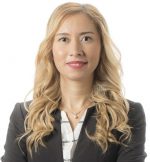
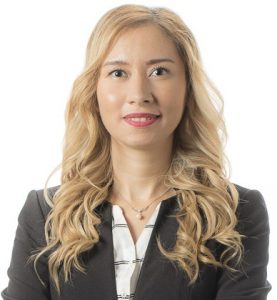
Sophie GagnonISO 37001: Système de gestion anticorruption
(ISO 37001: Anti-corruption Management System)

Par Jean-Pierre Amiel, ASQ Senior, CQA ret., Responsable comité web. (English text follows)

Vous pensiez tout savoir sur les normes ISO? Eh bien, comme 72% des participants, nous ne savions pas qu’ISO avait publié en 2016 une norme sur la gestion anticorruption et qu’on s’apprêtait à en faire sa mise à jour. En réalité, Sophie Gagnon, notre conférencière invitée nous a expliqué qu’il ne fallait pas vraiment se fier au titre de cette norme parce qu’elle traite surtout sur l’ensemble des valeurs de l’entreprise, donc l’éthique. Elle a partagé son parcours professionnel d’ingénieure dans le domaine manufacturier et d’amélioration continue, d’innovation des processus et ce qu’il l’a enfin amené à faire une maîtrise en éthique appliquée, son dada favori.

Selon sa présentation, nous avons appris qu’il y aurait plus de 7,900 sites (2,996 entreprises) de certifiés mondialement à cette norme et que 28% sont en Italie, 17% en Indonésie, 10% en Corée. Le reste sont surtout dans des pays asiatiques et Amérique latine. Et le Québec alors? Il y a Hydro Québec et la municipalité de Granby (!) et il semble que la firme Pomerleau est en phase de développement. Pourrait-on être choqué si l’on en croit les “unes” des contrats de construction ici? En 2018, suite à la Commission d’enquête sur l’octroi et la gestion des contrats publics dans l’industrie de la construction, le gouvernement du Québec a passé une loi permettant à la Régie du bâtiment du Québec (RBQ) la latitude de participer à la prévention et la lutte contre les pratiques frauduleuses et la corruption dans la construction. Cette approche volontaire, se base sur les grand principes de la norme pour évaluer et décerner des Certificats d’intégrité.

Il y a eu beaucoup de discussions et d’échanges sur l’approche quant à la mise en oeuvre d’un tel système et aussi comment un organisme pourrait s’auditer, se faire auditer et certifier son intégrité. Sophie nous a ramener aux principes de la norme, celle-ci “. . . définit des exigences pour les systèmes de management conçus pour aider les organismes à prévenir, détecter et lutter contre la corruption, et à respecter les lois anti-corruption et leurs engagements volontaires applicables à leurs activités“.  Donc, une prévention par la mise en place de l’analyse des risques d’opportunités de dérapage afin de mettre en place les systèmes et mécanismes qui peuvent les réduire ou les éliminer. C’est à dire, évaluer les divers risques: gouvernance; éthique; non-respect des lois et des règlements; ressources humaines; personnes; sécurité de l’information; appels d’offres; comités de sélection; collusion et vérification inadéquate. Ensuite, de s’assurer de développer une vision commune des valeurs de l’entreprise, les définir, les faire connaitre au personnel et en valider son respect. Être moralement correct non seulement à l’interne, mais aussi vu de l’externe.

Sophie nous a ensuite présenté et rappelé les quatre phases de la mise en oeuvre d’un système: Planifier – Déployer – Contrôler – Agir, mais pas nécessairement en ligne continue, plutôt en boucle de validations afin d’assurer l’atteinte de chaque bloc. Elle a ensuite dressé un portrait de l’approche au Québec du développement des systèmes internes permettant de se qualifier à un Certificat d’intégrité. Elle a terminé en présentant une autre vision de l’éthique – Savoir quant et comment réfléchir — en référence au processus qu’un professionnel met en oeuvre lorsqu’il agit avec pertinence en situation.

Vous avez raté une bonne présentation.

Nous nous réjouissons de poursuivre les discussions sur ce sujet ainsi que sur d’autres à l’avenir.

And you thought you knew everything about ISO standards? Well, like 72% of the participants, we didn’t know that ISO had published a standard on anti-corruption management in 2016 and that it was about to be updated. In fact, Sophie Gagnon, our guest speaker, explained to us that we should not really rely on the title of this standard because it deals mainly with all the values of the company, i.e. ethics. She shared her career path as a manufacturing engineer and in continuous improvement/process innovation and what finally led her to do a master’s degree in applied ethics, her favourite hobby.

From his presentation, we learned that there are over 7,900 sites (2,996 companies) certified to this standard worldwide and that 28% are in Italy, 17% in Indonesia, 10% in Korea. The rest are mostly in Asian countries and Latin America. What about Quebec? There is Hydro Quebec and the municipality of Granby (!) and it seems that Pomerleau is in the development phase. Could we be shocked if we believe the front pages of construction contracts here? In 2018, following the Commission of Inquiry into the awarding and management of public contracts in the construction industry, the Quebec government passed a law allowing the Régie du bâtiment du Québec (RBQ) the latitude to participate in the prevention and fight against fraudulent practices and corruption in construction. This voluntary approach is based on the main principles of the standard for evaluating and awarding Integrity certificates.

There was a lot of discussion and exchange on the approach to implementing such a system and also how an organisation could audit itself, be audited and certify its integrity. Sophie took us back to the principles of the standard, which sets out “. . . requirements for management systems designed to help organisations prevent, detect and combat corruption, and to comply with anti-bribery laws and voluntary commitments applicable to their activities“. Thus, prevention through the implementation of risk analysis of opportunities for slippage in order to put in place systems and mechanisms that can reduce or eliminate them. This means assessing the various risks: governance; ethics; non-compliance with laws and regulations; human resources; people; information security; tenders; selection committees; collusion and inadequate auditing. Secondly, to ensure that a common vision of the company’s values is developed, defined, communicated to staff and validated. To be morally correct not only internally, but also externally.

Sophie then presented and reminded us of the four phases of the implementation of a system: Plan – Deploy – Control – Act, but not necessarily in a continuous line, but rather in a loop of validations in order to ensure the achievement of each block. She then presented a portrait of the approach used in Quebec to develop internal systems so as to qualify for a Certificate of Integrity. She concluded by presenting another view of ethics – Knowing when and how to think – in reference to the process a professional uses when acting appropriately in a situation.

You missed a good presentation.

We look forward to continuing discussions on this and other topics in the future.

Had You Connected to the Last Event | Si vous étiez connecté Read More »

ASQ Career Pathways — Map your professional career

By Jean-Pierre Amiel, ASQ Senior, CQA ret., Web committee Chair.

Plan your career today: where would you like to go with Career Pathways?

ASQ has developed a tool that will allow you to “map out” your career journey, now available in beta test form for you to provide feedback on. The Career Pathways tool is full of resources and learning to help you reach your desired role, field, and experience level, as well as find new and exciting opportunities on our job board. Click on the links below to find basic information about typical quality field roles, the skills required and potential advancement opportunities.

Mid-level icon tile and button Mid-level icon tile and button Advanced icon tile and button

More information…


ASQ Career Pathways — Map your professional career Read More »

Word from the Chair | Mot du président

Raymond Dyer

Raymond DyerBy Raymond E. Dyer (Ray), ASQ Senior Member, CMQ/OE, & CQA (un texte en français suit)

We had our Section Leadership Team meeting this week. After the meeting was over, a few of us stayed on the call to network a little and share our stories. I couldn’t help noticing that, while we’re all Quality professionals, we each have our preferred areas of expertise, e.g. management system audits, Lean Six Sigma process improvement methods, inspection, statistics, Design of Experiments, etc.

In sharing this with the team, one of our learned leaders asked if a few of us could support him to make an easier to understand Design of Experiments presentation (DOE). Right away a few of us accepted, not only to help him out but also to learn more on the topic, recognizing it’s not a particularly strong area of knowledge for us.

What happened that evening is yet another example of how networking, learning, and friendships occur when one decides to invest some time volunteering for their ASQ section. In February, I will have been a member of our section for 30 years. Except for a couple of years where I was president of my son’s daycare, I’ve been an active leadership team member for most of my membership. It is work, but the return on investment is really worth it, not only for professional recognition, but also for the feeling of making a difference and for the friendships we develop. Should you be interested in becoming a Section Leadership Team member, please contact any of us to discuss it. Thank you!


Nous avons tenu notre réunion d’équipe de direction cette semaine. Après la réunion, quelques-uns d’entre nous sont restés en ligne pour réseauter et partager leurs histoires. Je n’ai pas pu m’empêcher de remarquer que, bien que nous soyons tous des professionnels de la qualité, nous avons chacun nos domaines d’expertise préférés, par exemple les audits de systèmes de gestion, les méthodes d’amélioration des processus Lean Six Sigma, l’inspection, les statistiques, les plans d’expériences, etc.

En partageant cela avec l’équipe, l’un de nos leaders vénérables a demandé si quelques-uns d’entre nous pouvaient l’aider à faire une présentation plus facile à comprendre sur la conception d’expériences (DOE). Quelques-uns d’entre nous ont immédiatement accepté, non seulement pour l’aider, mais aussi pour en apprendre davantage sur le sujet, car il ne s’agit pas d’un domaine de connaissances particulièrement fort pour nous.

Ce qui s’est passé ce soir-là est un autre exemple de la façon dont le réseautage, l’apprentissage et les amitiés se produisent lorsqu’on décide d’investir un peu de temps dans le bénévolat pour sa section de l’ASQ. En février, cela fera 30 ans que je suis membre de notre section. À l’exception de quelques années où j’étais président de la garderie de mon fils, j’ai été un membre actif de l’équipe de direction pendant la majeure partie de mon adhésion. C’est du travail, mais le retour sur investissement en vaut vraiment la peine, non seulement pour la reconnaissance professionnelle, mais aussi pour le sentiment de faire une différence et pour les amitiés que nous avons développées. Si vous souhaitez devenir membre de l’équipe de direction de la section, veuillez contacter l’un d’entre nous pour en discuter. Merci!

Send me your comments | Envoyez-moi vos commentaires

Word from the Chair | Mot du président Read More »

Had You Connected to the Last Event | Si vous étiez connecté (2022.11.30)

JP Amiel

Kaikaku Before Kaizen
(Le Kaikaku avant le Kaizen)

By Jean-Pierre Amiel, ASQ Senior, CQA ret., Secretary, Web committee Chair and Audit Chair. A review of our last event of the year, a webinar the 30th of November 2022 with Albanesa Ymaya, live from the Dominican Republic. (Texte en français)

Kaizen Teian, Kaizen Events, Kaikaku, Kakushin
How is your Japanese quality dictionary?

It turns out that 76% of the 27 respondents to our quick poll admitted that they had not heard of Kaikaku and that 19% had heard a little about it. Well of course, this meant that our webinar participants had both ears propped up to listen to Albanesa Ymaya explain what this beast was and how it differed from it’s better known brother Kaizen. A new concept? No. It’s just that we have been more concerned with doing Kaizen events since they are easier to realize and show results sooner.

To get us started, Albanesa first introduced the terms proposed by Masaaki Ima (considered the father of Continuous improvement) as part of his spirit of improvement, and then described the relationships between Kaizen Teian, Kaizen Events, Kaikaku and Kakushin.
a1a362a0df302431c743cf934418ef85-huge-ka

She then proceeded to explain the commonalities of both Kaikaku and Kaizen and illustrated their major differences by using extinguishing a fire as the goal — using Kaikaku is like using a fire hose, doing Kaizen events is like using water droplets. With both methods you will reach for the same improvement goal but, bottom line, the effort and time required to realize the goal and the eventual gain, impact and benefits are quite different as shown in the graph. For the three main blocks of a process, the table below summarizes the Kaikaku and Kaizen parameters. Typically the “Inputs” are the same but the differences appear in the “Global Process” and the “Outputs” — the efforts required and benefits obtained.

Inputs Global Process Outputs
Kaizen Kaikuku Kaizen Kaikuku Kaizen Kaikuku
• Leadership support (8-10)
• Training material
• Office supplies
• KPIs Information
• Lean, SME (OpEx leader or trained Kaizen leader)
• Work room as needed
• Food and drinks
• Leadership support (8-10)
• Training material
• Office supplies
• KPIs Information
• Lean, SME (OpEx leader or trained Kaizen leader)
• Work room as needed
• Food and drinks
• Pre-event plan: 15-30 days
• Event development: 3-5 days (8hrs)
• Action plan completion: 30 days, average
• Pre-event plan: 30 days
• Event development: 15 days (120hrs)
• Implementation: 60-180 days, average
• Issue eliminated or improved
• Employee engagement
• Best practices shared
• Employees trained
• Savings/cost reduction
• Improved operational performance
• Stable process
• Improved margin
• Improved flow
• Several projects completed
• Best practices shared
• Employee engagement improved
• Improved behaviours
• Improved culture
• Savings/cost reduction

Albanesa also shared and clarified for us the philosophy she embodies with her clients: to first plan a Kaikaku project and then do Kaizen events so as to support and achieve improvement opportunities.
Her equation for success: KAIKAKU + KAIZEN EVENT + KAIZEN TEIAN + KAKUSHIN = THE REAL LEAN TRANSFORMATION APPROACH. She’s a Kaizen type of lady, no?
As a result, there were many exchanges by the participants, as summarized below:

  • How do you measure the results to know that the initiative gave the expected results? How long do you analyze after implementation? AY: Projects are first selected on the data collected and the evolution of KPIs.
  • How is Kaizen and Kaikaku different from Lean Six Sigma? Participant: Kaikaku is like multiple focused Kaizen events that integrates them. Re-engineering is to do it again but somehow the human component is not usually considered, in the long term it is less effective.
  • What’s the difference between Kaikaku and breakthrough?
  • How do you achieve the team’s commitment to achieve the transformations? AY: Teaching and implication.
  • I believe also people have to find a purpose for themselves . . . what’s in it for me?
  • Organizations which have no slack . . . do not innovate . . . and are not robust and sustainable. Many participants: The fallacy of productivity alone, to the cost of strategy and operational excellence. Planning “slack” time ensures buffers which can be used for teaching, problem solving and other opportunities.
  • . . . IMHO, if you are not making mistakes, one is not trying hard enough. Push the envelope. So Albanesa, are you saying to try not to be scared of that mistake when you are innovating?
    • Risk is a prerequisite to innovation.
    • I heard an ex-Google engineer say that in innovation, you need to fail often and fail fast otherwise there is no innovation.
    • The commitment is easy to get from management as long as you don’t need them to commit resources, time or money.

    We look forward to further discussions on this subject as well as others in the future.


    Kaizen Teian, Événements Kaizen, Kaikaku, Kakushin
    Comment se porte votre dictionnaire qualité en Japonais?

    Il s’avère que 76% des 27 personnes ayant répondu à notre sondage éclair ont admis ne pas avoir entendu parler du Kaikaku et que 19 % en avaient un peu entendu parler. Il va de soit que les participants à notre webinaire ont bien tendu l’oreille pour écouter Albanesa Ymaya expliquer ce qu’était cette bête et en quoi elle différait de son frère plus connu, le Kaizen. Un nouveau concept? Non. C’est juste que nous nous sommes davantage intéressés aux événements Kaizen, car ils sont plus faciles à réaliser et donnent des résultats plus rapidement.

    Pour démarrer, Albanesa a d’abord présenté les termes proposés par Masaaki Ima (considéré comme le père de l’amélioration continue) dans le cadre de son esprit d’amélioration, puis elle a décrit les relations entre le Kaizen Teian, les événements Kaizen, le Kaikaku et le Kakushin.

    Elle a ensuite expliqué les points communs entre Kaikaku et Kaizen, et a illustré leurs principales différences en utilisant l’extinction d’un incendie comme objectif – utiliser Kaikaku, c’est comme se servird’un boyau d’incendie, faire des événements Kaizen, c’est comme utiliser des gouttes d’eau. Avec les deux méthodes, vous atteindrez le même objectif d’amélioration mais, en fin de compte, l’effort et le temps nécessaires pour atteindre l’objectif et le gain final, l’impact et les avantages sont très différents, comme le montre le graphique. Pour les trois principaux blocs d’un processus, le tableau ci-dessous résume les paramètres Kaikaku et Kaizen. Généralement, les “Intrants” sont les mêmes, mais les différences apparaissent dans le “Processus global” et les “Sortants” – les efforts requis et les bénéfices obtenus.

    Intrants Processus Global Sortants
    Kaizen Kaikuku Kaizen Kaikuku Kaizen Kaikuku
    •Soutien aux dirigeants (8-10)
    •Matériel de formation
    •Fournitures de bureau
    •Informations sur les indicateurs clés de performance
    •Lean, PME (leader OpEx ou leader Kaizen formé)
    •Salle de travail selon les besoins
    •Nourriture et boissons
    •Soutien aux dirigeants (8-10)
    •Matériel de formation
    •Fournitures de bureau
    •Informations sur les indicateurs clés de performance
    •Lean, PME (leader OpEx ou leader Kaizen formé)
    •Salle de travail selon les besoins
    •Nourriture et boissons
    •Plan de pré-événement: 15-30 jours
    •Développement de l’événement: 3-5 jours (8h)
    •Achèvement du plan d’action: 30 jours, en moyenne
    •Plan de pré-événement : 30 jours
    •Développement de l’événement: 15 jours (120 heures)
    • Mise en œuvre: 60-180 jours, en moyenne
    •Problème éliminé ou amélioré
    •Engagement des employés
    •Partage des meilleures pratiques
    •Employés formés
    •Economies/réduction des coûts
    •Amélioration des performances opérationnelles
    •Processus stable
    •Amélioration de la marge
    •Amélioration du flux
    •Plusieurs projets achevés
    •Partage des meilleures pratiques
    •Amélioration de l’engagement des employés
    •Amélioration des comportements
    •Amélioration de la culture
    •Economies/réduction des coûts

    Albanesa a également partagé et clarifié pour nous la philosophie qu’elle incarne avec ses clients: d’abord planifier un projet Kaikaku, puis organiser des événements Kaizen afin de soutenir et de réaliser des opportunités d’amélioration.
    Son équation pour le succès: KAIKAKU + ÉVÉNEMENT KAIZEN + KAIZEN TEIAN + KAKUSHIN. Une femme de type Kaizen, non?
    En conséquence, les participants ont eu de nombreux échanges, résumés ci-dessous:

    • Comment mesurez-vous les résultats pour savoir si l’initiative a donné les résultats escomptés? Combien de temps analysez-vous après la mise en œuvre? AY: Les projets sont d’abord sélectionnés en fonction des données recueillies et de l’évolution des indicateurs clés de performance.
    • En quoi le Kaizen et le Kaikaku sont-ils différents du lean six sigma? Participant: Kaikaku est comme de multiples événements Kaizen ciblés qui les intègrent. La réingénierie consiste à recommencer, mais d’une manière ou d’une autre, la composante humaine n’est généralement pas prise en compte et, à long terme, elle est moins efficace.
    • Quelle est la différence entre Kaikaku et la percée?
    • Comment obtenez-vous l’engagement de l’équipe pour réaliser les transformations? AY: L’enseignement et l’implication.
    • Je crois aussi que les gens doivent trouver un but pour eux-mêmes… qu’est-ce que j’y gagne?
    • Les organisations qui n’ont pas de marge de manœuvre . . . n’innovent pas . . . et ne sont pas robustes et durables. De nombreux participants: L’erreur de la productivité seule, au détriment de la stratégie et de l’excellence opérationnelle. La planification du temps libre permet de créer des tampons qui peuvent être utilisés pour l’enseignement, la résolution de problèmes et d’autres opportunités.
    • . . . À mon avis, si vous ne faites pas d’erreurs, c’est que vous ne faites pas assez d’efforts. Poussez l’enveloppe. Albanesa, êtes-vous en train de dire que vous devez essayer de ne pas avoir peur de l’erreur lorsque vous innovez?
      • Le risque est une condition préalable à l’innovation.
      • J’ai entendu un ancien ingénieur de Google dire qu’en matière d’innovation, il faut échouer souvent et rapidement, sinon il n’y a pas d’innovation.
      • L’engagement de la direction est facile à obtenir tant que vous n’avez pas besoin qu’elle engage des ressources, du temps ou de l’argent.

    Nous nous réjouissons de poursuivre les discussions sur ce sujet ainsi que sur d’autres à l’avenir.

Had You Connected to the Last Event | Si vous étiez connecté (2022.11.30) Read More »

The Editor’s Corner | Mot de l’éditeur

Michael Bournazian

By Michael Bournazian, Eng., Newsletter Editor, ASQ Senior Member, Quality Management Professional, CSSGB

Late last year, I helped organize and participated in a 2-day Supplier Quality workshop in my company. One of the things that I did at the start of each day’s sessions was to present a safety moment. On Day 1, I presented a one-pager on safe driving habits during the winter season, timely as we were about to enter the snowy season. On Day 2, I focused on safe practices when dealing with hazardous materials in the workplace.

More and more when I attend workshops, all-hands presentations, etc., I find that these events are starting with safety moments. And it is good to see, for in my humble opinion, there is plenty of crossover between Safety and Quality, whether it be during our working time or our personal time.

So going forward in 2023 and beyond, please do your best to assure your own personal safety in anything you do, as I am sure no one would want to be the subject of the headline below, which caught my eye as I was starting my first day of work in 2023.

EDITOR’S NOTE: Neither the “C” word nor the “P” word were used during the writing of this article.

**********************************************

Any feedback? Click on the link and let me know.

ALSO . . .  Please contact me or any one else on the Leadership team if you would like to:
1) Write and submit an article to be published in the Newsletter.
2) Write a review of one of the upcoming monthly webinars for the “Had You Been There” section.

Thank you, all the best and none of the worst.

The Editor’s Corner | Mot de l’éditeur Read More »

ASQ Certification Study Group

Dr David TozerBy Dr. David Tozer, Ph.D., ASQ CQE and SSBB, Education & Audit Chair.

Would you like to work with others to prepare for ASQ examinations? We have a Teams based section study group that is open every Tuesday evening from 7:00 pm to 8:30 pm, starting January 17, 2023.

Join the team and get to help each other. Contact the host Dr. David Tozer, Montreal Section Education Chair, to obtain a link.


Aimeriez-vous travailler avec d’autres personnes pour préparer les examens de l’ASQ ? Nous avons un groupe d’étude Teams ouvert tous les mardis soirs de 19 h à 20 h 30, à partir du 17 janvier 2023.

Rejoignez l’équipe et aidez-vous mutuellement. Contactez l’hôte, Dr. David Tozer, président de l’éducation de la section de Montréal, pour obtenir un lien.

ASQ Certification Study Group Read More »

Scroll to Top