Last Event Review

Had You Been There | Si vous étiez présent

Teddy Bear Doctor

A lean start-up of a centre for pediatric emergencies

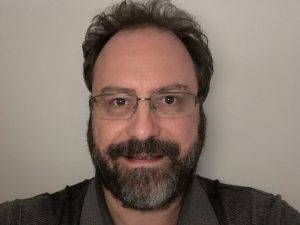
Teddy Bear DoctorSummary of our November 24th, 2021 conference by Dr. Sasha Dubrovsky, president and co-founder of Up (centre d’Urgences Pédiatriques – Centre for pediatric emergencies) a lean start-up on Montreal’s south shore.
By Francisco Oliveira Machado, Adm. A., D. Sc. ASQ member. (texte en français suit)

For the ASQ Montreal November webinar, Dr. Dubrovsky began by introducing us to his medical clinic by emphasizing his own self-perception: he does not qualify his initiatives, his perception, his feeling and other characteristics as being that of a true Quality Manager. He thinks he needs more knowledge in this area. As a result, several participants, including myself, did not agree with him.

From his initial idea of creating a pediatric center, Dr. Dubrovsky chose to consider the accepted understanding of Lean reducing waste and variability, and always being simple as a cornerstone. He has worked hard to minimize the suffering of parents and their children when they needed a health center for appropriate care. His work led to the choice of setting up his clinic on the South Shore of Montreal in order to reduce traffic time. He really knows the needs of his customers and where they come from!

Creating a new organization based on Lean principles is not an easy task, but he has succeeded. How?
Firstly, by putting into practice the five principles of the book “The Lean Start-up: How Constant Innovation Creates Radically Successful Businesses” by Eric Ries (new Renaud-Bray edition). Those principles are:

Create a new product under conditions of extreme uncertainty;
Entrepreneurship becomes management in extreme uncertainty;
• Learning how is a key to building a sustainable business;
The “build-measure-learn” cycle as a fundamental activity;
• Focus on execution.

Secondly, he mentioned his company’s perception is that the pediatric unit exists to foster a strong bond between families and his team. In this sense, he shared the clinic’s “manifesto”:

No one left behind;
Provide quality pediatric emergency care close to home, with responsibility for follow-up;
Create “WOW” moments;
We are mentors, coaches and lifelong learners;
Welcome and lead change;
Engage in continuous improvement;
Together we can create a win-win with 1 + 1 = 5 math.

In conclusion, my overall impression of this webinar is that his company is a good case study for the practice of lean methodology, a well-established lean start-up in Quebec. He constantly uses the DMAIC (Define / Measure / Analyze / Improve / Control) methodology and Ries’ principles, and is therefore able to retain his staff during difficult real world circumstances, where a pandemic has changed healthcare organizations around the world.

Finally, I will leave you with this expression that he presented during the webinar: “Before I state the problem, are there any solutions?”.

Démarrage Lean d’un centre d’urgence de pédiatrie

Sommaire de la conférence du 24 novembre, 2021, du Dr. Sasha Dubrovsky, président et cofondateur d’Up (centre d’Urgences Pédiatriques) un démarrage lean à la rive-sud de Montréal.
Par Francisco Oliveira Machado, Adm. A., D. Sc. Membre de l’ASQ.

Pour ce webinaire de l’ASQ Montréal, le Dr Dubrovsky a commencé par nous présenter sa clinique médicale en mettant l’accent sur sa propre perception de lui-même: il ne qualifie pas ses initiatives, sa perception, son ressenti et autres caractéristiques comme étant celles d’un véritable Responsable Qualité. Il pense avoir besoin de plus de connaissances dans ce domaine. De ce fait, plusieurs participants, dont moi-même, n’étaient pas d’accord avec lui.

À partir de son idée initiale de créer un centre pédiatrique, le Dr Dubrovsky a choisi de considérer la compréhension acceptée du Lean ─ réduire le gaspillage et la variabilité, et toujours être simple ─ comme une pierre angulaire. Il a travaillé dur pour minimiser la souffrance des parents et de leurs enfants lorsqu’ils avaient besoin d’un centre de santé pour des soins appropriés. Son travail l’a amené à choisir d’installer sa clinique sur la Rive-Sud de Montréal afin de réduire le temps de circulation. Il connaît vraiment les besoins de ses clients et d’où ils viennent!

Créer une nouvelle organisation basée sur les principes du Lean n’est pas une tâche facile, mais il a réussi. Comment?
D’abord, en mettant en pratique les cinq principes du livre “The Lean Start-up: How Constant Innovation Creates Radically Successful Businesses” d’Eric Ries (nouvelle édition, Renaud-Bray). Ces principes sont les suivants:

Créer un nouveau produit dans des conditions d’incertitude extrême;
L’entrepreneuriat devient le management dans une incertitude extrême;
• Apprendre comment, est une clé pour construire une entreprise durable;
Le cycle « construire-mesurer-apprendre » comme activité fondamentale;
• Concentrez-vous sur l’exécution.

Deuxièmement, il a mentionné que la perception de son entreprise est que l’unité pédiatrique existe pour favoriser un lien fort entre les familles et son équipe. En ce sens, il a partagé le “manifeste” de la clinique:

Personne n’est laissé pour compte;
Fournir des soins d’urgence pédiatriques de qualité à proximité du domicile, avec responsabilité du suivi;
Créer des moments “WOW”;
Nous sommes des mentors, des coachs et des apprenants tout au long de la vie;
Accueillir et conduire le changement;
S’engager dans l’amélioration continue;
Ensemble, nous pouvons créer un gagnant-gagnant avec les mathématiques 1 + 1 = 5.

En conclusion, mon impression générale de ce webinaire est que son entreprise est une bonne étude de cas pour la pratique de la méthodologie lean, une start-up lean bien établie au Québec. Il utilise constamment la méthodologie DMAIC (Define / Measure / Analyze / Improve / Control ou Définir / Mesurer / Analyser / Innover (Améliorer) et Contrôler) et les principes de Ries, et est donc en mesure de conserver son personnel dans des circonstances réelles difficiles, où une pandémie a changé les organisations de soins de santé dans le monde entier.

Enfin, je vous laisserai sur cette expression qu’il a présentée lors du webinaire: “Avant d’énoncer le problème, y a-t-il des solutions?”.


Our next event | Notre prochain rendez-vous :

Une marque employeur forte comme facteur clé pour le succès de votre transformation Lean (A strong employer brand – Key factor of successful Lean transformation) avec Alexis et Martin CARIGNAN, le 24 Janvier 2022. Un webinaire en français − Q&A Bilingue.

Had You Been There | Si vous étiez présent Read More »

Had You Connected to the Last Event
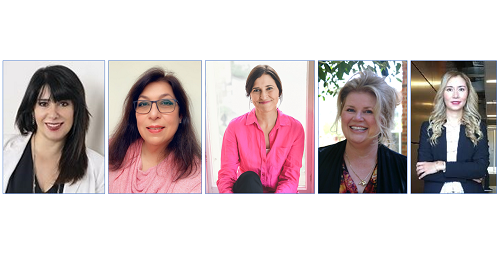
Cristian Dragnef

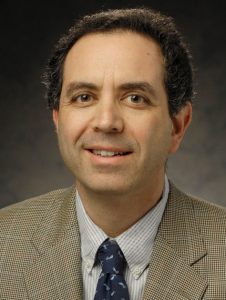
Raymond DyerBy Raymond E. Dyer, ASQ Senior Member, CMQ/OE, CQA, Program Chair and Section Secretary

Had you been connected….. Le 25 Novembre 2020, Exploiter votre système de gestion qualité (SGQ) ISO pour garantir la sécurité des données critiques and December 17th 2020, Party on line | Party en ligne.

Commençons par la présentation de Cristian Dragnef en novembre. Il nous a parlé de l’efficacité et des risques opérationnels, et de l’exposition à différents niveaux de risque pour la confidentialité, l’intégrité, la disponibilité et la conformité, y compris les menaces et les risques que ces expositions peuvent soulever. Il a ensuite parlé de la gestion des facteurs de risque tels que les conséquences, les stratégies, les dépendances et les actions (ou contrôles). Il a ensuite partagé certaines estimations de coûts pour diverses formes de violations de la sécurité suivie par les principaux facteurs de sécurité de l’information à prendre en compte. Cristian a terminé en montrant comment les normes ISO 9001 (système de gestion de la qualité) et ISO 27001 (système de gestion de la sécurité de l’information) pouvaient fonctionner ensemble pour fournir un système de gestion intégré complet. Les parties que j’ai vraiment appréciées ont été de partager les exemples sur les conséquences des menaces et les risques sur la confidentialité, l’intégrité, et la disponibilité et la comparaison des principales sections des deux normes, c’est-à-dire ISO 9001 et ISO 27001. Cristian et sa présentation ont obtenu un score de 100 % (4 et 5 sur 5) pour le sujet, l’approche et le présentateur. Il est vraiment dommage que certaines personnes aient eu des difficultés à se joindre à cet excellent événement.

Now for the Party on line | Party en ligne held in December. This networking event was hosted by incoming Section Chair Chantale Simard using Teams. Given the difficulties several interested individuals had in joining our November event, the Section Leadership Team decided to set aside Webex and try using Teams, another video conferencing tool made available to us by ASQ. It’s a different look and feel, but the virtual event went quite well. Chantale led a roundtable of introductions and some of the stories shared were quite amusing. Some people got to meet each other for the first time, old-timers like me knew everyone that attended, but really enjoyed seeing them again. In both circumstances, the exchanges were a pleasant way to end what had been a very challenging year. We’re going to try and leverage this experience to start the year off using Teams instead of Webex and see where this brings us. We’ll continue to explore alternatives to bring our members and interested Quality parties the best events we can.

To all, we wish you a safe, healthy, and happy new year for 2021.
Nous vous souhaitons à tous une bonne et heureuse année 2021, en toute sécurité et santé.

Had You Connected to the Last Event Read More »

Had You Connected to the Last Event

Diego Lithgoe

Veronica MarquezBy Veronica Marquez, M.Sc., CSSBB, ASQ senior member, and Had You Connected . . . COACHING SIX-SIGMA TEAMS

On October 28th, the Montreal section was around their computer screens to listen to a talk about Diego Lythgoe’s perspective on his journey of coaching.

Diego started with introducing the “coaching definition”, according to the International Coaching Federation (ICF): “partnering with clients in a thought-provoking and creative process that inspires them to maximize their personal and professional potential”. It is important to realise that coaching is not teaching and is not mentoring. It is an exploration based on curiosity and not knowing the answers. For those that practice Lean Six Sigma projects, this may sound somewhat familiar.

Based on my understanding from the presentation, the coaching’s competency model relies on 4 main sections. I’ve represented it in the following table.

The coach is there to help the client, not to solve the issue. The conversation therefore needs to focus on how the client is seeing and understanding the issue. It is about seeing the issue from the client’s perspective and their understanding of it. Since the coach is there for the client’s “growth to be optimal”, the focus must be on the client and not the issue being solved.

When looking at coaching outcomes specifically for a LSS practitioner’s development path, we can see two distinct axes. First, from individual to collective goals. Second, from behaviour to results. This 2 by 2 matrix lets us plot the different coaching outcomes that can be worked on depending on the experience of the LSS and the goals of development. Since Diego was addressing coaching in LSS teams, the team dynamics becomes an important element to consider. Therefore, he looks for shared goals and purposes; structured communications; allocated responsibilities and accountabilities; a level of interdependence; a willingness to place the collective goal above their own priorities; clear boundaries; and operating within a social system context. The coach of the LSS team must be able to understand the environment within which the team is operating; understand the phases of team development; understand the power and politics; connect the coaching to organisational change and development; and finally, consider the coaching as a leadership development process.

Interestingly, Diego presented the coaching system as being part of a social ecology, i.e. the organisation’s environment. Meaning that the coach interacts within an established system between the client team and the management, and both of these form part of the whole organisation. The coach’s relationship with both the client team and the management requires important levels of trust that cannot be breached. Therefore, a situation where the coach also directly reports to the management can create discomfort and uneasiness. Clear guidelines and methodology appear to be critical for the coaching cycle to be successful when in such an environment.Finally, as practitioners of LSS, we are familiar with the Define, Measure, Analyze, Improve and Control (DMAIC) approach. Diego took it further and applied coaching to it and presented a new framework which guides the coach to use the DMAIC principles when coaching. The key elements of this framework are that all steps are driven with open questions as the coach wants to insight reflection to the client.

Diego finished the presentation with some of his personal “a-ha” moments into his coaching journey. His passion for coaching and for LSS wholly evident through his entire talk. I sincerely hope that you can meet him one day and have a conversation with him about coaching. It will encourage you to learn more about it.

Thank you Diego!

Had You Connected to the Last Event Read More »

Had You Connected to the Last Event

Raymond DyerBy Raymond E. Dyer, ASQ Senior Member, CMQ/OE, CQA, Internet Liaison and Section Secretary

Had You Connected . . . RISK MANAGEMENT

Our last event showcased Jim Moran, an experienced ISO standards professional, trainer, and speaker. The topic was managing risk with ISO 31000. Even before Jim could begin, I started the questions by asking him why ISO 31000 and not 31001 like ISO 9001, ISO 14001, ISO 27001 (you get the idea). This was quickly addressed by Jim reminding us that standards that finish with a “1” are those you can generally get registered to. Those that finish with a “0” are typically guidelines that provide principles, a framework, and a process. In the case of ISO 31000, these guidelines are for managing risk. That is in large part what Jim went through, i.e. the principles, framework, and process for managing risk. He also went into the benefits of doing so. He showed a few approaches or tools used in managing risks, including Ishikawa Diagrams, Process Mapping, Risk Analysis Matrices, Internal Audits, etc. By the way, one attendee did comment that AS9100 was an exception of a standard finishing by “0” that you can get registered to (thanks Michael) . . . (Editor’s Note: You’re welcome).

My challenge in writing this article was that I was also moderating the webinar, and so not really taking notes. There were a few amusing stories Jim raised that caught my attention, most notably when he talked about “in his time” they used five and a quarter inch floppy disks. I reflected on that with amusement given I still remember a time we stored programs on cassette tapes and even go as far back as providing program instructions on decks of punched out cards back in university!

One of the benefits of being the moderator is having access to survey (or poll) feedback from our Webex host J.P. Amiel. I hope not to repeat too much information that our Voice of the Customer Chair Amine Djeffal will report, but here is some of the feedback:

– Great topic and presentation. – Great presentation! Much appreciated! – Thank you everyone, great presentation 🙂 – Thanks for organizing this excellent event! I only miss the human interaction! – Like the idea of survey as we go! Keeps the audience engaged! – Thanks for an outstanding presentation. – Very interesting subject. It will be nice to go a bit deeper on it. – Thank you, great presentation. – Interesting presentation on topic. Highly knowledgeable presenter. – Thank you Ray, ASQ Section and Jim Moran.

I shared the video recording with Véronique B. who could not attend, but wanted to know if she could hear the recording of the event. Her feedback was: “Great presentation, I really appreciate it. Jim is really a good communicator, he knows what he is talking about and I liked his vision. I also laughed several times such as when he mentioned the floppy disk ;-). Good job inviting him.” Thank you Véronique for the feedback.

Now we did get feedback about opportunities to improve on both the presentation and the format as well, namely to incorporate more practical examples in the presentation and to consider opening the format to encourage more exchange amongst the attendees, many of whom no doubt know each other. For example, one participant asked if it would be possible to see fellow attendees during the first few opening minutes of the event. We’ll need to explore the implications of this latter suggestion, but the feedback has been registered. Thanks!

As I said when kicking off the event, I’ve enjoyed Jim Moran’s weekly emailed bulletins on various topics surrounding the ISO world of standards for over a year and a half. They’re reasonable in duration, informative, and somewhat amusing, at least to me. If you’re interested in subscribing to them, visit https://simplifyiso.com/. I look forward to hearing from you at our next event! Thanks for attending and participating.

Had You Connected to the Last Event Read More »

ASQ Montreal — Had You Connected To The Last Event — Food Fraud | La Fraude Alimentaire

Amine Djeffal

Here’s a brief description of the Section’s first Webinar on Food Fraud by Amine Djeffal, ASQ CQA, RAC, Quality and Regulatory Affairs Professional.

1054cf4809c203d0930fa699fbb46f6c-huge-deDeborah Esplin is a Food Safety and Quality Contract Auditor with SAI Global, with 16 years in food production and auditing. Before starting her career in consulting, Deborah worked 13 years for several companies ranging from nut and granola processing, gluten-free bakery products to natural products and packing of drink mixes.
As a food safety consultant, she has carried out almost 200 audits in food manufacturing plants in North America. Since fraud detection and controls are important elements in many of the standards audited, this webinar was an opportunity to learn more from Deborah’s experience and knowledge.

According to the Canadian Food Inspection Agency (CFIA), food fraud happens when food is intentionally misrepresented. It may also happen through substitution, addition/adulteration and tampering at any point in the supply chain. In 2019, Canadians were shocked when confronted with news that counterfeit seafood had found its way onto retail store shelves and restaurants. Surprisingly, based on webinar poll results, only 44% of the attendees felt confident in the food they consume as being genuine.
Food adulteration is not easy to control due to supply chain complexity. In addition, one cannot rely solely on certifications to reduce risk. Some certifications like those issued by the Global Food Safety Intiatiative (GFSI) require food fraud risk assessment and controls from applicants. At government level, CFIA requires preventive control plans for meeting labelling regulations. Other initiatives and strategies to mitigate risks include stricter control over labelling. Definitely it takes a joint effort between industry, including all stakeholders in the supply chain, and governments.
It is also important to not forget the public, which needs to be part of the solution, by making information easily accessible in addition to having the ability to lodge complaints and report fraud.
As a bonus, instructions on how to do a taste test were provided at the end of the presentation.
In conclusion, the topic was very interesting and the webinar worth the attendance.

Give me your feedback by e-mail

Here’s a look at JP Amiel, ASQ Montreal Web Committee Chair, behind the scenes.
JP Amiel behind the scene

ASQ Montreal — Had You Connected To The Last Event — Food Fraud | La Fraude Alimentaire Read More »

Scroll to Top