NL-V76-07

The Editor’s Corner | Mot de l’éditeur

Michael Bournazian

By Michael Bournazian, Eng., Newsletter Editor, ASQ Senior Member, Quality Management Professional, CSSGB with Rolls-Royce

I hope everybody had a wonderful summer.

I look forward  to seeing many of you during 2026’s remaining 3 member events, coming up in September, October and November . . . whether they be virtual or in-person. Your participation in the events we organize are essential for our section.

As well, you will find in this newsletter information and links to a 1-day conference being organized by the ASQ Vermont Chapter. The conference takes place on October 22, 2026 in South Burlington, Vermont. If you live in the Montreal area, that is a relatively short 2-hour drive. And to encourage Canadian members to participate, a special Canadian promo code VQCAN can be used at registration to get an at par rate for the event!

    **********************************************

Any feedback? Click on the link and let me know.

ALSO . . .  Please contact me or any one else on the Leadership team if you would like to:
1) Write and submit an article to be published in the Newsletter.
2) Write a review of one of the upcoming monthly webinars for the “Had You Been There” section.

Thank you, all the best and none of the worst.

The Editor’s Corner | Mot de l’éditeur Read More »

ASQ Montreal Section – Education Program 2026

Dr David TozerBy Dr. David Tozer, Ph.D., ASQ CQE and SSBB, Education & Audit Chair.

Having ASQ certification gives you an edge in the market and can significantly increase your income.

ASQ Certification often leads to higher paying employment.  The money invested in education and certification increases chances of finding employment quickly in the downsizing environment we live in.

For advice on the program, contact David Tozer at davidtozer@qualitiqua.com or call 514-694-2830.

The following is a list of the certifications and some of the topics covered.

Certified Quality Engineer: Topics include: quality concepts, cost of quality, human resources, team formation and group dynamics, inspection, metrology, sampling, reliability, quality standards, quality audit, statistics, design of experiments, process improvement, liability, and modern management methods for improving quality.

Certified Reliability Engineer: Topics include: reliability management, probability and statistics, modelling and prediction, data collection and analysis, design for reliability, maintainability and availability, reliability testing, product safety and liability.

Certified Software Quality Engineer: Topics include: cost of quality and return on investment, team formation and group dynamics, Life Cycles and Process Models, Systems Architecture, Requirements Engineering, Requirements Management, Audits, Maintenance Management, Software Analysis, Tracking and Controlling, Risk Management, Process and Product Measurement, Analysis and Reporting Techniques, Software Verification and Validation, Software Configuration Management.

 Certified Quality Inspector: Topics include: quality concepts, team formation and group dynamics, geometry, metrology, reading drawings, mechanical processes, statistical process control, inspection, and sampling.

Certified Quality Technician: Topics include: quality concepts, team formation and group dynamics, planning for sampling, problem solving, procedure and instruction preparation, statistical methods, cost of quality.

Certified Calibration Technician: Topics include: testing, calibration, repair, maintenance, environment, electrical, mechanical and electro-mechanical equipment.

Certified Quality Improvement Associate: Topics include: quality tools, improvement projects and teams.

Certified Quality Process Analyst: Topics include: problem solving methods, quality tools, improvement projects and teams,

Certified Master Black Belt: Requirements: Many years experience at the Six Sigma Black Belt level, portfolio of achievements, demonstration of practice and advancing the quality field.

Certified Six Sigma Black Belt: Topics include: quality concepts, cost of quality, enterprise-wide deployment, business process management, project management, team formation and group dynamics, define, measure, analyze, improve, control, lean enterprise, statistics, design of experiments, and design for six sigma.

Certified Six Sigma Green Belt: Topics include: quality concepts, cost of quality, enterprise-wide deployment, business process management, project management, team formation and group dynamics, define, measure, analyze, improve, control, and statistics.

Certified Six Sigma Yellow Belt: Topics include: problem solving using Define, Measure, Analyse, Improve, Control.

Certified Manager of Quality/Organizational Excellence: Topics include: quality concepts, quality planning, customer focus, quality standards, project management, cost of quality, team formation and group dynamics, human resources and improvement. 

Certified Quality Auditor: Topics include: quality concepts, team formation and group dynamics, management responsibility, audit objectives, audit preparation, audit conduct, audit reporting, sampling, and basic statistics.

Certified Food Safety and Quality Auditor: Topics include: auditing for Food Safety, HACCP, managing methods for food safety, reporting on food safety.

Certified Medical Device Auditor: Topics include: standards, regulations, directives, guidance, systems and controls, auditing.

Certified Pharmaceutical GMP Professional: Topics include: human and veterinarian, standards and regulations, raw material management, manufacturing control, pharmaceutical delivery methods, packaging and labeling, auditing,

Certified Construction Quality Manager: Topics include: contract management, quality planning, resource management, documentation, closing the contract, risk management, environment, safety, team building, quality tools and statistical methods.

Certified Supplier Quality Professional: Topics include: supply chain quality, quality assurance plans, scrap reduction, repair and rework cycle time.

ASQ Montreal Section – Education Program 2026 Read More »

Si vous étiez présent | Had You Been There

Raymond Dyer 2020

Raymond Dyer 2020

Événement de réseautage estival de l’ASQ 2026
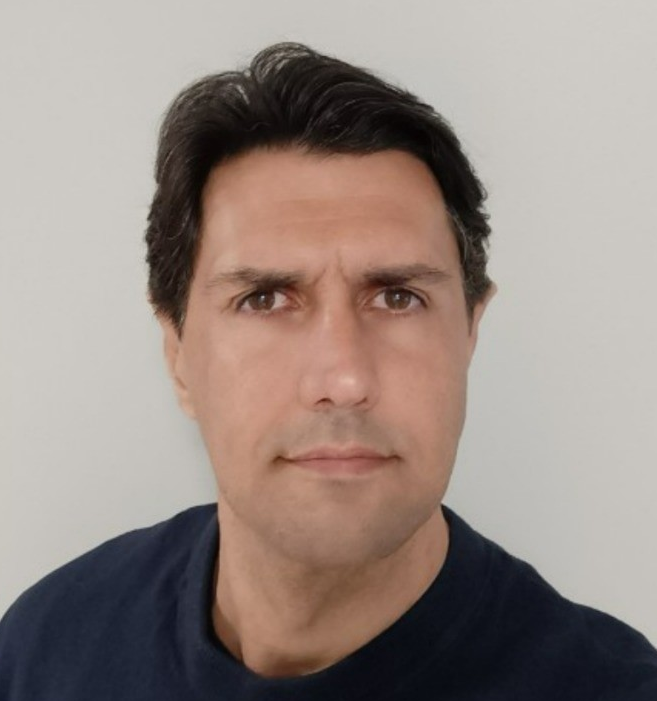
Par Raymond E. Dyer, B.Sc., MBA

Directeur régional adjoint d’ASQ Canada pour la section ASQ Montréal. ASQ Senior Member, CMQ/OE, & CQA (English Text Follows)

Organisé par l’équipe de direction de la section montréalaise de l’ASQ.

Le 17 juin, nous avons organisé une soirée en présentiel placée sous le signe du réseautage, de la collaboration et de la fête avec les membres de la communauté ASQ Montréal. Les professionnels de la qualité ont pu échanger et partager leurs expériences. Certains ont, nous l’espérons, élargi leur réseau, mais dans la plupart des cas, il s’agissait surtout de retrouvailles entre visages familiers. Nous avons célébré la distinction “Silver Achievement 2025” décernée à ASQ Montréal dans le cadre du Programme d’excellence en performance (PEP), et notre présidente de section, Chantale Simard, s’est vu remettre une écharpe commémorative du 75e anniversaire de l’ASQ. Avec l’aide de Kunal Das, Hani Antar a organisé un quiz comportant des questions liées à l’ASQ et à la qualité. Des prix ont été remis et les amuse-bouches étaient excellents. Nous avons vraiment passé un bon moment et appris quelques choses au passage. Nous espérons voir davantage de membres de la section lors de notre événement en présentiel du mois d’octobre. C’est le moment idéal pour élargir votre réseau dans le domaine de la qualité et vous impliquer au sein de l’ASQ. Merci à Hani et Kunal pour ce moment de convivialité, ainsi qu’à Chantale, Samira et Sam pour l’organisation de cet agréable événement en présentiel.


ASQ Summer Networking Event 2026

On June 17th, we held an in-person evening of networking, collaboration and celebration with ASQ Montreal community members. Fellow quality professionals connected and shared stories. Some hopefully expanded their network but, in most cases, it was mostly familiar faces reconnecting. We recognized ASQ Montreal’s 2025 Silver Achievement in the Performance Excellence Program (PEP) and our Section Chair, Chantale Simard, was presented with an ASQ 75th anniversary scarf. With the help of Kunal Das, Hani Antar organized a quiz competition with ASQ and Quality related questions. There were some prizes and the finger foods were excellent. We really enjoyed ourselves and learned a few things along the way. We hope to see more section members at our October in-person event. These are the times to expand your Quality network and get involved with ASQ. Thank you Hani and Kunal for the fun time and to Chantale, Samira, and Sam for the organization of this enjoyable in-person event.

Si vous étiez présent | Had You Been There Read More »

Voice of The Customer | Voix du Client

By Claudio Sasseron, Responsable VoC, (English text follows)

Ces derniers mois, nous avons eu une pause estivale, un moment important pour passer du temps avec nos amis et notre famille, retrouver des personnes que nous voyons moins souvent et simplement recharger nos batteries.

Prendre du recul nous aide aussi à réfléchir à notre vie, à nos projets et à nos priorités. Souvent, de nouvelles idées apparaissent lorsque nous sortons un peu de notre routine. Cela peut nous amener à changer certaines attitudes, à revoir nos priorités ou simplement à choisir une meilleure direction.

Comme un bateau, nous devons parfois ralentir pour ajuster notre trajectoire et continuer notre chemin plus sereinement.

J’espère que vous avez tous passé un bel été et que votre retour se passe bien. Pour ceux qui sont encore en vacances, profitez-en pour vous reposer, réfléchir et prendre soin de vous.

À la prochaine!

Claudio Sasseron


Over the past few months, we have had a summer break, an important time to spend with friends and family, reconnect with people we do not see very often, and simply recharge our batteries.

Taking a step back also gives us time to think about our lives, our projects, and our priorities. Often, new ideas come when we step away from our daily routine. It can help us change some habits, rethink our priorities, or simply choose a better direction.

Just like a boat, sometimes we need to slow down to adjust our course and continue our journey more smoothly.

I hope everyone had a great summer and a good return to work. For those who are still on vacation, take the time to rest, reflect, and enjoy it.

See you soon!

Claudio Sasseron

Voice of The Customer | Voix du Client Read More »

Mot de la présidente | Word from the Chair

Par Chantale Simard, MBA, ASQ Senior Member, CSSGB (English text follows)

La qualité comme point d’ancrage en période d’intégration

L’organisation dont je fais partie a récemment été acquise par une entreprise de beaucoup plus grande envergure. Nous entrons donc dans une période d’intégration qui amènera son lot de changements, de découvertes et, bien sûr, de questions.

Une acquisition est souvent présentée comme une occasion de croissance: accès à de nouvelles expertises, à davantage de ressources, à un réseau élargi et à de nouvelles possibilités de collaboration. Tout cela est vrai et extrêmement stimulant. Mais derrière les annonces officielles commence ensuite le véritable travail d’intégration.

Il faut apprendre à connaître une nouvelle organisation, comprendre sa culture, ses façons de faire, ses attentes et son vocabulaire. Il faut comparer les processus, clarifier les responsabilités et déterminer ce qui doit être harmonisé. Il faut aussi continuer à servir les clients et à faire fonctionner les activités quotidiennes, même si certaines réponses ne sont pas encore connues.

Dans cette période de transition, la qualité devient un point d’ancrage. Elle nous rappelle l’importance de comprendre avant de transformer. Avant de modifier un processus, il faut savoir pourquoi il existe, à quel besoin il répond et quelle valeur il crée. Une pratique différente n’est pas nécessairement moins bonne: elle peut simplement refléter une autre réalité.

L’intégration ne devrait donc pas être uniquement l’adoption des méthodes de l’organisation la plus grande. Elle représente une occasion de réunir les forces de chacun: la structure et les ressources d’une grande entreprise, combinées à l’agilité, à la proximité avec les clients et à l’expertise spécialisée d’une plus petite organisation.

La qualité repose aussi sur l’écoute des personnes qui réalisent le travail. Elles connaissent les besoins des clients, les risques et les ajustements qui permettent aux processus de bien fonctionner. Les consulter aide à prendre de meilleures décisions et à favoriser l’adhésion au changement.

Je vis cette transition avec beaucoup d’optimisme. Elle représente une occasion d’apprendre, de remettre en question certaines habitudes et de construire quelque chose de meilleur. Elle exige toutefois de l’ouverture, de l’humilité et une volonté réelle de progresser ensemble.

C’est peut-être là l’une des plus belles contributions de la qualité : nous aider à faire du changement non seulement une transition à gérer, mais une occasion d’évoluer collectivement.

Envoyez-moi vos commentaires


Quality as an Anchor During Integration

The organization I am part of was recently acquired by a much larger company. We are now entering a period of integration that will bring its share of change, discovery and, of course, questions.

An acquisition is often presented as an opportunity for growth: access to new expertise, greater resources, a broader network and new possibilities for collaboration. All of this is true and extremely exciting. But once the official announcements have been made, the real work of integration begins.

We must get to know a new organization and understand its culture, practices, expectations and language. We must compare processes, clarify responsibilities and determine what needs to be aligned. At the same time, we must continue serving our clients and managing day-to-day operations, even when some answers are not yet known.

During this transition, quality becomes an anchor. It reminds us of the importance of understanding before transforming. Before changing a process, we need to understand why it exists, what need it addresses and what value it creates. A different practice is not necessarily an inferior one; it may simply reflect a different reality.

Integration should therefore not be viewed solely as the adoption of the larger organization’s methods. It is an opportunity to bring together the strengths of both organizations: the structure and resources of a large company, combined with the agility, close client relationships and specialized expertise of a smaller one.

Quality also relies on listening to the people who perform the work. They understand client needs, potential risks and the adjustments that allow processes to function effectively. Involving them leads to better decisions and greater engagement in the change.

I am approaching this transition with great optimism. It is an opportunity to learn, challenge some of our habits and build something better. It also requires openness, humility and a genuine willingness to move forward together.

Perhaps this is one of quality’s greatest contributions: helping us turn change from a transition to be managed into an opportunity to grow together.

Send me your comments


Suivez-nous sur LinkedIn

Explorez NOTRE site myASQ Montréal |  Explore OUR Montreal myASQ site.

Mot de la présidente | Word from the Chair Read More »

Student Outreach | Sensibilisation étudiante

Pierre Marquis, Membership Chair Section Montréal, Student Outreach Committee Member (An English text follows)

Activités de sensibilisation des étudiants – août 2026

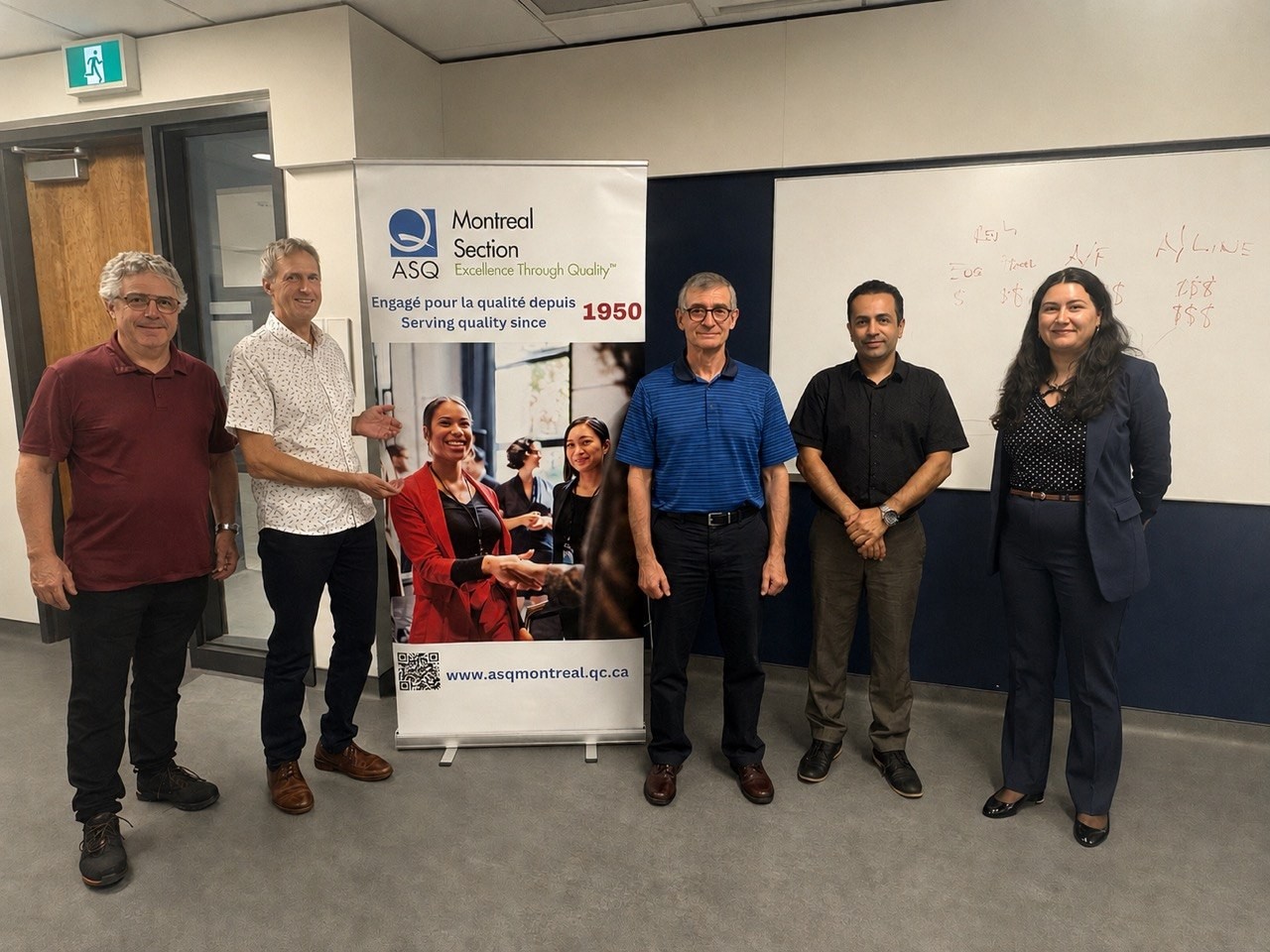
Le 10 août dernier à Concordia, l’enseignante Mme Marzieh Ghiyasinasab, PhD, nous a invité à rencontrer ses étudiants à la maîtrise en génie pour un panel “Lean Six Sigma – LSS”. Près de 20 étudiants en génie ont participé à l’événement, où trois panelistes associés à l’ASQ Montréal (Eric Hosking, Pierre Gaudet et moi-même) ont parlé de leurs formations, expériences en industrie dans le domaine de la qualité et présenté des projets LSS, de niveau ceinture verte et noire. Eric a fait le parallèle avec le programme RedX de P&WC, une méthode reconnue et efficace de résolution de problèmes. Pierre Gaudet a appelé à la prudence en utilisant le diagramme d’Ishikawa (en arête de poisson), qui risque de devenir très laborieux si le client s’en mêle! Parmi les questions des étudiants, on note: Comment calculez-vous les économies? Comment résoudre un problème de moteur si fabriqué à très faible volume (cause design ou production)? Ces questions ont résulté en des discussions animées, certains étudiants ayant vécu de tels défis durant leurs stages en industrie. À la fin, notre équipe a été chaudement applaudie. La session a duré 1.5 hre, questions incluses. Notez que Kunal Das a grandement contribué à la préparation du matériel, quoiqu’absent ce soir-là.

Lors de cet événement, nous avons aussi discuté des avantages de l’adhésion étudiante à l’ASQ pour seulement $31 US, présenté les formations certifiées offertes ainsi que les webinaires mensuels d’ASQ Montréal.

Sur la photo, en commençant par la gauche: Pierre Gaudet, Pierre Marquis, Eric Hosking, Amir Saeed Gholizadeh et Marzieh Ghiyasinasab. Notez qu’Amir a fait une présentation sur la résolution de problèmes en industrie, à la suite de notre panel.

ACADEMIA:

  • Contactez-nous si vous souhaitez organiser un événement avec vos étudiants et discutons de la manière dont nous pouvons aborder le sujet de la qualité dans le monde universitaire.
  • Si vous faites partie d’un établissement d’enseignement et que vous souhaitez avoir plus de visibilité sur les sujets liés à la qualité, contactez Pierre Marquis sur LinkedIn. Nous disposons d’un réseau de conférenciers potentiels qui pourraient vous intéresser.

Student Outreach Activities – August 2026

On August 10th at Concordia University, Professor Marzieh Ghiyasinasab, PhD, invited us to meet with her Master of Engineering students for a panel discussion on Lean Six Sigma (LSS). Nearly 20 engineering students attended the event, where three panelists associated with ASQ Montreal (Eric Hosking, Pierre Gaudet, and myself) discussed their training and industry experience in quality management and presented LSS projects at the Green and Black Belt levels. Eric drew parallels with P&WC’s RedX program, a recognized and effective problem-solving method. Pierre Gaudet cautioned against using the Ishikawa diagram (fishbone diagram), which can become very cumbersome if the client gets involved! Among the students’ questions were: How do you calculate cost savings? How do you solve an engine problem if it’s manufactured in very low volumes (due to design or production issues)? These questions led to lively discussions, as some students had experienced similar challenges during their industry internships. At the end, our team received a warm round of applause. The session lasted 1.5 hours, including questions. Please note that Kunal Das made a significant contribution to the preparation of the materials, although he was unable to attend that evening.

At this event, we also discussed the benefits of ASQ student membership for only $31 US, presented the certified training programs offered, and ASQ Montreal’s monthly webinars.

In the photo, from left to right: Pierre Gaudet, Pierre Marquis, Eric Hosking, Amir Saeed Gholizadeh, and Marzieh Ghiyasinasab. Note that Amir gave a presentation on problem-solving in industry following our panel discussion.

ACADEMIA:

  • Contact us if you are organizing a student event and wish to discuss how to present quality-related topics in the university.
  • If you are part of an educational institution and would like to have more visibility on quality-related topics, please contact Pierre Marquis on LinkedIn. We have a network of potential speakers that may be of interest to you.

Student Outreach | Sensibilisation étudiante Read More »

Scroll to Top